
Why Your Water Situation Matters More Than Any Brand
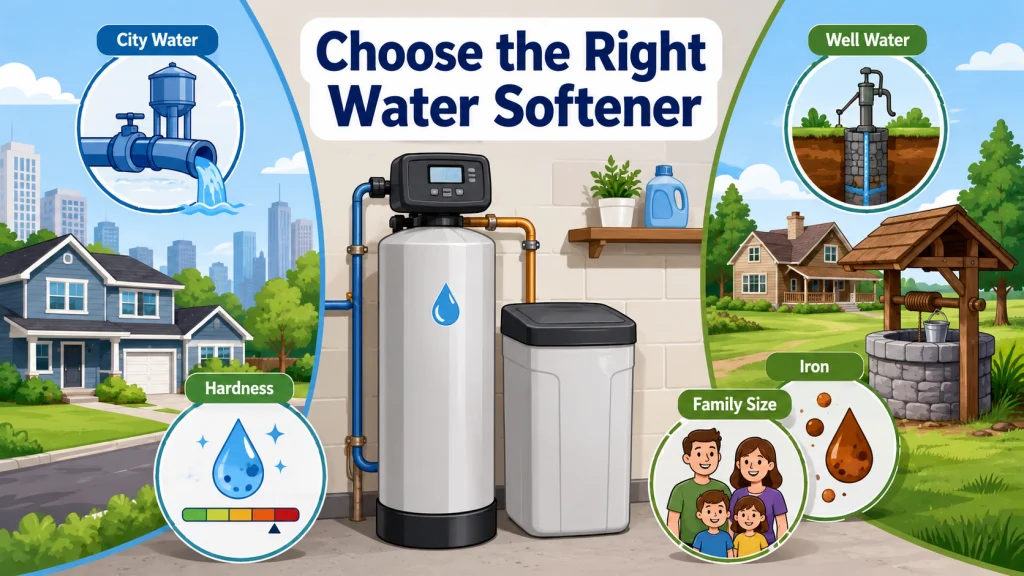
The single variable that changes every recommendation I make is your actual water chemistry, not the name on the cabinet. Hard water is measured in grains per gallon, or GPG. Anything above 7 GPG is considered hard, and most city water in the US falls somewhere between 7 and 15 GPG depending on where you live. The Southwest runs harder, with Phoenix, Las Vegas, and parts of Texas routinely coming in at 15 to 20 GPG. Well water varies by location but tends to run harder than municipal supply, and it almost always brings variables that city water does not have.
City water and well water are not the same softening problem, and this distinction matters more than most buying guides acknowledge. City water is treated with chlorine or chloramine, which is good for biological safety but actively degrades standard softener resin over time. Well water skips chlorine entirely, which is better for resin longevity, but iron, sediment, and sulfur are all common in groundwater. Each one changes what you need upstream, downstream, or sometimes instead of a standard softener. Treating both situations as the same purchasing decision is the first place I see homeowners go wrong.
Iron is the variable that causes the most calculation errors. If a water test shows 12 GPG hardness and 2 PPM ferrous iron, that is not a 12 GPG problem. Iron adds roughly 4 to 5 GPG to the effective hardness load per 1 PPM, which means that home is actually sizing for somewhere between 20 and 22 GPG. Buy based on the stated hardness number alone, and the system regenerates too often, burns through salt inefficiently, and wears out ahead of schedule. The iron rating on every softener box refers only to dissolved ferrous iron, the clear kind that shows up in a test without discoloring the water. Red or orange water means ferric iron, and no standard softener resin handles that cleanly regardless of what the label claims.
Field Note: One of the most common calls I get is from homeowners who bought a 32,000-grain system for a family of four at 15 GPG. The math does not support it. At roughly 75 gallons per person per day, that household is processing about 31,500 grains of hardness every week. A 32k system at that load regenerates too often, runs at terrible salt efficiency, and wears the resin down faster than it should. Right-size the system for a 7 to 10 day regeneration cycle and the long-run cost comes down considerably.
Household size feeds into the sizing calculation, but the goal is not simply matching daily water use to a grain capacity number. The target is a regeneration interval of 7 to 10 days at an efficient salt dose. Regenerating more frequently than that wastes salt and water on unnecessary backwash cycles. Stretching past 14 days lets water quality drop toward the end of the cycle as the resin approaches exhaustion. The water softener sizing guide walks through the full calculation, but the short version is to multiply your daily household water use by your GPG hardness number and by 7, then size to that figure with some buffer built in.

This kit lets you test drinking water, pool water, or any water source in seconds using a simple dip-and-read method with an oversized color chart ranging from red to green, covering 0 to 25 GPG and 0 to 425 PPM. All 100 strips are protected by FreshSeal technology across a ready-to-use bottle and two sealed pouches for long-term accuracy. Each purchase also funds a full year of clean water for someone in the Central African Republic.
Check On AmazonIf you click this link and buy, we earn a commission at no additional cost to you.
Best Water Softener Picks by Situation
If I had to narrow the decision down before looking at every product spec, I would start with your water source, hardness level, and whether iron is present. Those three details eliminate most bad recommendations quickly. The systems below are not interchangeable. Each one makes the most sense in a different buying situation.
| Best fit | System to start with | Why it makes sense | Watch for this |
|---|---|---|---|
| Best overall for most city water homes | SpringWell SS Series | Strong fit for treated city water because the system is built around demand-initiated regeneration, solid flow rates, and 10% crosslink resin, which matters when chlorine is in the water. | Make sure you choose the right size for your household and GPG level. The best spec still fails if the system is undersized. |
| Best value for buyers who want serviceable parts | AFWFilters Fleck 5600SXT build | The Fleck 5600SXT is one of the easiest valves to service in the field, parts are widely available, and the platform is proven enough that many local dealers still build around it. | Confirm resin type, tank size, and whether the seller includes proper bypass and brine components. |
| Best accessible option for straightforward hardness | Aquasure Harmony | Good fit for buyers who want a functional whole-house softener at a more approachable price, especially when the water problem is ordinary hardness rather than complex iron or sulfur. | Check the resin spec and do not rely on the box capacity alone. Size the system by actual weekly grain load. |
For a standard city water home at 7 to 15 GPG, I would usually start with a properly sized metered softener using 10% crosslink resin. SpringWell SS is the cleaner fit if you want stronger city water specs and a more polished package. A Fleck 5600SXT build makes more sense if you care most about field-serviceable parts and long-term repairability. Aquasure Harmony is the budget-conscious route when the water problem is simple and the household load is not extreme.
For simple well water where hardness is the main problem, no sulfur smell is present, and iron is under 1 PPM, a standard salt-based softener can work well if it is sized correctly and protected with sediment filtration. In that situation, I would lean toward a Fleck-based system or an appropriately sized SpringWell SS, then adjust capacity upward if iron is present. If the well has red water, sulfur odor, low pH, or iron above the low range, do not treat it like a simple softener purchase. That is where the well water softener guide becomes the better starting point.
For high-hardness homes above 15 GPG, capacity becomes more important than brand. A 48,000-grain system may be comfortable for some households at 10 to 12 GPG, but it can become marginal quickly in Arizona, Las Vegas, parts of Texas, or any home with iron adding to the effective hardness load. At that point, I start looking at 64k, 80k, or twin alternating setups rather than assuming the standard size will carry the house comfortably.
What I Actually Look For Before Recommending Any System
The control valve is the first thing I check, before grain capacity, before price, and before anything on the marketing sheet. The two valve names I trust most in residential water softeners are Fleck and Clack. Both have long track records in residential installs. Both have large parts networks accessible to water treatment technicians without special ordering. Both can be serviced in the field without proprietary tools. If a system is built around one of these valves, it passes the first check. If the listing does not mention the valve manufacturer anywhere, that is worth investigating before you commit.
Resin crosslink percentage is the second thing I look for, and it gets glossed over in nearly every consumer guide. Standard resin is 8% crosslink, which works well for many well water applications where chlorine exposure is zero. City water is a different situation. Chlorine and chloramine attack resin over time, and a system with 8% crosslink installed on city water will degrade noticeably faster than one with 10% crosslink. The lifespan difference is significant, and the price gap between systems using each type is usually smaller than the long-run replacement cost. Most product listings do not surface the crosslink percentage without you going looking for it, so if it is not in the spec sheet, ask before buying.
Regeneration control is the third check. Demand-initiated, metered regeneration tracks actual water consumption and only triggers a cycle when the resin is genuinely exhausted. Timer-based systems regenerate on a fixed schedule, every Tuesday or every three days, regardless of whether the resin needs it or not. Timer systems waste salt and water on unnecessary backwash cycles. There is no residential scenario I can think of where I would recommend a timer-based system over a metered one. If the system regenerates on a clock rather than on usage, that alone is enough for me to pass on it.
| Spec to check | What I look for | Why it matters |
|---|---|---|
| Control valve | Fleck or Clack | Large parts network, field-serviceable without proprietary tools |
| Resin crosslink | 10% for city water; 8% acceptable for many well water homes | Chlorine in city water degrades 8% crosslink resin faster over time |
| Regeneration type | Demand-initiated and metered | Regenerates only when needed and saves salt and water compared with timer-based systems |
| Iron handling | Ferrous iron rating only; ferric iron requires upstream filtration | Ferric iron fouls standard resin regardless of box claims |
| Grain capacity | Sized for 7 to 10 day regeneration at your household load | Frequent regeneration reduces salt efficiency and shortens resin life |
Grain capacity gets the most attention on store shelves, but in isolation it is one of the less useful numbers. The capacity rating printed on the box is almost always stated at maximum salt dose, not at an efficient dose. A 48,000-grain system running at 15 lbs of salt per regeneration cycle delivers around 3,300 grains per pound, which is solid efficiency. Push the same system to 25 lbs of salt to hit that stated 48k number on paper, and efficiency drops considerably. The number on the box is a ceiling, not what you will get in practice. For a full breakdown of how ion exchange works and what actually drives efficiency, the complete water softener guide covers the mechanics in detail.
The distinction compounds over time. A 48,000-grain system sized correctly for a family of four at 15 GPG, running one efficient regeneration per week, is cheaper to operate over its lifetime than a cheaper system pushed beyond its efficient range. Salt is an ongoing cost that adds up across every regeneration cycle for as long as the system is running, and getting the sizing right from the start is one of the few decisions that pays back every single week.
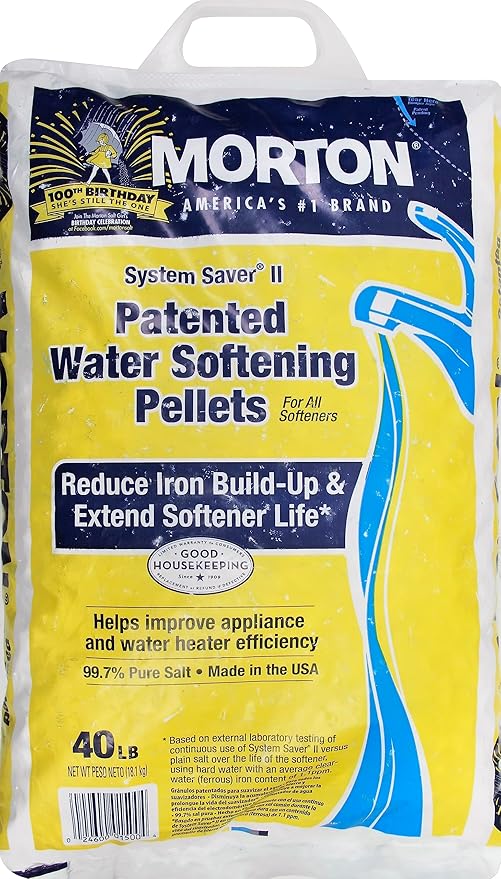
This 40-pound bag of System Saver pellets is manufactured in the United States and designed to improve the taste of your water while helping extend the life of your appliances and water softener. Simple to use, just add the pellets directly to your softener's brine tank as needed.
Check On AmazonIf you click this link and buy, we earn a commission at no additional cost to you.
The Dealer Markup Reality
If you have ever gotten a quote from a national water treatment dealer and walked away with a number between $3,000 and $6,000 for a residential softener, the first thing worth understanding is what is physically inside that cabinet. Culligan and Kinetico are two of the best-known names in residential water treatment. Many dealer systems are built around the same kind of control valve architecture that appears in direct-purchase systems selling for a fraction of the price. The difference is not always the water-softening mechanism itself. Often, the difference is the sales model, the service model, the warranty structure, and the brand overhead wrapped around it.
This comes up in homeowner discussions with some regularity. The pattern that appears most often is someone who paid for a branded dealer system, called for service regularly, used far more salt than expected, and then replaced it with a direct-purchase unit using a proven valve and metered regeneration. Salt use dropped, service calls stopped, and the replacement kept running for years. That does not mean every dealer system is bad. It means the quote only makes sense after you understand what the price is actually buying.
The dealer service relationship does have real value in specific situations. If your well water has high iron, sulfur present, a pH below 6.8, and hardness above 20 GPG all at once, you are in genuinely complicated territory. Pre-treatment sequencing, system compatibility, and having a local technician who knows your setup when something changes are all worth something real in that context. But a city water home at 10 to 12 GPG with no iron is not that situation, and paying dealer rates for a standard residential softening problem is a hard case to make once you understand what the price actually reflects.
Field Note: On more than a few service visits, I have opened an expensive branded cabinet to replace a failed injector, seal, spacer, or bypass fitting and found familiar components inside. The markup often covers the dealer network, the service contract overhead, and the advertising spend. It does not always reflect a proprietary component that softens water differently from what you can buy direct. That is worth knowing before you sign a contract, not after.
Before You Buy: How to Sanity-Check a Water Softener Quote
Whether you buy online, from a local dealer, or through a big-box store, the quote should answer a few basic questions clearly. If it does not, I would slow down before paying for the system. A good softener recommendation should be built around your water test and household load, not around whatever model the salesperson wants to move that month.
- What valve is inside the system? If the quote does not name the valve, ask. Fleck and Clack are the two names I like seeing because parts and service are widely available.
- What resin is included? For city water, I want to know whether it is 8% or 10% crosslink resin. If the seller cannot answer, that is a warning sign.
- Is regeneration metered? Demand-initiated regeneration should be standard. A timer-only system is not something I would choose for a new install.
- How was the capacity sized? The answer should include household size, daily water use, GPG, iron adjustment if needed, and target regeneration interval.
- What problem is the system actually solving? A softener removes calcium and magnesium hardness. It is not a complete fix for sulfur smell, ferric iron, bacteria, sediment, or low pH.
If a quote passes those checks, then price becomes easier to judge. If it fails them, the cheapest system may cost more over time and the most expensive system may simply be an ordinary softener wrapped in a premium sales package.

Sized for homes with 3 to 4 bathrooms and up to 5 family members, this system treats 48,000 grains of hardness and up to 10 ppm of iron by removing hard minerals like iron and magnesium that can clog pores and cause skin irritation. A built-in sediment and GAC pre-filter captures sand, dirt, rust, and other large particles at the source, protecting appliances and extending the life of your water softener. The high-efficiency Aquatrol control head helps conserve water and lower maintenance costs over time.
Check On AmazonIf you click this link and buy, we earn a commission at no additional cost to you.
What I Do Not Recommend
Two categories come up constantly in water softener searches that I consistently steer homeowners away from, regardless of how they are marketed or how prominently they appear in results. The first shows up as a low-cost alternative to real softening. The second gets pushed in dealer sales pitches for problems it does not actually fit. Both share the same underlying issue: the marketing promise is ahead of what the product delivers in practice.
Magnetic descalers and electronic water conditioners that clamp onto the outside of a pipe with no media, no resin, and no actual contact with the water are the first category. The claimed mechanism does not hold up under scrutiny, and in my experience these products produce no measurable change in a hardness test. The calcium and magnesium are still in the water after passing through an electromagnetic field. Scale continues to build. Soap lather does not improve. For anyone dealing with actual hard water problems, these products are not the answer, and the money is better applied toward something that removes hardness minerals through a process that has been validated outside of a marketing brochure.
- Magnetic and electronic descalers: No resin, no media, and no documented effect on hardness in independent testing. The budget is better applied toward a system that actually removes calcium and magnesium.
- Timer-based regeneration systems: Regenerate on a fixed schedule whether the resin is exhausted or not. They waste salt and water compared with demand-initiated alternatives available at similar price points.
- Undersized capacity to save on upfront cost: A system regenerating every two to three days can cost more in salt over a single year than the savings on the original purchase price. Size correctly the first time.
- Dealer installs for simple city water hardness: An 8 to 12 GPG city water home with no iron and no sulfur does not require a $4,000 quote. A metered system with a quality valve, properly sized for the household, can handle it reliably at a fraction of that cost.
The dealer install category deserves a clarification, because I am not saying dealer-installed systems are never worth the cost. The service model has real value when the water problem is complex enough to justify it. What I am saying is that city water at standard residential hardness is not a complex problem. It is a solved one. The threshold where a dealer relationship adds meaningful value is considerably higher than most dealer sales pitches suggest.
Finding the Right Guide for Your Situation
The situations that come up most often in residential softener installs break down into four main categories, each driven by a different set of water chemistry variables. Knowing which one applies to your home is the most useful step before comparing any specific products or reading any product review. A well water home at 18 GPG with iron present is a completely different purchasing decision from a city water home at 10 GPG with no iron, even though both searches start the same way.
| Your situation | What changes the decision | Where to go |
|---|---|---|
| Well water | Iron, sulfur, sediment, and pH each require different equipment upstream of the softener. A softener alone is rarely the complete answer. | Choosing a water softener for well water |
| Hard city water | Chlorine degrades standard resin over time. Regional GPG variation and local salt discharge restrictions both affect which system fits. | Hard water softener guide by region and GPG |
| Salt-free conditioning | Prevents scale without removing hardness minerals. Works within certain GPG ranges. Does not produce the same water feel as ion exchange. | Salt-free water conditioner guide |
| Sizing | Grain capacity, household load, and regeneration interval as one calculation. Manufacturer calculators often round up in the seller’s favor. | Water softener sizing guide |
For homeowners planning to handle their own installation, the water softener installation and maintenance guide covers what the job actually involves, what to expect on the day, and what routine maintenance looks like once the system is running. A standard city water install is a straightforward plumbing project. Well water setups with pre-treatment stages are more variable, but that guide addresses both scenarios in enough detail to go in prepared.
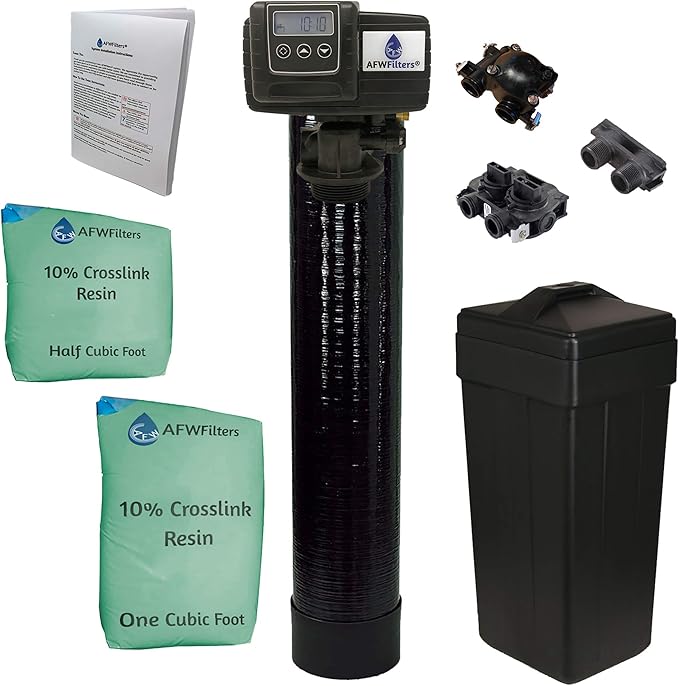
Backed by over 35 years of water treatment experience, this USA-made system comes pre-loaded with 1.5 cubic feet of 10% crosslink resin, which offers superior chlorine resistance and a longer service life than standard resin. The digital on-demand control head is easy to program and efficiently removes hard water minerals, scale buildup, water spots, and soap scum with minimal maintenance required. Step-by-step installation instructions and knowledgeable customer support make setup straightforward for most homeowners.
Check On AmazonIf you click this link and buy, we earn a commission at no additional cost to you.
Final Thoughts: Start With a Water Test, Not a Brand
The most consistent advice I give before anyone starts comparing systems is to get a water test first, from an independent source rather than from the dealer about to quote you a system. City water customers can pull their utility’s Consumer Confidence Report, published annually and available on request, where hardness is usually listed in mg/L. Divide that number by 17.1 to get GPG. Well water homeowners need a home test kit or a lab test, since there is no utility report covering a private well. GPG level, iron content, and whether you are on city or well water together tell you more about what system you need than any product review, including this one.
From that test result, the criteria I come back to across hundreds of installs stay consistent. What I look for is a Fleck or Clack control valve, the right resin crosslink for the water source, demand-initiated metered regeneration, and a grain capacity sized for a 7 to 10 day regeneration interval at an efficient salt dose. Systems that hit those marks, at whatever price point you are working with, are the ones that have performed reliably from what I have seen. Systems that miss them are the ones I have been called back to service, explain, or help replace ahead of schedule.
If you are on standard city water and want the cleanest all-around starting point, look at a properly sized system with 10% crosslink resin and metered regeneration. If long-term serviceability matters most, a Fleck 5600SXT build is one of the safest platforms to understand and repair. If your water problem is simple hardness and the budget matters, a correctly sized Aquasure Harmony can make sense. If your well has iron, sulfur, sediment, or pH problems, do not buy a softener first and hope it solves everything. Start with the water test, match the equipment to the problem, and then choose the system that fits that situation.
Hard water is not dangerous. It is a maintenance and efficiency problem, and it is a solved one. The right system for your situation, properly sized and installed, runs with minimal attention for a long time. The goal here is to help you get there without the detours that cost money and frustration before you land on something that actually works.

This professional-grade liquid cleanser removes iron, manganese, silt, metal particles, and other contaminants that salt leaves behind in your resin bed, valve parts, and beads. Regular use helps extend appliance life, reduce maintenance calls, and maintain consistent water quality across any water softener brand. It is NSF certified to NSF/ANSI/CAN Standard 60 for drinking water additives and is made in the USA, making it safe for families and pets. Apply 4 oz before each regeneration or use with the Pro Products Easy Feeder kit for daily low-dose treatment.
Check On AmazonIf you click this link and buy, we earn a commission at no additional cost to you.
FAQs
💧 What size water softener do I need for a family of 4?
Multiply the number of people by daily water use per person, roughly 75 gallons, then by your GPG hardness level, then by 7 days. A family of four at 15 GPG needs to process about 31,500 grains per week. A 48,000-grain system gives a more comfortable buffer than a 32,000-grain system in that situation. Size up if iron is present.
🔧 What is the difference between a Fleck and a Clack control valve?
Both are industry-standard control valves used across residential and light commercial water softeners. Fleck has a long residential track record, and Clack is known for strong modular design. Either can be a solid choice when the rest of the system is sized and built correctly.
🏠 Is a salt-free water conditioner the same as a water softener?
No. A salt-free conditioner helps reduce scale adhesion, but it does not remove calcium and magnesium from the water. Your water will still test hard. A true ion exchange softener removes hardness minerals, which is why softened water changes soap performance, appliance scaling, and water feel.
💰 Why are some dealer-installed water softeners so expensive?
The price often reflects the dealer network, service model, installation overhead, warranty structure, and brand cost. For complex well water, that service relationship can have value. For straightforward city water hardness, the premium is harder to justify unless the quote clearly explains what better equipment or service you are getting.
🧪 How do I find out how hard my water is?
City water customers can check their utility’s Consumer Confidence Report. Hardness is often listed in mg/L, and you can divide by 17.1 to convert to GPG. Well water homeowners need a home test kit or lab test. For a private well, test hardness, iron, sulfur, pH, and sediment before choosing equipment.
⏱️ How often should a water softener regenerate?
Once every 7 to 10 days is the target range for most residential systems running at efficient salt doses. More frequent regeneration usually means the system is undersized or programmed poorly. Stretching too long can let water quality drop near the end of the cycle.