
Three Tests, Ten Minutes, No Service Call Needed
The most common call I get from homeowners convinced their water softener stopped working goes like this: water feels hard again, tested it at the hose bib out back, definitely hard. Then I ask which tap they used. Nine times out of ten, it was the outdoor hose bib. Outdoor hose bibs are plumbed upstream of the softener on purpose so that sodium-softened water doesn’t reach the lawn and garden. That faucet is supposed to show hard water. A hard reading from an outdoor bib doesn’t tell you anything about whether the softener is working.
I bring this up first because it’s the single most common reason homeowners pay for a diagnostic call they didn’t need. Before you call anyone, run through the three tests below. Two of them take about ten minutes right now. The salt check is a follow-up that takes a few weeks to confirm, but it’s worth starting immediately. If the softener is working, you’ll know. If it isn’t, you’ll have specific information to work with before you decide what to do next.
Test 1: Hardness Test Strips Give You a Direct Answer
This is the most reliable of the three tests. A box of 50 hardness test strips runs $10 to $15 at most hardware stores or online. Run the indoor cold tap for 30 to 60 seconds first to flush any standing water from the line, then dip a strip, hold it for a few seconds, and compare the color change against the chart on the box. Properly softened water should read 0 to 1 GPG (grains per gallon). Anything above that after a recent regeneration cycle means the softener isn’t doing its job effectively.
Warning: Only test from regular indoor cold taps: kitchen sink, bathroom sink, laundry tub. Do not use an outdoor hose bib as your softened-water test point — it is plumbed before the softener and will always read hard. You can use it as a raw-water baseline for comparison, which is covered below. Also avoid a dedicated drinking water tap from an under-sink reverse osmosis system (its own supply line) and hot water taps (temperature affects strip accuracy).
Not all strips are the same. When buying, look for strips that show a hardness scale in GPG or ppm, and confirm they can read accurately at the low end of that range, around 0 to 5 GPG. Pool and spa test strips are not designed for this range and will give you a useless reading. A pack of 50 is better than a pack of 10 if you plan to test before and after a regeneration cycle, or periodically over several months.
One thing I do when testing a system I haven’t seen before is use the outdoor hose bib as a baseline first. The outdoor bib is upstream of the softener and will always show your raw, untreated hardness. Dip a strip there, note the reading, then test the indoor cold tap. If the indoor tap reads the same as the outdoor bib, the softener isn’t treating anything. If the indoor tap reads near zero and the outdoor reads 12 or 15 GPG, that’s a working softener doing exactly what it should. The comparison also confirms the strips are reacting correctly before you draw any conclusions.
When I’m checking a system and both indoor cold taps read significant hardness right after a completed regeneration cycle, something in the regen process isn’t working. The cause is usually one of a handful of things: a venturi clog, a salt bridge, a float valve that’s stuck, or a timer that lost its program after a power outage. The troubleshooting guide for water softener problems walks through each of these by symptom.

This kit includes 150 dip-and-read test strips for quickly measuring water hardness across virtually any source, including home faucets, well water, softeners, dishwashers, showers, and aquariums. Results are instant and easy to read against a color chart, making it simple to verify whether your water softener, reverse osmosis, or water conditioning system is performing as expected. A bonus eBook is included to help you record, track, and interpret your results over time.
Check On AmazonIf you click this link and buy, we earn a commission at no additional cost to you.
Test 2: The Soap Lather Test Is Less Precise but Free
This one requires no equipment. Add a few drops of liquid dish soap to a clean, dry sink or glass. Run a small amount of water over it and work it with your hands for about fifteen seconds. Soft water produces a slippery, rich lather quickly. Hard water produces thin or barely-there lather, and your hands will feel coated or slightly gritty as the soap binds to calcium and magnesium instead of foaming.
The limitation here is that the test is subjective, and the result depends on your water hardness level and the soap you’re using. At 3 to 4 GPG, the difference from fully soft water can be subtle enough that you’ll second-guess yourself. At 10 GPG or above, it’s obvious. I don’t treat this as a standalone confirmation, but as a cross-check. If the lather is thin and the test strips also came back positive for hardness, you’ve confirmed the same result from two different directions, and that matters.
Field Note: In my experience, the soap change is often the first thing homeowners notice when a softener starts to fail, before they consciously identify a problem. The shower feels slightly different. Dishes spot more. Soap takes longer to rinse off. Most people chalk it up to product changes or dry skin before it occurs to them to check the softener. If soap behavior in your home has shifted noticeably over the past few weeks, that’s worth investigating rather than ignoring.
Test 3: Is the Salt Level Actually Going Down?
Open the brine tank lid and note the current salt level. Take a photo or mark the level on the outside of the tank with a piece of tape. Come back in four to six weeks and check again. If the level has dropped, the system is regenerating and drawing brine through the resin. If the level is exactly the same as when you marked it, the system has not been regenerating effectively, and hard water has likely been returning to the house.
Before concluding there’s a mechanical problem, check for a salt bridge. A salt bridge forms when a hardened crust of salt develops above the water line inside the brine tank, leaving a hollow space beneath it. The tank looks full from above because the surface is solid, but no salt is actually dissolving into brine. Push a broom handle down through the salt mass. If the handle breaks through to empty space, that’s the problem. It’s common, it’s fixable in a few minutes, and it requires no parts. On the other hand, if the salt is loose all the way down and the level still hasn’t moved in over a month, you’re looking at a regeneration failure.
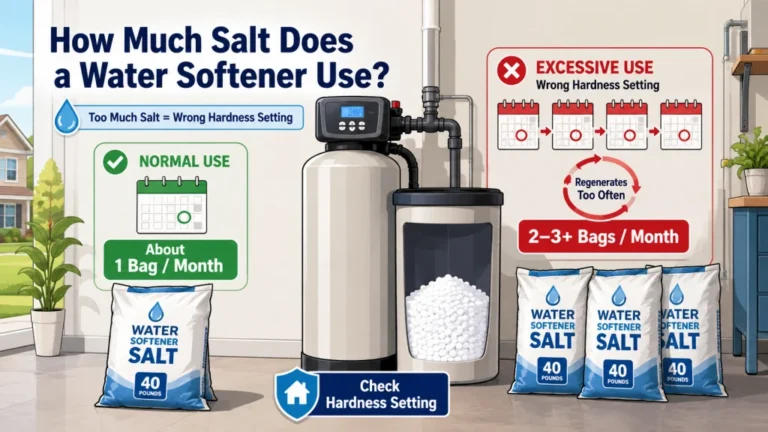
A normally functioning softener in a household of four, with water at 10 to 12 GPG, will typically go through a 40-pound bag of salt roughly every three to five weeks on a demand-initiated system. Timer-based systems tend to use more because they regenerate on a fixed schedule regardless of actual water use. If your household has always consumed salt at a predictable rate and the tank has suddenly stopped moving, that pattern change tells you something specific.
| Test | What you need | Working softener result | Failing softener result |
|---|---|---|---|
| Hardness test strips | Test strips ($10-15), indoor cold tap | 0-1 GPG reading | Measurable GPG after recent regen cycle |
| Soap lather test | Dish soap, clean sink | Rich lather within 15 seconds, slippery feel | Thin or absent lather, coated hands |
| Salt level check | Photo or tape marker | Noticeable drop after 4-6 weeks | Same level after 4-6 weeks |
Two out of three tests pointing to the same result is a reliable confirmation. All three pointing the same direction means you can move forward with troubleshooting from a clear starting point, rather than guessing.
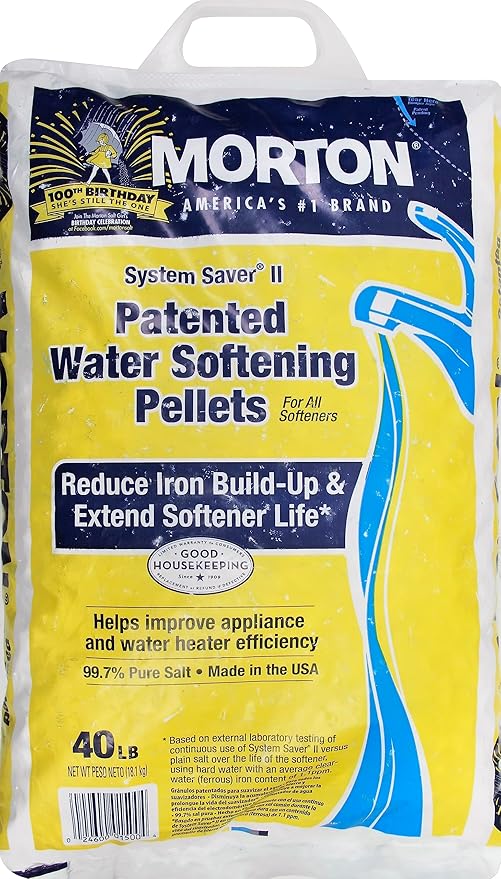
This 40-pound bag of USA-made System Saver pellets is designed to improve the taste of your water while helping extend the life of your appliances and water softener. Simple to use, just add the pellets directly to your softener's brine tank as needed.
Check On AmazonIf you click this link and buy, we earn a commission at no additional cost to you.
What to Check Before You Spend a Dollar
If the tests confirm the softener isn’t working, a handful of quick checks will rule out the most common non-mechanical causes before you involve anyone else. Run through these first:
- Confirm the unit has power. A tripped breaker or a cord that worked loose at the outlet has been mistaken for a mechanical failure more times than I can count. Check that the display is active and showing the correct time.
- Verify the bypass valve position. If the bypass valve was moved recently for plumbing work and not reset, water is routing around the softener entirely. The valve should be in the service position, not bypass.
- Check the clock on the control head. A power outage resets the time on most timer-based systems, which throws off the entire regeneration schedule. If the displayed time is wrong, the softener may be set to regenerate at 2 AM but thinks it’s the middle of the afternoon. Correcting the clock costs nothing.
- Look for a salt bridge. As described in the salt check above, push a broom handle down through the salt mass and confirm there’s no hollow space beneath a hardened surface crust.
If none of those account for the problem, the water softener installation and maintenance guide covers what a normal operating cycle looks like and can help you compare your system’s behavior against a working baseline before you decide on next steps.

This professional-grade liquid cleanser removes iron, manganese, silt, metal particles, and other contaminants that salt leaves behind in your resin bed, valve parts, and beads. Regular use helps extend appliance life, reduce maintenance calls, and maintain consistent water quality across any water softener brand. It is NSF certified to NSF/ANSI/CAN Standard 60 for drinking water additives and is made in the USA, making it safe for families and pets. Apply 4 oz before each regeneration or use with the Pro Products Easy Feeder kit for daily low-dose treatment.
Check On AmazonIf you click this link and buy, we earn a commission at no additional cost to you.
Final Thoughts: Know the Diagnosis Before You Pay for One
Service technicians charge for the drive before they touch a thing. A $150 diagnostic call is a reasonable price for a genuinely complex problem. It is not a reasonable price for a power outage that reset the timer, or a salt bridge that breaks up with a broom handle. I’ve seen both of those result in service calls, and in both cases the homeowner could have resolved it in ten minutes with the information above.
Run the three tests first. If all three come back clean and the system still doesn’t seem right, trust that instinct and make the call. But in most cases, the tests will point clearly at the problem, and what follows costs less than the test strips.
FAQs
🧪 How do I test if my water softener is working at home?
Use hardness test strips on water from an indoor cold tap, not an outdoor hose bib. A working softener should produce 0 to 1 GPG. Also check whether the salt level in the brine tank has dropped over the past four to six weeks.
💧 My water feels hard again. Does that mean my softener is broken?
Not necessarily. Check the bypass valve position first, then confirm the unit has power and the timer is set correctly. A power outage that reset the clock is a common cause that costs nothing to fix. A salt bridge in the brine tank is another frequent culprit.
🚿 Why does my outdoor hose bib always show hard water even with a softener?
Because it’s plumbed upstream of the softener on purpose. Sodium in softened water accumulates in soil and damages plants and lawns over time. Hard water from outdoor bibs is correct installation, not a sign of a broken system.
🔋 Can a power outage stop my water softener from regenerating?
Yes, on timer-based systems. A power outage resets the control head clock, which throws off the regeneration schedule. Check the current time and regen time settings and reprogram if needed. This is one of the most commonly missed causes of regen failure.
🧂 How much salt should my water softener use each month?
A household of four at 10 to 12 GPG typically uses one 40-pound bag every three to five weeks on a demand-initiated system. Timer-based systems usually consume more. If the salt level hasn’t moved at all in six weeks, the system isn’t regenerating.
⏱️ How soon after a manual regeneration should my water test soft?
Indoor taps should test at 0 to 1 GPG within an hour of a completed regeneration cycle. If hardness persists after a full cycle, the brine draw may not be completing correctly, or the resin bed may need cleaning or replacement.