Quick Answer: If you have well water with measurable iron or visible rust staining in the brine tank, choose an iron-removing cleaner like Iron Out. If you are on city water and the system is more than a couple of years old, choose a resin cleaner like ResCare or ResUp. If both issues apply, use both in sequence with a few weeks between treatments. If your softener is producing hard water but the salt level is not dropping, check the venturi, salt bridge, and timer before buying any cleaner at all.

Two Types of Cleaner, Two Different Problems
The most common mistake I see when homeowners go looking for the best water softener cleaner is grabbing whatever bottle is on the shelf without understanding what it actually does. This is not a high-stakes mistake. The wrong product will not harm your resin. It just means spending $15 on something that solves a different problem than the one you have, while the actual problem continues.
Resin beads foul in two distinct ways. The first is iron coating: iron ions from well water bond to the bead surface over time and reduce softening capacity. The second is organic and mineral fouling: chlorine from municipal water oxidizes resin beads gradually, and naturally occurring organics in water accumulate on the bead surface. These two problems require different chemistry. Iron-removing cleaners use citric or oxalic acid to dissolve iron deposits. Resin-specific cleaners are phosphoric acid-based and work on organics and general fouling from chlorinated water. They do not clean the same things, and one will not substitute for the other.
Field Note: I have seen brine tanks with obvious orange-brown rust staining, where the homeowner had been faithfully using resin cleaner every few months with no improvement. The organics-based product was not going to touch iron deposits. Once they switched to an iron-removing cleaner and ran a manual regeneration cycle, the staining cleared and soft water capacity came back. Classic wrong-cleaner situation, and it happens more often than it should.
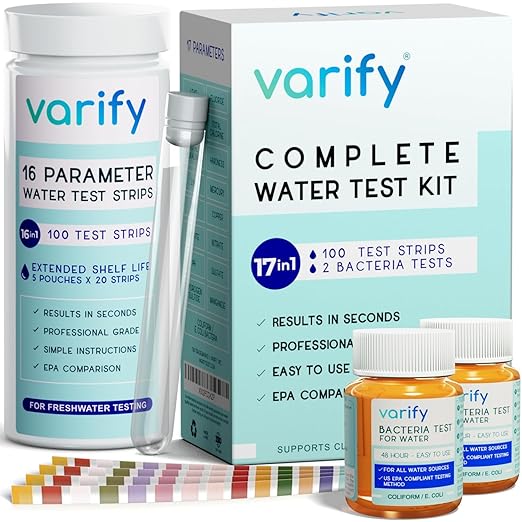
This comprehensive kit tests for 17 parameters including chlorine, fluoride, lead, iron, and bacteria, giving you a full picture of your water's safety in minutes. The 100 color-coded test strips come in 5 individually sealed pouches of 20 for extended freshness, while 2 included bacteria tests deliver results within 48 hours. Every purchase contributes a portion of proceeds to Water For Good, supporting clean water access in Central Africa.
Check On AmazonIf you click this link and buy, we earn a commission at no additional cost to you.
Iron-Removing Cleaners: What They Do and When Your System Needs One
Iron Out and Super Iron Out are the most widely available products in this category. The active chemistry is citric or oxalic acid, which dissolves ferrous and ferric iron deposits from resin beads. As a side effect, the same chemistry removes rust staining from the brine tank itself. If your brine tank has orange or brown discoloration, or if your water comes from a private well with any measurable iron, iron-removing cleaner belongs in your maintenance routine.
The practical threshold is around 0.3 PPM iron in raw water. Below that, iron fouling of the resin is rarely significant enough to notice. Above it, especially in well water systems running at 1 to 2 PPM, resin beads will show reduced capacity within a year or two if no iron pre-filtration is installed upstream. City water typically does not carry enough iron to make this a priority, which is why iron-removing cleaner is almost entirely a well water product. Using Iron Out in a water softener on city water is harmless, it just does not address what city water does to resin over time.
How to Apply Iron-Removing Cleaner
The method is straightforward. Pour the product directly into the brine well, which is the narrow tube inside the brine tank, before initiating a manual regeneration cycle. One-half to one cup per treatment is the typical dose range, depending on the product and how severe the fouling is. During the brine draw step of regeneration, the dissolved cleaner gets pulled through the resin bed and contacts the iron deposits directly. The spent solution flushes out during the fast rinse step.
For ongoing maintenance on well water systems, adding iron-removing cleaner when refilling salt is a simpler approach than scheduling separate treatment cycles. Drop it into the brine tank with every second or third bag of salt and let the next regeneration pull it through. This prevents iron fouling from accumulating rather than waiting to treat it after capacity has already declined. If you are dealing with an existing problem, a dedicated manual regeneration with the full recommended dose is a better starting point than the maintenance dose.
- Use iron-removing cleaner when: your water source is a private well with measurable iron, you see orange or brown staining in the brine tank or on fixtures, or softening capacity has declined and iron fouling is the likely cause based on your water test.
- Maintenance schedule for well water: add a dose with every second or third bag of salt as prevention, or treat every 3 to 4 months with a manual regeneration cycle if you prefer a scheduled approach.
- Skip it if: you are on city water with no iron history and no staining anywhere in the system. The product is not harmful on city water, but it solves a problem you almost certainly do not have.

Specially formulated for high-iron well water, this resin cleaner dissolves metallic and organic buildup in resin beds, converting rust and iron into a clear solution that rinses away during normal regeneration cycles without harsh or abrasive chemicals. Regular use extends the life of your resin tank and keeps your water softener performing at peak efficiency. Simply add half a cup for every 40 pounds of salt, layering it between bags to ensure a continuous dose with each regeneration. It also doubles as a rust stain remover for dishwashers, glassware, white fabrics, tubs, and surfaces including porcelain, fiberglass, and acrylic.
Check On AmazonIf you click this link and buy, we earn a commission at no additional cost to you.
Resin-Specific Cleaners: The City Water Maintenance Step Most Homeowners Skip
ResCare and ResUp are the most recognized products in this category, and they belong to a different product class than Iron Out despite being sold in the same aisle. Where iron-removing cleaners target iron with acid chemistry, resin cleaners use a phosphoric acid-based formula to address organic fouling, chlorine degradation byproducts, and general mineral buildup that is not iron-related. For households on municipal water, this is the relevant cleaner. It is also the one that tends to get ignored until something goes wrong.
The reason resin cleaner matters for city water is chlorine. Municipal water chlorine oxidizes resin beads gradually over the years, breaking down the polymer structure of the beads and reducing ion exchange capacity. Resin cleaner does not reverse that physical degradation, but it does remove the surface fouling that accelerates it and compounds the capacity loss. A system maintained with periodic resin cleaner will hold its capacity longer than one that runs without it. This is not a dramatic difference year to year, but over a 10-year resin lifespan it adds up.
I worked with a homeowner who had an 8-year-old system on city water. Never used any cleaner of any kind. The resin was still working, but regeneration frequency had crept up noticeably, which meant salt use was higher than it should have been. After two treatments with resin cleaner about four weeks apart, the regeneration frequency dropped. Not a dramatic fix, but it was measurable, and it cost less than ten dollars to do. If you are in the planning phase and want to understand the full picture of what cleaning can and cannot accomplish versus outright resin replacement, the guide on when to clean vs replace water softener resin covers that decision in detail.
How to Apply Resin Cleaner
Application works the same way as iron-removing cleaner. Pour the recommended dose into the brine well before initiating a manual regeneration cycle. The product gets drawn through the resin bed during the brine draw step and rinses out during the fast rinse. Some liquid resin cleaners can also be dosed continuously by adding them to the brine tank each time you refill salt, which works well as a low-effort maintenance approach.
For city water systems, every 3 to 6 months is a reasonable interval. If the system is more than five years old and has never been cleaned, starting with two treatments about four weeks apart gives the cleaner time to work through accumulated fouling in stages rather than trying to address years of buildup in a single cycle. One treatment on a heavily fouled system will help, but it will not do everything. Think of resin cleaner as maintenance, not a reset for resin that has already lost significant capacity after years of chlorine exposure.

This professional-grade liquid cleanser removes iron, manganese, silt, metal particles, and other contaminants that salt leaves behind in your resin bed, valve parts, and beads. Regular use helps extend appliance life, reduce maintenance calls, and maintain consistent water quality across any water softener brand. It is NSF certified to NSF/ANSI/CAN Standard 60 for drinking water additives and is made in the USA, making it safe for families and pets. Apply 4 oz before each regeneration or use with the Pro Products Easy Feeder kit for daily low-dose treatment.
Check On AmazonIf you click this link and buy, we earn a commission at no additional cost to you.
Using Both Cleaners: Sequential, Not Simultaneous
Well water systems with elevated iron and significant organic load sometimes need both types of cleaner, and that is fine. The rule is sequential, not simultaneous. Do not mix them in the same treatment cycle. The chemistry is designed to work independently and the two products target different fouling types. Running them at the same time does not double the cleaning effect, it just means you used twice as much product on one cycle.
The practical sequence: treat with iron-removing cleaner first if iron fouling is the primary concern, let the system run one or two normal regeneration cycles, then follow with resin cleaner for the organics side. For ongoing maintenance on a well water system with both concerns, alternating treatments every few months is a reasonable approach. For city water systems, iron-removing cleaner adds nothing to the maintenance routine and resin cleaner alone covers what is needed.
| Water Source | Primary Fouling Concern | Cleaner Type to Use | Suggested Frequency |
|---|---|---|---|
| City water (chlorinated) | Chlorine degradation and organic buildup | Resin cleaner (ResCare, ResUp type) | Every 3 to 6 months |
| City water, 5+ years with no prior cleaning | Accumulated organic fouling | Resin cleaner, two treatments | Two treatments 4 weeks apart, then quarterly |
| Well water with iron above 0.3 PPM | Iron coating on resin beads | Iron-removing cleaner (Iron Out type) | Every 3 to 4 months, or with every 2nd or 3rd bag of salt |
| Well water with iron and organic load | Both iron fouling and organic fouling | Both, sequentially | Iron-removing cleaner first, resin cleaner 4 to 6 weeks later |
The schedules above are starting points, not formulas. Water conditions vary enough that there is no single universal interval that fits every home. If you are unsure whether iron or organics are your primary issue, checking for orange staining in the brine tank is a useful first indicator. Visible rust staining points toward iron. A city water system with declining performance and no staining points toward chlorine degradation and organic fouling. Start with the cleaner that matches the symptom.
This is also one area where the broader context of your system matters. Cleaning addresses surface fouling on resin beads. It does not fix a clogged venturi, a salt bridge, or a timer that reset after a power outage. If your system is underperforming, it is worth ruling out those mechanical causes first before spending time and money on cleaner. The full sequence for diagnosing and maintaining a softener is part of the water softener installation and maintenance overview, which covers the complete lifecycle from setup through long-term upkeep.
Final Thoughts: Match the Cleaner to the Problem
The main point here is not complicated. If your water has iron, use an iron-removing cleaner on a regular schedule. If you are on city water and the system is more than a couple of years old, resin cleaner deserves a place in your routine. If both concerns apply, use both products in sequence. Neither type is expensive relative to what they protect: a resin bed that costs $100 to $300 to replace, and a control head that costs considerably more.
For a complete picture of what belongs in a maintenance schedule, including venturi cleaning intervals, brine tank inspection, and when to test water hardness, the water softener maintenance checklist lays it all out in one place. And if you are at the point where cleaning may no longer be enough and replacement is on the table, the guide on when to clean vs replace water softener resin covers how to make that call based on actual symptoms rather than age alone.
FAQs
💧 How often should I use resin cleaner in my water softener?
For city water systems, every 3 to 6 months is a reasonable maintenance schedule. For well water with iron, adding iron-removing cleaner when you refill salt every second or third bag is a simple approach that prevents fouling from building up. If the system has never been cleaned and is more than five years old, start with two treatments about four weeks apart before moving to a regular interval.
🔧 Can I use Iron Out in a softener that runs on city water?
You can, and it will not harm anything. But city water rarely carries enough iron to cause resin fouling, so the product is unlikely to improve performance. The fouling issue on city water is chlorine degradation and organic buildup, which iron-removing cleaner does not address. A phosphoric acid-based resin cleaner is the right product for city water systems.
🧪 Will resin cleaner fix a softener that has stopped softening water?
It depends on the cause. If the issue is resin fouling from organics or iron buildup, cleaning can restore capacity. If the resin itself is physically degraded from age or long-term chlorine exposure, cleaning will not help. Before treating the resin, rule out the more common causes: a clogged venturi, a salt bridge in the brine tank, or a timer that lost its setting after a power outage. Those are more likely culprits than resin fouling in most cases.
⚠️ What happens if I use the wrong type of cleaner?
Nothing harmful, but nothing useful either. Iron-removing cleaner on city water does not address organic fouling. Resin cleaner on a well water system with iron buildup will not clear the iron deposits. The wrong product is a wasted treatment, not a setback.
🔄 Can I mix Iron Out and ResCare in the same treatment cycle?
No. Use them sequentially. Treat with one product, let the system run one or two normal regeneration cycles, then apply the other. They target different types of fouling and are designed to work independently. Combining them in one cycle does not improve results.
💰 How much cleaner do I use per treatment?
For powdered iron-removing cleaners, one-half to one cup per treatment is the typical range. Liquid resin cleaners vary by product concentration, so check the label for the dose per regeneration cycle. Overdosing does not significantly improve results and wastes product. For preventive maintenance added directly to the brine tank with salt, use the lower end of the recommended dose.
🪣 Do I pour the cleaner into the brine tank or somewhere else?
Pour it into the brine well, which is the narrow perforated tube standing inside the brine tank, not loosely into the tank itself. The brine well is how the salt water gets drawn into the system during regeneration, so adding the cleaner there ensures it gets pulled through the resin bed properly. After adding the product, initiate a manual regeneration cycle to pull it through.