
Why Softened Water Tastes Salty
During regeneration, the softener draws a concentrated salt solution from the brine tank and passes it through the resin. That brine strips calcium and magnesium off the resin beads, which recharges them. Then the control head runs a slow rinse and a fast rinse to flush all of that brine out through the drain before the softener goes back into service. When those rinse steps work correctly, the water that reaches your tap has no detectable sodium beyond what the ion exchange process itself contributes.
If the rinse steps do not move enough water through the resin tank, brine stays behind. When service resumes, that residual salt mixes into your supply. That is what you are tasting. A working softener adds trace sodium through ion exchange, typically around 150 to 200 milligrams per liter at 20 GPG hardness. That level is below what most people can detect as salty taste. If you can taste salt in a glass of water, the sodium level is far higher than normal softening produces. That is brine residue, and it points to a specific mechanical failure in the rinse cycle.
The fix almost always comes down to one of four things: a drain line that cannot move water fast enough, an injector that is partially clogged, a rinse time setting that is too short, or a power interruption that stopped a regen cycle mid-rinse. Work through them in that order and you will find the problem.
The Drain Line Is Usually the Culprit
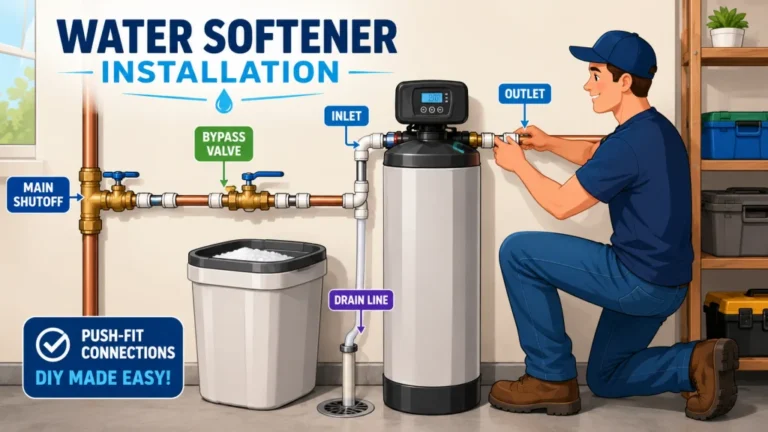
The drain line is the first thing I check when a homeowner reports salty water from a softener. A clogged, kinked, or undersized drain hose reduces flow during the rinse steps, which means brine does not fully clear the resin tank before service resumes. It is the most common cause, and it is the most visible to diagnose.
Run a manual regeneration and watch the water coming out of the drain hose. During the slow rinse step, you should see a steady, visible stream going to the floor drain or standpipe. If the flow is barely a trickle, or if it pulses and starts and stops, the drain line is restricting flow. That is your answer.
Here is what to look for when you inspect the line:
- Kinks along the hose length, especially where it bends near the floor drain or makes a corner
- Debris or buildup at the outlet end, particularly at the standpipe entry
- Total run length: horizontal sections over 8 feet or total runs over 20 feet can restrict flow enough to leave brine behind, especially if the hose also has to climb any elevation
- Standpipe diameter under 1.5 inches, which may be too small to handle regen flow on many residential setups
- Hose end inserted into the standpipe instead of hanging above it: this creates a siphon condition that can pull brine back rather than expel it
That last point catches more people than it should. If the drain hose slipped slightly into the standpipe during salt bag delivery, the siphon effect during the drain step partially recirculates brine instead of expelling it. If you recently loaded salt bags and the salty taste appeared shortly after, check the hose position before anything else. The fix takes about 30 seconds.
Field Note: I have seen this siphon problem cause salty water complaints that persisted for weeks because nobody thought to check the drain hose position. The homeowner kept adding salt, running extra manual regens, adjusting settings, none of it helped. The hose end was two inches inside the standpipe. Pulling it out and zip-tying it above the drain opening fixed it immediately.

This 10-foot FDA-compliant clear PVC tubing measures 3 eighths inch inner diameter by half inch outer diameter with a 1 sixteenth inch wall thickness, and handles pressures from 19 to 55 PSI at temperatures up to 170 degrees Fahrenheit. Flexible and easy to cut to size, it is safe for potable water applications and works well for drainage lines, beverage dispensers, aquariums, and lab use, though it is not recommended for ice maker supply lines.
Check On AmazonIf you click this link and buy, we earn a commission at no additional cost to you.
Clean the Injector Before You Adjust Any Settings
The injector, sometimes called the venturi, is a small plastic nozzle inside the control head that creates suction to draw brine from the brine tank during regeneration. It has a tiny orifice and a mesh screen. If either gets partially clogged with sediment, iron deposits, or mineral scale, brine draw weakens. When the injector is restricted, the brine draw and slow-rinse phase can both behave poorly, leaving the system partly regenerated and harder to rinse clean. The result shows up as residual brine in the water.
Pro Tips: Before removing any part of the control head, put the softener in bypass mode and open a nearby cold tap briefly to relieve line pressure. Take a quick photo of the injector assembly before pulling anything out. The screen and nozzle seat in a specific orientation, and a photo saves a lot of guesswork on reassembly.
I have cleaned a lot of injectors over the years. The part is usually accessible with a standard screwdriver, no special tools needed. Remove the injector and its screen, soak both in white vinegar for 30 minutes, clear the small orifice with a toothpick, rinse thoroughly, and reinstall. The whole job takes about 20 minutes. If you do not have the control head manual, most manufacturers publish disassembly guides online and the injector location is usually identified by a small plug or cap on the front or side of the control head.
If you are on well water with any iron in the supply, expect the injector screen to clog faster than it would on city water. Annual cleaning makes sense as routine maintenance regardless of whether you have a salty taste problem. One thing worth knowing: if the screen is cracked, warped, or will not come clean after soaking, replace it rather than reinstall it. The screen is usually a small, inexpensive part specific to your control head model, and putting a compromised screen back in just delays the same problem. The same applies to a drain hose that is stiff, kinked permanently, or has buildup that does not clear. Replacing the hose to the correct diameter and a reasonable run length is cheaper than a service call and solves the flow restriction permanently. For a broader picture of what annual maintenance tasks look like across the whole system, the water softener installation and maintenance overview covers each item with the same practical approach.
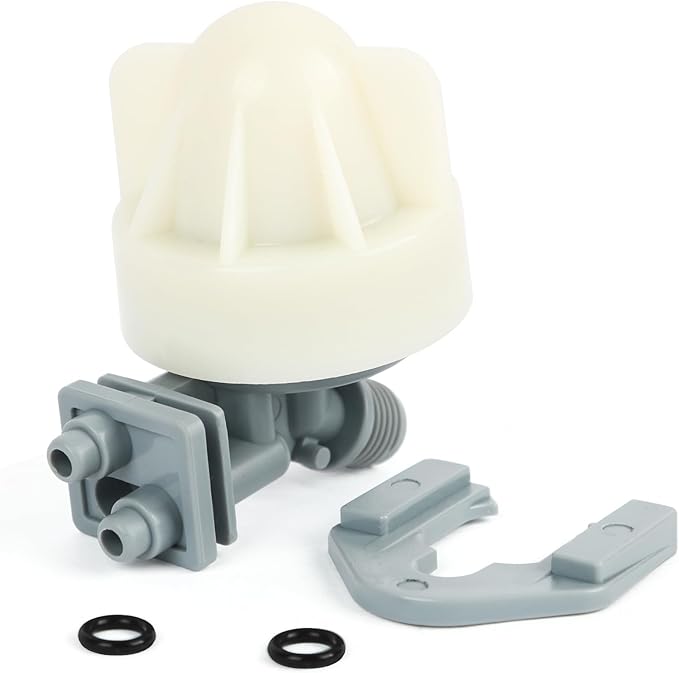
This direct replacement nozzle and venturi assembly is compatible with EcoWater, GE, Bosch, Whirlpool, Kenmore, North Star, Rheem, Morton, and several other major brands, replacing part numbers 7187065, 7214969, 7165704, 7238450, WS15X10027, and WS15X10046. Built from high-quality materials to withstand regular use, it is designed to optimize brine draw performance and keep your water softener regenerating efficiently for years. Installation is straightforward, with video guidance available by searching the part number on YouTube.
Check On AmazonIf you click this link and buy, we earn a commission at no additional cost to you.
Control Head Settings and Interrupted Regen Cycles
Timer-based control heads have a programmed rinse duration. The slow rinse step on a standard residential softener typically runs 30 to 60 minutes. If someone adjusted the programming and shortened that window, the system returns to service before brine is fully flushed. This is less common than a drain or injector issue, but if the drain flow looked normal and the injector came back clean, it is worth checking the rinse time setting in the control head’s programming menu. Extending it by 10 to 15 minutes and running a manual regen from start to finish will confirm whether the setting was the problem.
Power interruptions are a cause that does not get mentioned often enough when homeowners ask why does my softened water taste salty after nothing obviously changed. If the power went out mid-regen, the unit stopped with brine still sitting in the resin tank, then resumed service when power returned. The salty water shows up the next morning with no apparent explanation because the softener looks and sounds normal. If the taste appeared after a power outage or you know a circuit tripped recently, run a complete manual regeneration from the beginning before doing anything else. That single step resolves the problem in most power-interruption cases.
| Symptom pattern | Most likely cause | First step |
|---|---|---|
| Salty taste all day, every day | Drain line clog or restriction | Run manual regen, watch drain flow |
| Salty taste all day, drain flow looks fine | Injector clog | Remove and clean injector and screen |
| Taste appeared after a power outage | Interrupted regen cycle | Run a complete manual regeneration |
| Taste appeared after a settings change | Rinse time set too short | Check slow rinse duration in programming |
| Salty taste only in the first few gallons after regen | Normal post-regen flush condition | Run faucet 30 seconds, retest |
The table above covers the five most common patterns. In practice, a drain line issue is the right first assumption until you observe the drain flow and rule it out.
Temporary Post-Regen Saltiness vs. a Persistent Problem
Some softeners produce slightly elevated sodium in the first few gallons immediately after a regeneration cycle. This is a characteristic of how certain control head designs handle the transition back to service and it is not a malfunction. If you run your kitchen faucet for 30 to 60 seconds after a regen and the water tastes normal, the system is working correctly. A brief flush moves that small residual amount through, and the taste should be gone after that.
The question is whether the taste clears after a short flush or stays through a full glass, a full pot, the whole morning. Temporary first-gallon saltiness that resolves quickly is normal. Saltiness that persists for hours after regeneration, or that is present any time you draw water regardless of when the last regen ran, points to one of the mechanical causes covered above. A practical test: if your softener regenerates at 2 AM, run the kitchen tap for a full minute before tasting the water. Normal condition clears immediately. A real problem does not.
If the salty taste is one of several symptoms you are chasing at the same time, walking through the complete water softener troubleshooting process will help you sort out whether the issues are related or independent problems compounding each other.
What “Water Softener Adding Salt to Water” Actually Means
There is a concern I hear from new softener owners that is worth addressing directly: the worry that a water softener adding salt to water is inherently a problem. It is worth separating two things that sound similar but are not the same.
A working softener does add trace sodium through ion exchange. Calcium and magnesium ions pulled off the water are replaced with sodium ions from the resin, and some of that sodium carries through to the tap. At 20 GPG, the typical amount is around 150 to 200 milligrams per liter, which most people cannot detect as a taste. For context, a single slice of white bread contains roughly 150 milligrams of sodium. This trace amount matters if you are on a strict, physician-directed sodium-restricted diet, in which case a reverse osmosis unit on the drinking tap is the standard fix. But it is not a softener malfunction, and it does not produce salty-tasting water.
Actual salty taste, the kind you can detect in a glass, means sodium levels are far higher than normal softening produces. That level comes from brine residue left by an incomplete rinse cycle. The two are easy to distinguish: trace ion-exchange sodium is undetectable in a glass of water. Brine residue from a failed rinse cycle tastes like something is wrong, because something is.

This 5-stage reverse osmosis system filters up to 50 gallons per day, removing 99.99% of impurities including arsenic, lead, fluoride, chlorine, heavy metals, PFAS, and microplastics for ultra-pure drinking water straight from your kitchen tap. Large-capacity filters are rated for replacement every 6 to 24 months depending on incoming water quality, and colored tubing with quick-connect fittings makes installation and maintenance straightforward without a plumber. The complete package includes a Filter-Max-ES50 filter set, brushed nickel faucet, water storage tank, and full installation kit, backed by over 20 years of in-house design and testing experience from APEC.
Check On AmazonIf you click this link and buy, we earn a commission at no additional cost to you.
Final Thoughts: Most Salty Water Problems Have a $0 Fix
The vast majority of salty water complaints from softeners trace back to a drain line or injector problem, both of which you can reach with a screwdriver and a bucket. Work through the causes in order, find which step in the rinse cycle is failing, and the fix follows directly from that.
If you corrected a power interruption and ran a complete manual regeneration, give the system a day of normal use before retesting. Residual brine clears through regular water draw once the rinse cycle completes properly. One full regen is usually enough to know if the problem is resolved.
That said, there are situations where DIY stops making sense: if the drain flow is completely absent rather than just slow, if the control head is displaying an error code, if the water is still noticeably salty after a full manual regen and a clean injector, or if you are not comfortable opening the control head at all. Those situations call for a service technician rather than more trial and error. Most salty water problems are not that complicated, but some units have underlying valve wear or internal seal failures that go beyond what a cleaning can fix.

This advanced microprocessor-based TDS meter delivers highly accurate water quality readings and includes a built-in digital thermometer for simultaneous temperature measurement. A hold function saves your measurements for easy reading and recording, while an auto-off feature shuts the meter down after 10 minutes of inactivity to preserve battery life. The included carrying case with belt clip makes it convenient for both commercial and field use.
Check On AmazonIf you click this link and buy, we earn a commission at no additional cost to you.
FAQs
🧂 Why does my softened water taste salty after regeneration?
Brine from the regeneration cycle was not fully flushed before the softener returned to service. The most common cause is a clogged or kinked drain line that reduces rinse flow. Check drain flow during a manual regen and inspect the hose for kinks or obstructions. A power interruption mid-regen can also leave brine in the tank. Run a complete manual regeneration and retest.
💧 Is it safe to drink softened water that tastes salty?
The brine residue causing salty taste is a sodium chloride solution, not a chemical contaminant. It is not acutely harmful, but it does mean the softener is not functioning correctly and the water should not be used as your regular drinking supply until the problem is resolved. Run through the drain line and injector checks to identify and fix the cause.
🔌 Can a power outage cause my water softener to produce salty water?
Yes. If power went out during a regeneration cycle, the unit stopped mid-rinse and returned to service with brine still in the resin tank. Run a complete manual regeneration from start to finish. That alone usually clears the problem.
🔧 How do I clean the injector on my water softener?
The injector and its screen are typically accessible by removing a small cap or plug on the front or side of the control head with a standard screwdriver. Pull both pieces, soak in white vinegar for 30 minutes, clear the small orifice with a toothpick, rinse thoroughly, and reinstall. Check your control head manual or the manufacturer’s website for the exact location on your model.
📏 How long can a water softener drain line be?
Horizontal runs should stay under 8 feet. Total run length, including both horizontal and vertical sections, should not exceed 20 feet. Runs longer than this restrict drain flow enough to leave brine behind during the rinse step. If your drain is far from the softener, check whether a longer run might be contributing to your salty taste problem.
🚿 Why does the water taste fine after I run the faucet for a minute?
Some softeners produce a slightly elevated sodium level in the first few gallons immediately after a regen cycle. This is a normal characteristic of certain control head designs, not a malfunction. If the taste fully clears after a short flush, the system is working correctly. If salty taste persists through a full minute of flow, the cause is an incomplete rinse and you should work through the drain line and injector checks.