
The Honest Answer, Before Anything Else
Salt-free water conditioners work. They work for scale prevention. That is the complete, accurate answer, and it comes with an equally important second half: they do not remove hardness minerals from your water. If you are asking because your skin feels rough, your shampoo barely lathers, or you want your water test to show a lower GPG, a salt-free conditioner will not give you any of those results. The water that passes through a TAC (template-assisted crystallization) system still contains the same calcium and magnesium it had going in. It just comes out in a crystal form that is less likely to adhere to pipe walls and appliance heating elements.
I have seen this confusion play out on enough installs to know exactly where it starts. Salt-free systems are sold in the same market as traditional softeners, often with very similar language about improving your water. The technology is legitimate. The frustration comes from the gap between what buyers expect and what the system is designed to produce. Most sellers do not lead with what a salt-free conditioner cannot do, which means most buyers find out the hard way. That is what this article is for.
What Independent Testing Actually Confirms
The most credible third-party verification for salt-free TAC systems is DVGW W 512 certification. DVGW is the German technical and scientific association for gas and water. Their W 512 protocol puts TAC media through independent laboratory conditions to measure scale prevention performance, and systems that pass have third-party evidence for 99.6% scale prevention. That is not a manufacturer claim backed by in-house testing. It is an external laboratory result, and the distinction matters when you are evaluating a category where marketing language tends to be generous.
When you are comparing salt-free conditioners, DVGW W 512 is the one certification worth looking for. Not every product on the market carries it, and the ones that do not have not gone through independent performance testing. That does not automatically make them ineffective, but it does mean you are relying entirely on the manufacturer’s own claims rather than any external verification. From what I have seen, that is a meaningful gap when the product is something you cannot easily test yourself in the first weeks after installation.
Scale prevention as an outcome is real and documented at certified hardness ranges. If your primary concern is protecting your water heater, dishwasher, and plumbing from mineral buildup, a certified TAC system has legitimate evidence backing that claim. The problem is that scale prevention is only one of several things homeowners expect a water softener to deliver, and for the others, the evidence simply does not exist.

This salt-free, chemical-free descaler prevents scale buildup in pipes and plumbing without softening water or removing minerals, requiring no electricity, backwashing, or salt bags. It works on both city and well water and is best suited for incoming water with hardness under 15 grains per gallon, pH under 8.3, and less than 0.3 ppm of iron. Designed for households of 4 or more, it delivers a impressive lifespan of up to 6 years or 600,000 gallons and includes a shut-off valve, hose adapter, and nipple, with use of a pre-filter recommended. The system is backed by a 6-year warranty.
Check On AmazonIf you click this link and buy, we earn a commission at no additional cost to you.
What the Evidence Does Not Show
No independent study demonstrates that TAC technology improves skin softness, increases soap lather, or produces better hair texture after rinsing. Those outcomes come from ion exchange, where calcium and magnesium ions are physically replaced by sodium or potassium ions. Once those minerals are out of the water, soap chemistry changes, skin moisture retention changes, and hair behaves differently. A salt-free conditioner does not remove those minerals, so none of those downstream effects follow. There is no credible independent evidence linking TAC technology to any measurable skin or hair benefit.
Laundry results and dish spotting work the same way. The spotting and detergent performance problems that hard water causes come from mineral concentration in the water. Scale prevention changes what happens to surfaces inside pipes and appliances, not how the water itself behaves on fabric, glass, or skin. Buyers who install a salt-free system hoping to use less detergent or get cleaner dishes typically do not see the improvement they expected, because the mechanism they needed was not part of what they bought.
Field Note: One of the most consistent complaints I come across from homeowners who bought salt-free systems is that nothing seemed to change. Skin still dry. Shampoo still thin. Dishes still spotting. In most of those cases, the system was likely doing exactly what it was built to do. Scale prevention was never the issue they were actually trying to solve.
Why the Hardness Reading Does Not Change After Installation
TAC media works by using nucleation sites on the media surface to convert dissolved calcium and magnesium into stable microscopic crystals. Those crystals travel through your plumbing in suspension rather than precipitating out onto surfaces. Because the minerals are still physically present in the water, a standard hardness test strip or photometer detects them and reports the same GPG reading as before. The test is measuring mineral concentration. It cannot distinguish between dissolved minerals and crystallized minerals.
This catches a lot of homeowners off guard. Someone who tests at 14 GPG, installs a salt-free conditioner, tests again at 14 GPG, and concludes the system is not working has drawn a reasonable but incorrect conclusion. The performance of a salt-free system is not visible on a test strip in the days after installation. It becomes visible over months, at your showerhead, at your water heater element, at the internal surfaces of your dishwasher. That is the correct metric. Reduced scale accumulation over time is what you are buying, not a different number on a test strip.
The right way to evaluate a salt-free conditioner is to watch what happens to surfaces that used to scale. A working system should reduce new buildup on faucets, showerheads, and appliance interiors over the following months. It will not make soap feel different, and it will not produce a lower GPG reading. That delayed and indirect feedback is part of why expectations matter so much before the purchase decision. If you are judging the system by how the water feels on day one, you will almost always conclude it is not working, even when it is.

This kit includes 150 dip-and-read test strips for quickly measuring water hardness across virtually any source, including home faucets, well water, softeners, dishwashers, showers, and aquariums. Results are instant and easy to read against a color chart, making it simple to verify whether your water softener, reverse osmosis, or water conditioning system is performing as expected. A bonus eBook is included to help you record, track, and interpret your results over time.
Check On AmazonIf you click this link and buy, we earn a commission at no additional cost to you.
Where Salt-Free Systems Work, and Where They Fail
The conditions where a salt-free conditioner performs reliably are fairly specific. City water in the 3 to 15 GPG range, with scale prevention as the primary and only goal, is where TAC technology has its strongest documented track record. Within that band, certified systems have third-party evidence for keeping scale out of appliances and plumbing without regeneration cycles, drain connections, or ongoing salt cost. For someone in an area with salt discharge restrictions, or someone who genuinely wants a maintenance-free setup and has realistic expectations, this is a defensible option.
| Water condition | What to expect from a salt-free system |
|---|---|
| City water, 3 to 15 GPG, no iron | Scale prevention confirmed by independent testing within this range |
| City water, 15 to 25 GPG | Reduced effectiveness, scale prevention becomes less reliable as mineral load increases |
| Any water above 25 GPG | TAC media cannot process the mineral load, scale prevention fails |
| Well water with iron above 0.1 PPM | Iron fouls the TAC nucleation sites, system performance degrades over time |
| Any hardness level, expecting soft water feel | Ion exchange required, a salt-free conditioner cannot produce this outcome |
The well water situation deserves its own emphasis. Dissolved iron fouls TAC media at levels as low as 0.1 to 0.3 PPM, well below what most basic tests flag as a concern. Most well water has some iron. A homeowner considering a salt-free system for a well with 12 GPG hardness and 0.5 PPM iron is looking at a system that will lose effectiveness within the first year without upstream iron pre-treatment. This is the most common failure mode for salt-free systems on well water, and it is absent from nearly every product page.
- Above 25 GPG: Scale prevention becomes unreliable. TAC media has a finite processing capacity, and at high mineral loads the system falls behind. If your water tests above this threshold, a salt-free conditioner is undersized for the problem regardless of what the product page claims.
- Well water with any detectable iron: Iron deposits on the nucleation sites where crystallization occurs and progressively degrades performance. Most well water has measurable iron. Pre-treatment to below 0.1 PPM is required before a salt-free system can work reliably.
- Any expectation of soft water feel: Softer skin, easier lather, improved hair texture, better laundry results. None of these follow from scale prevention alone. These outcomes require ion exchange, where the minerals are actually removed from the water.
If you are weighing the ongoing cost of salt versus the upfront cost of a salt-free system and trying to determine whether the numbers favor one over the other, the break-even analysis comparing salt-free and salt-based total costs works through that math in detail.
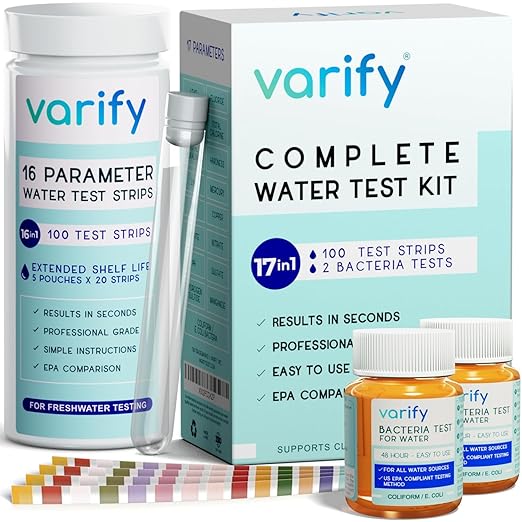
This comprehensive kit tests for 17 parameters including chlorine, fluoride, lead, iron, and bacteria, giving you a full picture of your water's safety in minutes. The 100 color-coded test strips come in 5 individually sealed pouches of 20 for extended freshness, while 2 included bacteria tests deliver results within 48 hours. Every purchase contributes a portion of proceeds to Water For Good, supporting clean water access in Central Africa.
Check On AmazonIf you click this link and buy, we earn a commission at no additional cost to you.
What Homeowners Actually Experience
Community feedback on salt-free systems follows a predictable pattern. Homeowners with city water in the moderate hardness range, who install a certified system with realistic expectations, tend to report reduced scale on fixtures and appliances over time. The reviews that go negative, and there are plenty of them, almost always come from one of two situations: water hardness above the range where TAC performs reliably, or buyers who expected the full soft-water experience and got none of it.
One pattern I have seen come up repeatedly involves homeowners who went through multiple salt-free systems, including dealer-installed combinations that ran well over two thousand dollars, without seeing any meaningful improvement in how the water felt. In several cases, the water tested at 16 to 20 GPG. At that level, scale prevention was already marginal, and the expectation of soft-water results was never going to be met by any salt-free system regardless of price. The issue was not that the technology failed. The issue was that it was matched to the wrong problem from the start.
Another pattern that comes up often is testing too soon. If the GPG reading is the only metric a homeowner checks, a working salt-free conditioner looks like a failure. The real outcome is reduced scale over time, and it takes months to observe. Patience and the right expectations going in are part of what makes this technology work for the people it actually works for.
For a direct comparison of what salt-based and salt-free systems each deliver across performance, maintenance, and cost, the side-by-side breakdown of salt-free versus salt-based softeners is worth reading before committing to either direction.
Before You Buy: Five Things to Confirm First
Salt-free conditioners are a legitimate choice for a specific subset of homeowners. The problem is that the product is often marketed to a much broader audience than it actually serves well. Before spending anything, confirm the following points about your situation. If any of them do not apply, you are likely looking at the wrong category of product.
- Your water source is city water, or well water confirmed iron-free below 0.1 PPM by a lab test. Basic test strips do not detect iron at the levels that foul TAC media.
- Your hardness is under 15 GPG. This is the range where certified TAC systems have the strongest independent evidence for consistent scale prevention. Above 25 GPG, scale prevention itself becomes unreliable.
- Scale protection on appliances and plumbing is your actual goal. Not softer skin, not better lather, not lower soap use. Those require ion exchange.
- You are not expecting a lower hardness reading on a test strip after installation. The number will not change. That is not a malfunction.
- You understand the feedback timeline. A salt-free system does not produce noticeable results in days or even weeks. The outcome is less scale buildup over months, which requires patience to observe.
If your situation checks all five of those boxes, a certified salt-free conditioner is worth evaluating seriously. If it does not, a traditional ion exchange softener is almost certainly the better fit for what you are actually trying to accomplish.

IAPMO certified to NSF/ANSI Standard 44, this system is sized for homes with up to 5 people and 4 bathrooms, using ion exchange to deliver soft, scale-free water from every tap with city or well water compatibility. The user-friendly LCD allows metered operation that uses up to 50% less salt and 28% less water compared to standard time-based softeners, helping lower long-term costs on appliances, soap, and cleaning products. The bundle includes a recommended pre-filter and installation kit, and is backed by a 5 to 10-year limited warranty with dedicated customer support.
Check On AmazonIf you click this link and buy, we earn a commission at no additional cost to you.
Final Thoughts: Get the Question Right Before You Buy
Whether salt-free water softeners work is the right question to start with, but the more useful version is whether they work for your specific water conditions and your specific goal. City water in the 7 to 15 GPG range, with scale protection as the only objective, is where the evidence is strongest and the value is clearest. Above 25 GPG, on well water with detectable iron, or with any expectation of softer skin and better lather, a salt-free conditioner will disappoint regardless of which product you choose or how much you spend on it.
Most of the frustration I have watched homeowners go through with these systems comes down to a mismatch between what they were led to expect and what the technology can actually deliver. Knowing that difference before you spend anything is the whole point of doing this research first. If you are still working through whether salt-free is the right category for your situation, the overview of salt-free water softener options by situation covers the different use cases and what each one calls for. If you have already decided on salt-free and want to know which systems are worth evaluating, the breakdown of the best salt-free conditioners on the market covers what specs and certifications to look for. And if you are still deciding between the two approaches and want the full picture first, how to choose the right water softener based on your water situation is where that decision starts.
FAQs
💧 Do salt-free water softeners actually work?
Yes, for scale prevention. Certified TAC systems have independent laboratory evidence confirming 99.6% scale prevention on pipes and appliances within their rated hardness range. They do not remove hardness minerals or produce the soft water feel associated with ion exchange softeners. Your GPG reading will not change after installation.
🔬 Will my water test show lower hardness after installing a salt-free conditioner?
No. A standard water hardness test will read the same before and after installation. TAC technology converts dissolved minerals into stable crystals that do not adhere to surfaces, but the minerals remain in the water. Any test measuring mineral concentration will detect them regardless of their crystal form.
🚿 Will a salt-free conditioner make my skin and hair feel softer?
No independent evidence supports this. The skin and hair improvement associated with soft water comes from ion exchange, where calcium and magnesium are physically removed from the water. Salt-free conditioners do not remove those minerals, so that downstream effect does not occur.
📋 What is DVGW W 512 certification and why does it matter?
DVGW W 512 is an independent laboratory test protocol from a German technical standards body for gas and water. It verifies that a TAC system achieves at least 99.6% scale prevention under controlled conditions. It is the only third-party certification that specifically tests salt-free conditioner performance. A system without it has not passed independent verification.
⚠️ Do salt-free conditioners work on well water?
Rarely without pre-treatment. Dissolved iron as low as 0.1 PPM fouls the TAC media nucleation sites and degrades performance over time. Most well water contains detectable iron. If a lab test confirms iron below 0.1 PPM and hardness is under 15 GPG, a salt-free system can work. Otherwise, a salt-based ion exchange softener is generally the better fit.
📊 At what hardness level does a salt-free system stop being effective?
Scale prevention becomes unreliable above 25 GPG. TAC media has a finite processing capacity, and at extreme hardness levels the mineral load exceeds what the system can handle. For water testing above 25 GPG, a traditional ion exchange softener is the appropriate choice.
⏳ How long does it take to see results from a salt-free conditioner?
Months, not days. A salt-free system does not change how water feels immediately after installation. The result is reduced scale accumulation on surfaces over time: less buildup on showerheads, faucets, and appliance interiors. Testing GPG the week after installation will show no change, which is expected and does not mean the system failed.