Water Softener Maintenance: The Annual Checklist and the 15-Minute Task That Prevents Most Service Calls

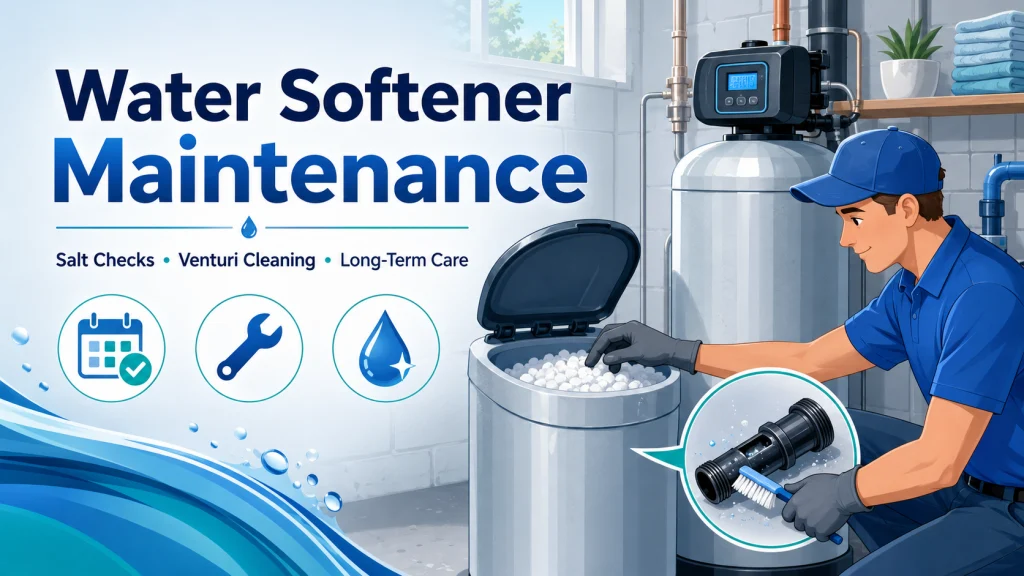
Water Softener Maintenance

The two maintenance tasks that prevent most problems are checking the salt every four to six weeks and cleaning the venturi valve once a year. Most homeowners do the first and skip the second entirely, which is why the venturi clog is the leading reason softeners stop using salt and the most common source of … Read more

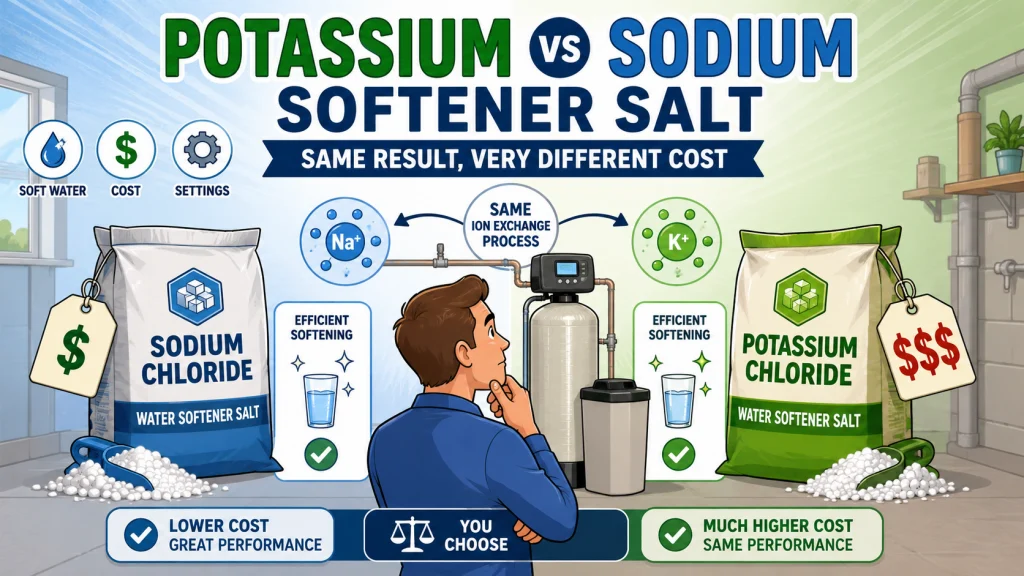
Potassium Chloride vs Sodium Chloride for Water Softeners: The Only Reason to Pay 5x More

Water Softener Salt Potassium Vs Sodium

Potassium chloride and sodium chloride both soften water through the same ion exchange process. The result in your pipes is identical. What changes is the ion added to your water, the price you pay for salt, and how efficiently each one regenerates the resin. For most households, the higher cost of potassium chloride buys nothing … Read more

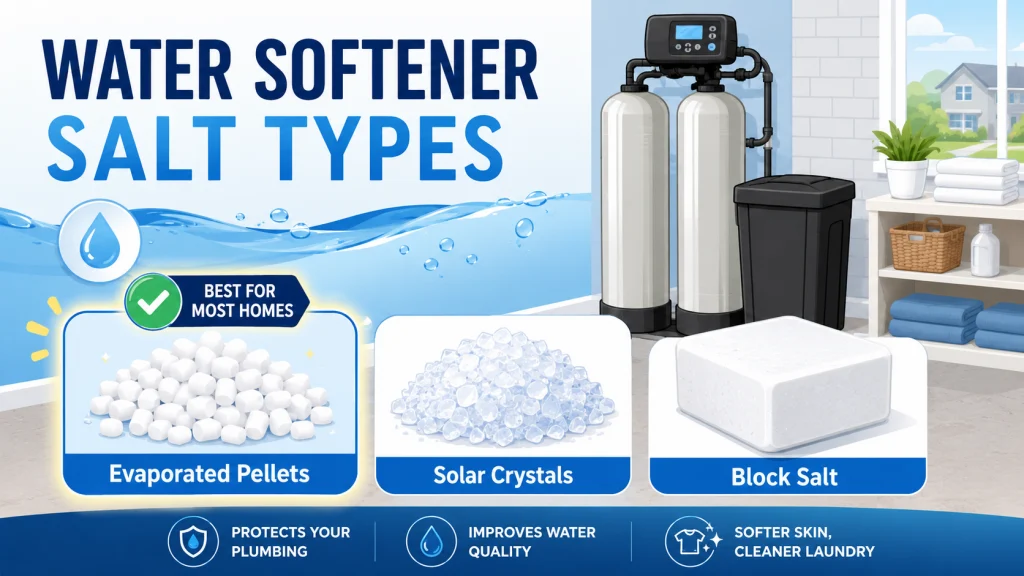
Water Softener Salt Types: Pellets vs. Crystals vs. Blocks and Which One You Actually Want

Water Softener Salt Types

The main forms of water softener salt sold at hardware stores are pellets, solar crystals, rock salt, and blocks. For a standard two-tank residential softener, evaporated pellets are the right choice in almost every situation. Crystals work but are more prone to mushing and bridging, especially in warm or humid conditions. Rock salt leaves more … Read more

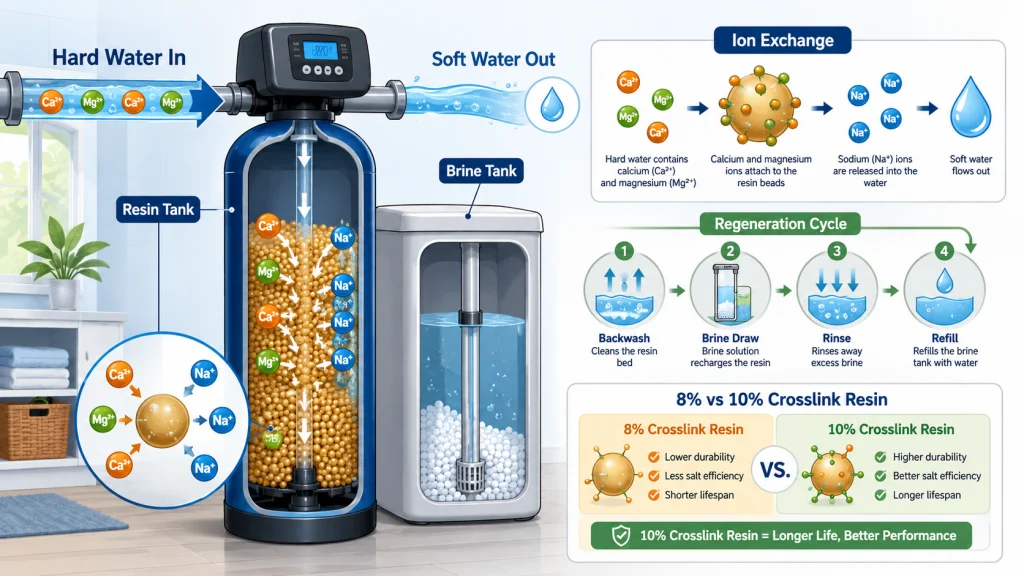
How a Water Softener Works: Ion Exchange Without the Chemistry Degree, Plus the Resin Spec Nobody at Home Depot Knows

How Does A Water Softener Work

A water softener works on one principle: calcium and magnesium ions prefer bonding to a charged resin bead over staying dissolved in your water. Salt breaks that bond during regeneration and resets the beads for the next round. That mechanism is not complicated. What nobody explains at the box store is the resin specification, specifically … Read more