What Changes, and What Does Not
Soft water is better for your pipes, your appliances, and your soap. Hard water tastes better to many people and contains the calcium and magnesium your softened water no longer has. Both of those statements are true. Neither one is the thing most first-time softener users end up asking about.
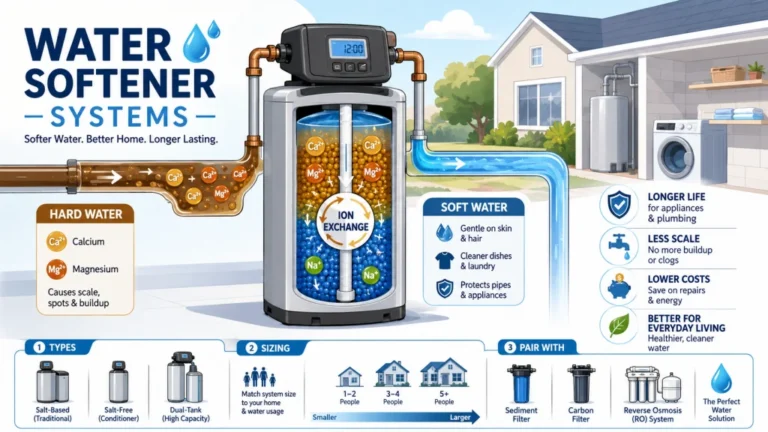
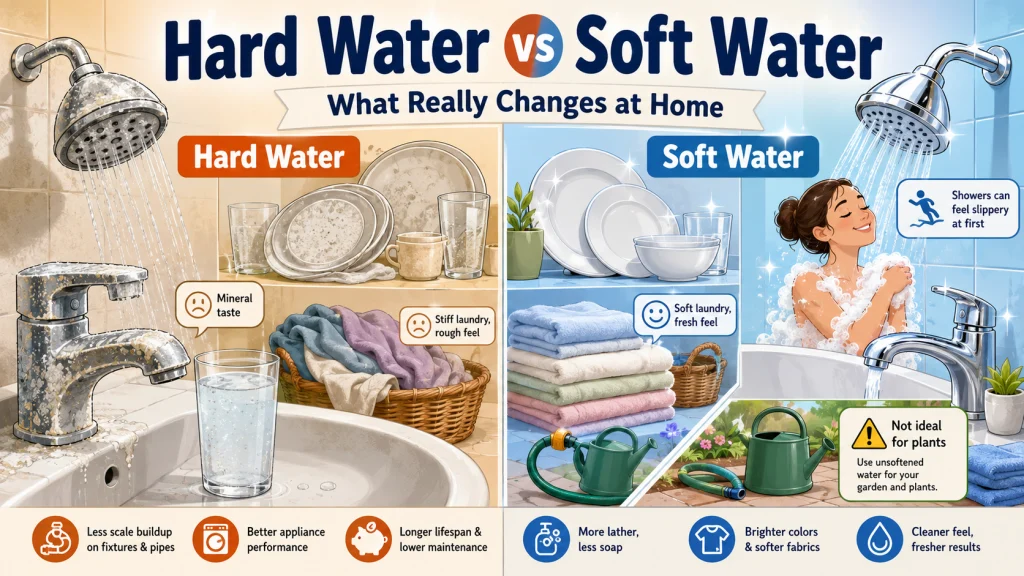
Start with the tangible changes, because they are real and they show up fast. When softened water runs through a home, scale stops accumulating on every surface that sees water regularly. The calcium carbonate crust around faucets, the mineral film on shower doors, the showerhead nozzles slowly losing pressure from buildup: all of that slows and eventually stops. Soap lathers noticeably better because calcium and magnesium react with soap to form scum rather than lather, which is why a bar disappears faster than it should and why there is always a gray film on the shower walls. Dishes rinse clean from the dishwasher. Laundry that felt stiff and rough starts feeling the way it is supposed to feel.
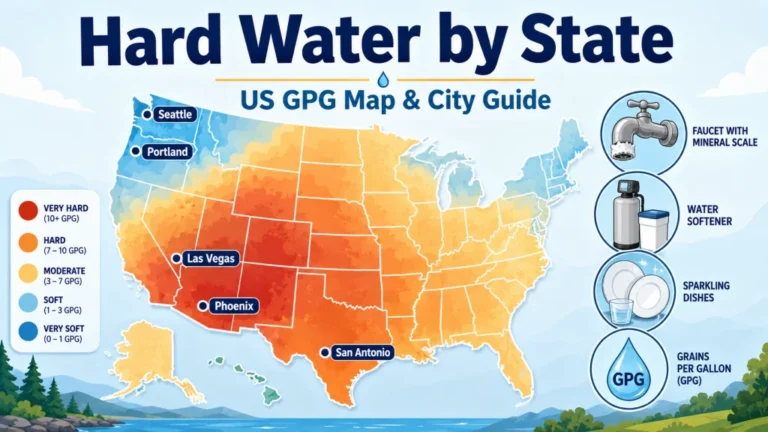
How dramatic the change feels depends on where you started. At 8 to 10 GPG the improvement is noticeable. At 18 to 20 GPG, common across Arizona, Nevada, and Central Texas, the change is hard to miss. The appliance efficiency picture matters over time too. Research by the Battelle Memorial Institute found that water heaters operating at high hardness levels lost measurable efficiency as scale built on heating elements. A softener running correctly removes the source before that buildup begins. A household at 15 GPG will feel most of these changes within the first week. Someone coming from 5 GPG will notice them more gradually.
- Scale stops forming on fixtures, faucets, and showerheads
- Soap and shampoo lather noticeably better, less product needed
- Dishes rinse clean from the dishwasher
- Laundry softens as mineral deposits stop building up in fabric fibers
- Water heater and dishwasher efficiency holds up longer without scale on heating elements
| Category | Hard Water | Soft Water |
|---|---|---|
| Scale on fixtures and appliances | Builds continuously | Stops forming |
| Soap lather | Poor, minerals react with soap | Noticeably better, less product needed |
| Dishes from dishwasher | Mineral film common | Cleaner rinse |
| Laundry | Stiff, mineral deposits in fibers | Softer |
| Showerhead pressure | Gradual loss from scale buildup | Maintained |
| Soap and detergent use | Higher, minerals reduce lather efficiency | Noticeably less needed once minerals are removed |
| Adjustment period | None | 2 to 4 weeks, shower feel and detergent amounts both change |
| Taste | Fuller, mineral character | Flatter, less mineral |
| Garden irrigation | Fine for plants | Not recommended, sodium accumulates |
| Drinking safety | Safe | Safe |
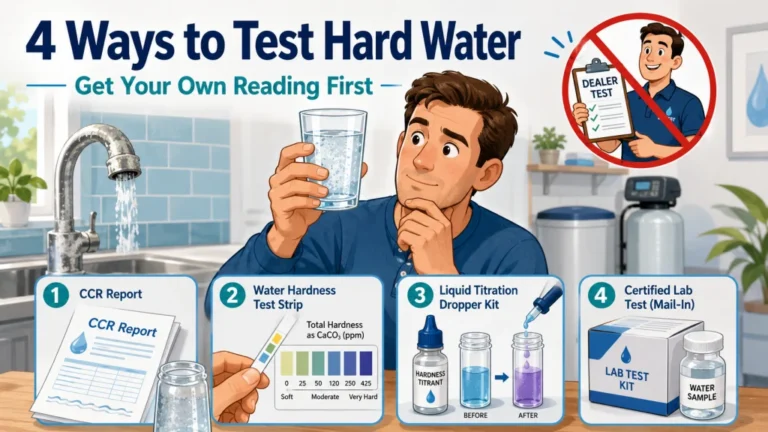
One thing that does not change: your water hardness test result still matters for understanding what you were dealing with. If you have not tested, or you have an older softener and are wondering whether it is still performing, a fresh test tells you quickly. For a broader look at hard water, what causes it, and how the GPG scale maps to real-world problems, the full hard water overview covers the whole picture before you start comparing systems.

This kit lets you test drinking water, pool water, or any water source in seconds using a simple dip-and-read method with an oversized color chart ranging from red to green, covering 0 to 25 GPG and 0 to 425 PPM. All 100 strips are protected by FreshSeal technology across a ready-to-use bottle and two sealed pouches for long-term accuracy. Each purchase also funds a full year of clean water for someone in the Central African Republic.
Check On AmazonIf you click this link and buy, we earn a commission at no additional cost to you.
The Slimy Shower Feeling Nobody Explains Beforehand
If I had to pick one thing to tell every homeowner before a new softener goes in, it is this. Within the first week, many first-time users call back to report that the shower feels slippery or slimy. The soap does not seem to rinse off. They assume something went wrong with the installation or the settings.
Nothing went wrong. The USGS Water Science Q&A addresses this directly: the slippery feeling when using soap with soft water occurs because soap binds to fats in the surface layers of skin. That sensation people are identifying as slimy is their skin retaining its natural oils. Hard water strips those oils continuously along with the mineral residue it leaves behind. Soft water does not. What feels unfamiliar is what clean, hydrated skin actually feels like. Most people stop noticing within two to four weeks once they understand what they are experiencing.
The same dynamic plays out with shampoo. Hard water leaves a mineral film on hair that many people have normalized as just how their hair feels. After switching to soft water, hair feels different, sometimes slipperier at first, because that coating is no longer there. It is an adjustment period, not a problem. People also find they need considerably less shampoo, soap, and detergent after making the switch. With soft water, soap actually lathers and rinses the way it was designed to.
Field Note: The slimy shower complaint is the most common call I get in the first month after installation. In almost every case, once I explain what the sensation actually is, the concern disappears. In my experience it has almost never been an installation problem. Almost always it is the same explanation: the customer has never felt their own skin without a hard water mineral coating, because the water had been stripping and re-coating it for years.
Outdoor Hose Bibs and the Garden: A Plumbing Detail Worth Getting Right
This is the one I bring up at every installation, because it is genuinely easy to overlook and the consequences show up slowly rather than immediately. Softened water should not be used for garden irrigation on a regular basis.
The ion exchange process replaces calcium and magnesium with sodium. For bathing and most household uses, the sodium concentration the process adds is low enough to be a non-issue. Plants and soil respond differently. Sodium accumulates in soil over time, gradually affecting soil structure and, at higher concentrations, inhibiting its ability to absorb water. The effect is not immediate, but it compounds season over season. An established vegetable garden or lawn running consistently on softened water will show it.
The fix is simple at installation and awkward to add later: outdoor hose bibs need to be plumbed upstream of the softener, on the untreated water supply. That way the garden gets hard water as it always did, and the softener handles indoor plumbing. Most installers include this as a matter of course. Not all of them do. If outdoor watering was not part of the conversation during your installation, it is worth confirming where your hose bibs sit before the first growing season.
One exception worth noting: if the system is running on potassium chloride instead of sodium chloride for regeneration, this concern drops significantly. Potassium is a plant nutrient. But standard sodium-based systems are what most residential installs use, and those should stay away from the garden.

These 99% sodium-free pellets offer a healthier alternative to traditional salt for anyone monitoring sodium intake while still enjoying the benefits of softened water. The bag features a sturdy plastic handle for comfortable carrying and an easy-tear opening for hassle-free pouring.
Check On AmazonIf you click this link and buy, we earn a commission at no additional cost to you.
Taste, Drinking Water, and What Changes in the Glass
Taste preference is personal, but the difference between hard and soft water in a glass is real and consistent. Hard water has a fuller, slightly mineral flavor from the dissolved calcium and magnesium. Much of the bottled water people describe as refreshing or clean-tasting falls in the moderately hard range. Soft water tastes flatter by comparison. The minerals that created the flavor profile are gone. Neither is better from a health standpoint. It is a genuine preference difference.
Some households address this by keeping the kitchen tap upstream of the softener, similar to the hose bib logic. The softener handles the water heater, dishwasher, bathrooms, and laundry while the kitchen sink draws from untreated water. If taste is a concern, this is worth discussing with whoever does the installation before any work starts. Adding a bypass at the kitchen after the fact is possible but adds cost and requires replumbing.
On the safety question, both are fine to drink. The sodium that ion exchange adds to softened water is minimal, around 8 mg per 8-ounce glass at 10 GPG, which is a fraction of what a single slice of bread contains. If you are managing a medically supervised low-sodium diet, it is worth a conversation with your doctor. For everyone else it is not a meaningful amount. The full evidence on hard water, mineral content, and health outcomes is covered in the article on whether hard water is safe to drink, including what the research does and does not say about long-term mineral intake from tap water.
What a Softener Will Not Fix Overnight
A water softener stops new scale from forming. It does not remove the scale that is already there. This distinction matters in the first few weeks after installation, when people sometimes expect an immediate transformation and do not see one.
A faucet aerator that has been caking up for years, a showerhead with restricted flow, and white buildup inside the dishwasher door seal are all pre-existing deposits. They will not disappear on their own once soft water starts running through. They need to be cleaned manually, or in some cases replaced. What the softener does is stop the cycle from continuing. No new scale forms. The existing scale stops growing. Over time, mild deposits may dissolve slowly as softer water passes over them, but that process is gradual and unreliable. For anything significant, a descaling treatment or vinegar soak is a faster fix.
The other adjustment that catches people off guard is detergent and soap amounts. Most households spend years compensating for hard water by using more product than the label recommends. Soft water lathers much more easily, so the old amounts produce far more suds than expected. Running a full dishwasher load with the usual detergent pod can leave dishes with a soapy film for the first few cycles. Laundry detergent may need to come down 30 to 50 percent before the results look right. It takes a few weeks of adjustment, but once dialed in the reduction in product use is one of the more satisfying changes.

This USA-made descaling solution dissolves stubborn calcium and mineral buildup to restore water flow and pressure without complicated tools or disassembly. Simply soak your shower head using 1 to 2 ounces of solution per treatment, giving you up to eight uses per bottle for long-lasting value. Regular use helps extend the lifespan of your shower head and is especially effective for homes dealing with hard water buildup.
Check On AmazonIf you click this link and buy, we earn a commission at no additional cost to you.
Final Thoughts: It Is a Practical Decision, Not a Binary One
The difference between hard water and soft water is not about which is healthier. Both are safe. The meaningful differences are practical: what softened water does to your appliances, your plumbing, and your soap consumption, along with the adjustments that catch most first-time users off guard.
A few questions worth settling before making any buying decision. Is the primary goal appliance and plumbing protection? Soft water is the clear answer above 10 GPG. Is taste the main concern? A kitchen bypass may matter as much as the system itself. Is there a garden or lawn? The hose bibs need to be upstream of the softener. And what is the actual GPG level? A home at 18 GPG is a fundamentally different buying situation from one at 5 GPG, and the system type, size, and payback timeline all follow from that number.
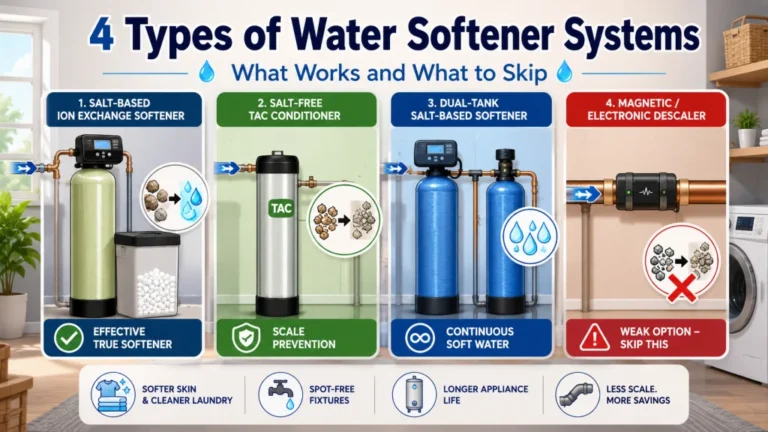
If you are still figuring out where your home falls, hardness level is the first thing to pin down. The complete water softener guide walks through the full process from identifying your hardness through choosing the right system type, sizing it correctly, and understanding what maintenance looks like over time. It is the place to start if you are comparing options and want the full picture before spending anything.
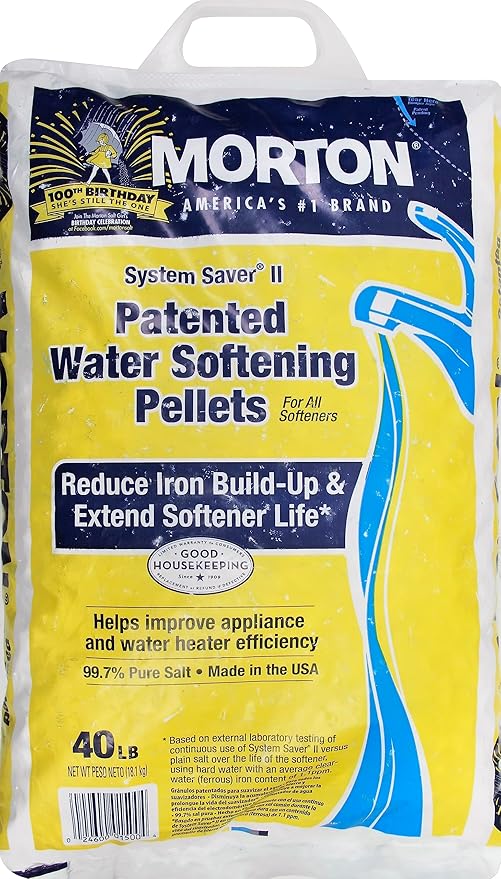
This 40-pound bag of USA-made System Saver pellets is designed to improve the taste of your water while helping extend the life of your appliances and water softener. Simple to use, just add the pellets directly to your softener's brine tank as needed.
Check On AmazonIf you click this link and buy, we earn a commission at no additional cost to you.
FAQs
🚿 Why does soft water feel slimy in the shower?
That slippery feeling is your skin retaining its natural oils. Hard water strips those oils along with the mineral residue it leaves behind. Soft water does not. The USGS confirms this is hydrated skin, not soap that failed to rinse. Most people stop noticing within two to four weeks once they understand what they are actually feeling.
🌱 Can I water my garden with softened water?
Not on a regular basis. Sodium from the ion exchange process accumulates in soil over time and can affect soil structure and water absorption. Outdoor hose bibs should be plumbed upstream of the softener on the untreated supply. This is easiest to plan for at installation rather than retrofitting it later.
💧 Does soft water taste different from hard water?
Yes, and noticeably so. Hard water has a fuller, mineral flavor from dissolved calcium and magnesium. Soft water tastes flatter because those minerals are gone. Many people genuinely prefer hard water for drinking. Some households keep the kitchen tap on the untreated supply for this reason.
🧴 Do you use less soap with soft water?
Yes, considerably less. Calcium and magnesium in hard water react with soap to form scum instead of lather, which is why soap seems to disappear and a residue remains. Soft water eliminates that reaction. Most households find they need significantly less shampoo, dish soap, and laundry detergent after the switch, though it takes a few weeks to dial down the amounts.
🥛 Is softened water safe to drink?
Yes. Ion exchange adds a small amount of sodium, roughly 8 mg per 8-ounce glass at 10 GPG. For most people that is not significant. If you are on a medically supervised low-sodium diet, discuss it with your doctor. Hard water is also safe to drink. The EPA has no maximum contaminant level for hardness.
🪥 What are the main benefits of soft water for hair and skin?
Soft water stops the mineral coating that builds up on hair shafts and contributes to dryness and roughness. Skin retains its natural oils rather than having them stripped by mineral residue after showering. The improvement is real and consistent, though it requires a short adjustment period while your hair and skin normalize to the change.