What the EPA and WHO Actually Say
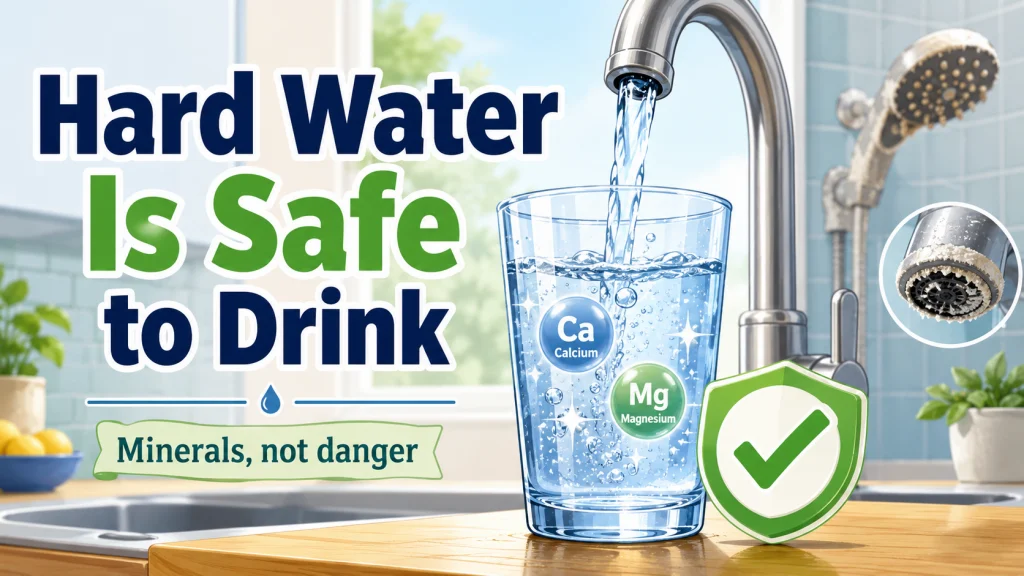
The EPA does not regulate water hardness as a health risk. Hardness falls under secondary drinking water standards, which cover aesthetic qualities like taste, odor, and appearance. There is no maximum contaminant level for calcium or magnesium. The Water Quality Association is direct about it: hardness is a property of water that is not a health concern, it is a nuisance. That has been the practical regulatory position for decades.
The WHO position is worth understanding because it runs in the opposite direction from the fear framing. Rather than warning against hard water, the WHO’s drinking water guidelines recommend minimum levels of calcium and magnesium because of their documented association with cardiovascular health. They set floors, not ceilings. Several regions with naturally soft water have been studied specifically because of concerns about insufficient mineral intake, not because hard water posed any risk. If the evidence were pointing toward hard water as a health hazard, that shift would show up in the guidelines.
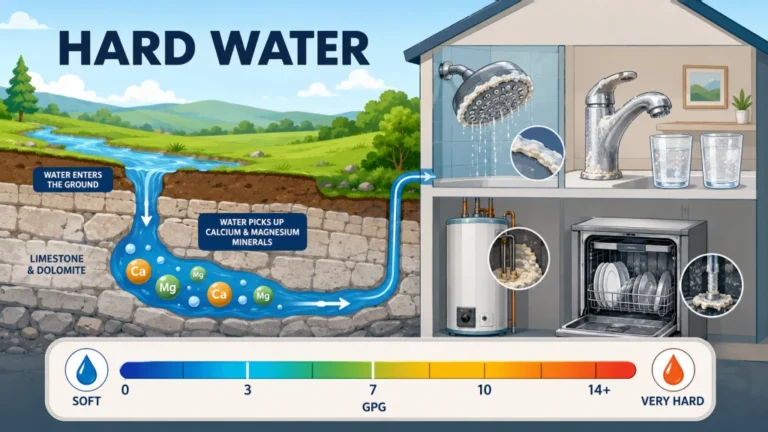
I raise all of this because the gap between what the regulatory record says and what homeowners have been told is genuinely wide. Over the years I have walked into homes where people were buying bottled water out of fear for their tap, based entirely on a sales demonstration a week earlier. Their water was testing at 12 GPG. That is hard water by any standard, and it is not dangerous. Understanding what hard water is and how the GPG scale actually works helps separate the measurement from the marketing built around it.
The Kidney Stone Claim
This one comes up constantly. A homeowner reads something online, usually from a water treatment company’s blog, or hears it during a demonstration, and the idea that hard water causes kidney stones takes hold. It is one of those claims that sounds plausible on the surface and falls apart quickly when you look at the mechanism behind it.
Most kidney stones are calcium oxalate. Calcium consumed in drinking water binds to oxalate in the gut before it reaches the kidneys, which reduces the amount of oxalate available for stone formation. Multiple urology sources confirm that dietary calcium from water is, if anything, modestly protective against this type of stone. The concern about calcium intake and kidney stones relates to supplemental calcium in pill form, taken outside of meals, which behaves differently in the digestive tract than dissolved mineral calcium in water. These are two distinct situations, and conflating them is how a legitimate observation about supplements gets turned into a scare tactic about your tap.
Field Note: I have had this exact conversation at installs more times than I can count. A homeowner brings it up, usually referencing something they read, and there is genuine anxiety behind it. My answer is always the same: if kidney stones are a medical concern for you or someone in your household, get that answer from a urologist, not from anyone selling water equipment. Including me. The health question and the treatment decision are separate conversations and should stay that way.
Hard water is not a recognized risk factor for kidney stones in urology literature. If a sales rep made that claim during a demonstration, it is worth noting. It tells you something about how they approach everything else in the pitch.
The One Group That Has a Genuine Reason to Pay Attention
There is one situation where the chemistry of softened water deserves a real look: people on strict, medically supervised sodium-restricted diets because of heart failure or severe hypertension. The ion exchange process that removes calcium and magnesium replaces those ions with sodium. How much sodium ends up in the treated water depends directly on how hard the original supply is.
| Original hardness (GPG) | Approximate sodium added to softened water (mg/L) |
|---|---|
| 5 GPG | ~20 mg/L |
| 10 GPG | ~45 mg/L |
| 15 GPG | ~70 mg/L |
| 20 GPG | ~95 mg/L |
For most households, these numbers are not meaningful. The FDA defines low-sodium food as under 140 mg per serving. An 8-ounce glass of softened water from a 10 GPG source adds roughly 11 mg of sodium, which is a fraction of what comes from a single slice of bread. If you are not managing a medically prescribed sodium limit, this is not a practical concern in daily life.
For someone on a strict 1,500 mg daily sodium ceiling because of heart failure, every consistent source matters and is worth accounting for. The fix is not to forgo softening the whole house. It is to install a bypass valve on the kitchen drinking tap, which keeps that single outlet on the untreated supply while the rest of the plumbing runs through the softener. This is a standard installation option and is easiest to plan for during the original install rather than retrofitting later.
I have seen this go wrong in the other direction too. A homeowner on a sodium restriction heard that softened water adds sodium, decided against the system entirely, and spent the next four years watching scale build on every fixture at 17 GPG. The bypass valve exists precisely so one concern does not require forfeiting everything else. If this applies to your household, mention it before installation so the bypass can be included from the beginning.

These 99% sodium-free pellets offer a healthier alternative to traditional salt for anyone monitoring sodium intake while still enjoying the benefits of softened water. The bag features a sturdy plastic handle for comfortable carrying and an easy-tear opening for hassle-free pouring.
Check On AmazonIf you click this link and buy, we earn a commission at no additional cost to you.
Where the Fear About Hard Water Safety Actually Comes From
The anxiety most homeowners carry into this topic did not come from a public health agency. It came from a sales demonstration. The fear framing around hard water drinking safety is a documented pattern with a consistent structure, not an occasional bad actor going off script.
The AnandTech forum has one of the more detailed first-person accounts I have come across. A homeowner describes a sales rep opening the pitch with a claim that chemicals in the tap water cause cancer. The entire presentation was built around making the water feel dangerous before a single feature of the product was mentioned. Make the water frightening first, then offer the solution. That is the structure, and it is used deliberately because it works.
The same pattern shows up at the institutional level. The town of Selbyville, Delaware issued an official municipal notice warning residents about companies mailing fake water test kits and following up door-to-door with alarming results. CBC News in Ottawa investigated a case where a 74-year-old was pressured into an $8,000 system based on a demonstration staged to look like a contamination test. These are not isolated incidents. They are the same approach running in different cities over many years.
None of this means your water has no issue worth addressing. Hard water at 15 GPG causes real, measurable damage to water heaters, dishwashers, and pipe connections over time. That is a legitimate and honest reason to look at treatment. The case for a softener stands on appliance protection and household quality of life, and it does not need manufactured health anxiety to hold up. When a pitch opens with health hazards, it usually means the straightforward case is not being made.
- The EPA classifies hardness under secondary drinking water standards, covering aesthetics, not health. It sits in the same regulatory category as taste and odor.
- The WHO recommends minimum calcium and magnesium levels in drinking water partly because of cardiovascular health associations. Their position sets a floor, not a ceiling.
- Hard water is not a recognized risk factor for kidney stones. Dietary calcium from water may modestly reduce oxalate available for stone formation in the gut.
- Softened water adds sodium in amounts that are not relevant for most people. For those on medically supervised sodium restrictions, a bypass valve on the kitchen tap separates the concern from the rest of the system.
- Fear-based claims about hard water drinking safety are documented by government notices, news investigations, and direct homeowner accounts. The public health record does not support the pitch.
The complete water softener guide covers the full picture from identifying your water hardness through understanding what treatment actually does, for anyone working through the whole decision rather than one question at a time.

This kit lets you test drinking water, pool water, or any water source in seconds using a simple dip-and-read method with an oversized color chart ranging from red to green, covering 0 to 25 GPG and 0 to 425 PPM. All 100 strips are protected by FreshSeal technology across a ready-to-use bottle and two sealed pouches for long-term accuracy. Each purchase also funds a full year of clean water for someone in the Central African Republic.
Check On AmazonIf you click this link and buy, we earn a commission at no additional cost to you.
Hard Water Safety Is Not the Same as Water Contamination
One thing worth being clear about: confirming that hard water is safe to drink is not the same as confirming your water is free of contaminants. Hardness testing measures calcium and magnesium. It does not test for lead, bacteria, nitrates, PFAS, arsenic, iron, sulfur, or anything else that can be present in a water supply. A 20 GPG reading tells you something is scaling your fixtures. It does not tell you anything about what else might be in the water.
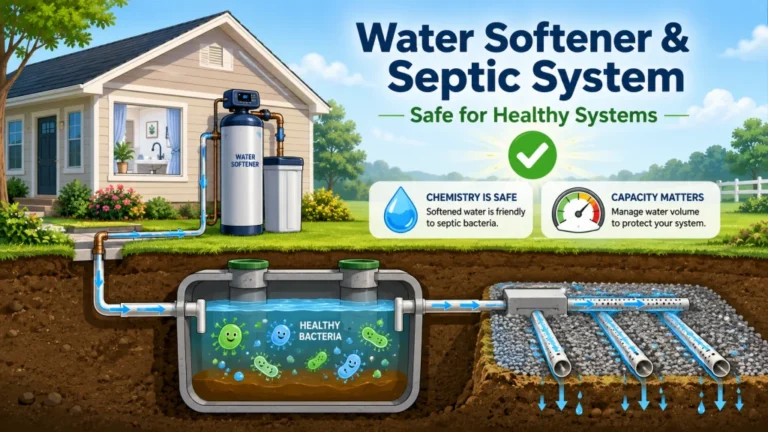
This matters especially for private well users. Municipal water systems are tested and reported regularly. Private wells are not covered by those reports, and the issues that show up on wells, including bacterial contamination, elevated nitrates, or heavy metals from local geology, require their own testing and their own treatment. A water softener handles hardness. It is not a filtration system and was never designed to prove water is safe to drink in the broader sense.
If your concern is about contamination rather than hardness, that is a separate water test and a separate conversation. A state-certified lab test, which covers a full panel of contaminants rather than just hardness, is the right starting point for that question. The answer to “is hard water safe” and the answer to “is my water safe” are not the same answer.

IAPMO certified to NSF/ANSI Standard 44, this system is sized for homes with up to 5 people and 4 bathrooms, using ion exchange to deliver soft, scale-free water from every tap with city or well water compatibility. The user-friendly LCD allows metered operation that uses up to 50% less salt and 28% less water compared to standard time-based softeners, helping lower long-term costs on appliances, soap, and cleaning products. The bundle includes a recommended pre-filter and installation kit, and is backed by a 5 to 10-year limited warranty with dedicated customer support.
Check On AmazonIf you click this link and buy, we earn a commission at no additional cost to you.
Final Thoughts: Keep the Health Question Separate From the Treatment Decision
Hard water is safe to drink. You can confirm that in under five minutes with the EPA’s secondary standards list or the WHO’s drinking water quality guidelines. Neither document treats water hardness as a health hazard, and neither has shifted position in recent years based on new evidence pointing that direction. The sales rep’s dramatic test result does not carry more authority than either of those sources.
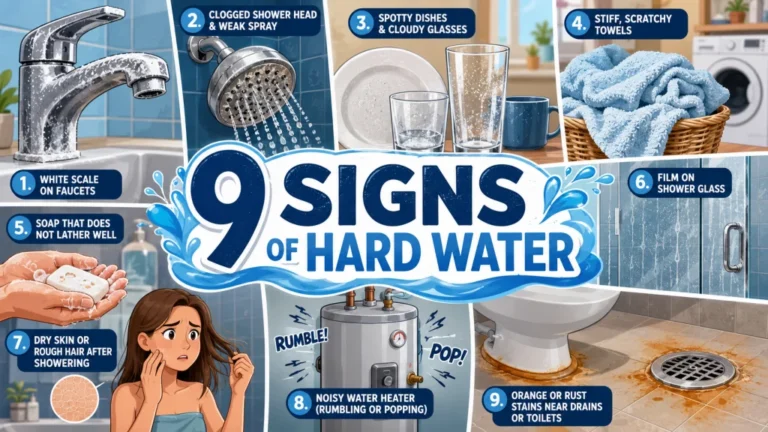
Whether to treat hard water is a different question entirely, and it deserves to be answered on its own honest terms. If your water is above 10 GPG and you are watching scale accumulate on fixtures, a water heater losing efficiency ahead of schedule, or laundry coming out stiff and scratchy, those are real reasons to look at a softener. You do not need to believe your tap water is making you sick to make a reasonable decision about protecting your plumbing and appliances.
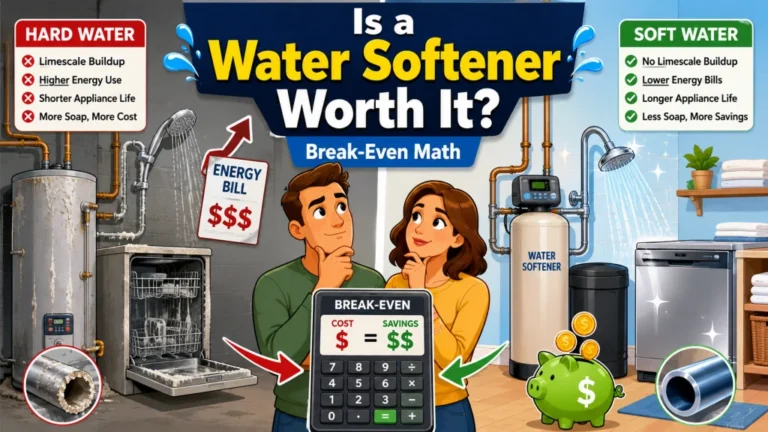
For the practical side of what actually changes after softening, including the one adjustment that catches almost every first-time softener user off guard, the day-to-day differences between hard and soft water covers it in detail. If you are at the stage of weighing whether the investment makes financial sense, including the honest cases where the answer is no, the break-even math on water softener value has the numbers. The broader context on hard water as a problem, from what GPG means to what your state typically shows, is in the hard water overview.

This OEM replacement bypass kit includes the bypass valve, O-rings, 4 clips, and 2 adapters with O-rings, and is compatible with a wide range of brands including Kenmore, GE, Whirlpool, Morton, NorthStar, EcoWater, and EcoPure. Designed for standard-sized water softeners only, this kit will not fit larger high-flow models, so check the listing image carefully before purchasing to confirm compatibility.
Check On AmazonIf you click this link and buy, we earn a commission at no additional cost to you.
FAQs
💧 Is it safe to drink hard water every day?
Yes. The EPA has no maximum contaminant level for water hardness, and the WHO recommends minimum calcium and magnesium levels in drinking water because of documented cardiovascular health associations. Daily consumption of hard water is not a recognized health risk by any major public health authority.
🪨 Does hard water cause kidney stones?
No. Calcium dissolved in drinking water binds to oxalate in the digestive tract before it reaches the kidneys, which may modestly reduce oxalate available for stone formation. The concern about calcium and stones relates to supplemental calcium pills taken outside of meals, not dissolved minerals in water. This claim appears frequently in water treatment sales pitches and is not supported by the evidence.
🧂 Does softened water have too much sodium to drink?
For most households, no. Softening 10 GPG water adds roughly 45 mg of sodium per liter, well within normal daily intake. People on strict medically supervised sodium-restricted diets should discuss this with their physician. A bypass valve on the kitchen drinking tap keeps that outlet on the unsoftened supply without affecting the rest of the house.
🏛️ What does the EPA actually say about drinking hard water?
The EPA classifies hardness under secondary drinking water standards, which cover aesthetic qualities like taste and appearance, not health risks. There is no maximum contaminant level for calcium or magnesium in the EPA’s regulatory framework. Hard water is not regulated as a health hazard.
❤️ Is hard water bad for your heart?
The evidence points the other direction. The WHO recommends minimum calcium and magnesium levels in drinking water partly because of associations with cardiovascular health. Regions with naturally soft water have drawn research attention over concerns about insufficient mineral intake, not any risk from hard water.
🚰 Should I bypass the softener for drinking water?
Most households drink softened water without issue. If someone in the household is on a strict medically prescribed sodium restriction, a bypass valve on the kitchen tap is the straightforward solution. It keeps the drinking outlet on the unsoftened supply while the rest of the plumbing benefits from softening. This is a standard installation option, not a major modification.