What Hard Water Is Actually Costing You
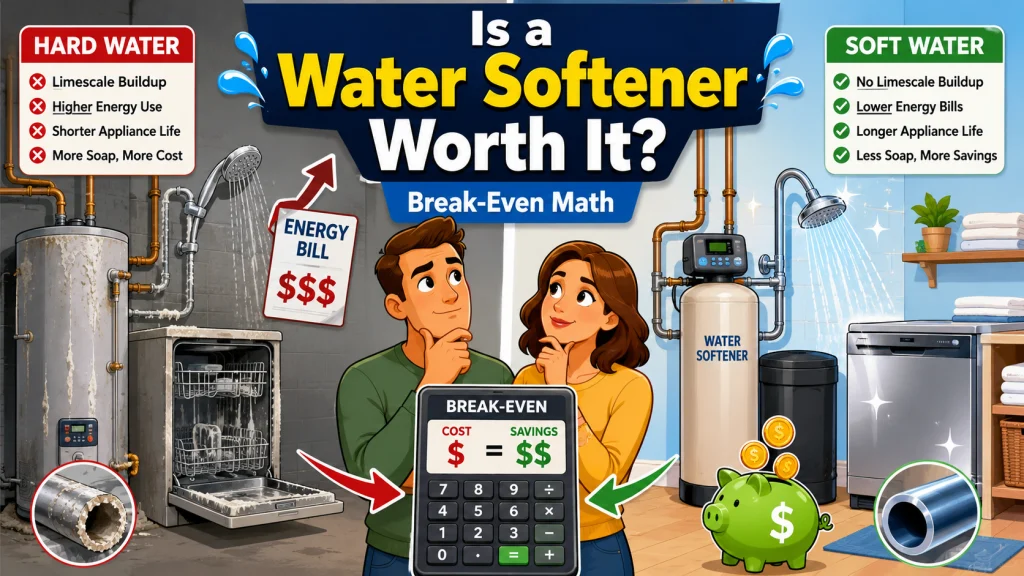
The real question is not whether soft water feels better. It does. The question is whether untreated scale is costing you more than the equipment, installation, and salt required to stop it. At the right hardness level, it is. At the wrong one, you are solving a problem that is mostly cosmetic with money that could stay in your pocket. That is what this is actually about, and here is the math to back it up.
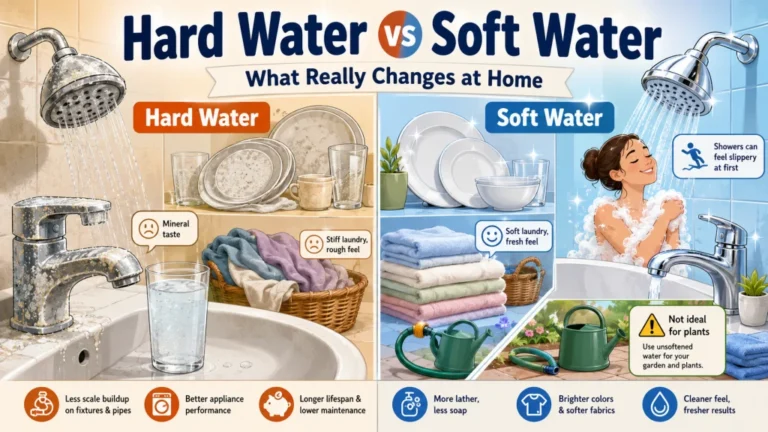
The most useful data I have seen on this comes from the Battelle Memorial Institute, which studied the appliance impact of hard water in a controlled setting. The findings are specific enough to use for real math. Gas water heaters running on 26 GPG water consumed 22% more energy than identical units running on treated water. Over the test period, those water heaters lost up to 48% of their operating efficiency as scale built up on the heating elements. Dishwashers required 30% more detergent to achieve the same cleaning results and showed measurably shorter service lifespans.
I have pulled heating elements out of water heaters in 20 GPG homes that looked like they had been dipped in concrete. The homeowners thought the unit was just getting old, or they blamed the brand. The scale was the reason their energy bills had crept up year after year and the unit was failing well ahead of schedule. Once you see that pattern across enough homes, the financial argument for treatment becomes straightforward at higher hardness levels.
Running the Break-Even Numbers
Is installing a water softener worth it on cost alone? At 15 GPG or above with a full household appliance load, the answer is usually yes. At 7 to 10 GPG, it depends on your specific situation. Below 5 GPG, the financial argument is thin. Here is what the numbers actually look like.
A quality ion exchange system runs $800 to $1,500. Professional installation adds $300 to $600. Salt costs around $150 per year for a typical household. That puts total year-one cost at roughly $1,250 to $2,250, depending on system choice and labor rates in your area. Now put that against the other side of the ledger.
| Item | Estimated Cost | Notes |
|---|---|---|
| Water softener system | $800 to $1,500 | Quality ion exchange unit, direct-to-consumer |
| Professional installation | $300 to $600 | Varies by region and plumbing complexity |
| Annual salt cost | ~$150/year | Average 4-person household, moderate hardness |
| Water heater replacement (untreated, 20 GPG) | $800 to $1,500 every 4 to 6 years | vs. 10 to 12 years with treated water |
| Water heater energy premium | ~22% higher gas or electric cost | Battelle study at 26 GPG |
| Dishwasher detergent overspend | ~30% more per cycle | Battelle study finding |
At 20 GPG with full appliance use, a water heater can fail at 4 to 6 years instead of the 10 to 12 you would reasonably expect. That is one replacement cycle every few years you would otherwise skip. Add the energy premium from the Battelle data, plus detergent and soap overuse, and the annual cost of untreated hard water in a fully loaded household adds up to real money. At 15 GPG or higher, the break-even on appliance savings alone often comes in under three years. That is not an optimistic estimate. That is just the arithmetic of not replacing a water heater twice before you would otherwise replace it once.
Before getting into the specifics of when treatment makes sense, here is a quick-reference summary of how the math plays out by situation:
| Your situation | Direction |
|---|---|
| 15+ GPG, 3+ people, visible scale, staying 5+ years | Worth it. Compare systems by capacity and household size. |
| 10 to 15 GPG, appliance symptoms already showing | Usually worth it. Run the numbers for your specific setup. |
| 7 to 10 GPG, no symptoms yet | Test and calculate first. Confirm hardness independently. |
| Under 5 GPG | Usually not worth it on financial grounds. |
| Renting without plumbing rights | Skip the whole-house system. Appliance savings go to the landlord. |
| Main complaint is taste or odor | Look at filtration. A softener does not fix this. |
| Well water with iron present | Lab test first, then size treatment for both iron and hardness together. |
The sections below cover each of these situations in more detail, including what symptoms to look for, when the dealer test warning applies, and how real homeowners on both ends of the decision have come out.

IAPMO certified to NSF/ANSI Standard 44, this system is sized for homes with up to 5 people and 4 bathrooms, using ion exchange to deliver soft, scale-free water from every tap with city or well water compatibility. The user-friendly LCD allows metered operation that uses up to 50% less salt and 28% less water compared to standard time-based softeners, helping lower long-term costs on appliances, soap, and cleaning products. The bundle includes a recommended pre-filter and installation kit, and is backed by a 5 to 10-year limited warranty with dedicated customer support.
Check On AmazonIf you click this link and buy, we earn a commission at no additional cost to you.
When a Water Softener Is Worth It
Homeowners usually frame this as a pros-and-cons question, but in practice it comes down to GPG, usage, and how long you plan to stay. The benefits are real at the right hardness level. At the wrong level, you are paying for something you do not need. The financial case is solid in these situations:
- Hard water at 10 GPG or above. This is where scale accumulation causes real appliance and fixture damage, not just cosmetic deposits on faucets. Scale starts forming below 10 GPG, but at that level the rate of accumulation is slow enough that appliance impact is minor.
- Visible scale symptoms already present. White buildup on fixtures, clogged shower heads, a water heater that takes longer to heat the same volume. If these are showing up now, the damage is ongoing and accelerating.
- Well water with iron. Iron accelerates damage to everything it contacts. At 15 GPG with iron in the mix, the cost of doing nothing adds up faster than hardness alone would suggest. The combination shortens appliance life more aggressively than either problem individually.
- Three or more people in the home with full appliance use. More hot water cycles, more dishwasher loads, more scale accumulation per year. The savings scale directly with usage, which is why the same hardness level can justify a softener in a busy household and not justify one in a low-use household.
- Planning to stay five or more years. The upfront cost needs time to amortize. A short stay limits the payback window, and in a rental sale situation the next owner captures the benefit.
One pattern I run into often: homeowners with iron-heavy well water who have gone through two water heaters in seven years and assumed it was bad luck or a bad brand. When I look at the water conditions, there is nothing surprising about the failure timeline. The water explains it entirely. Once that connection clicks, the question of whether treatment is worth it stops being complicated.
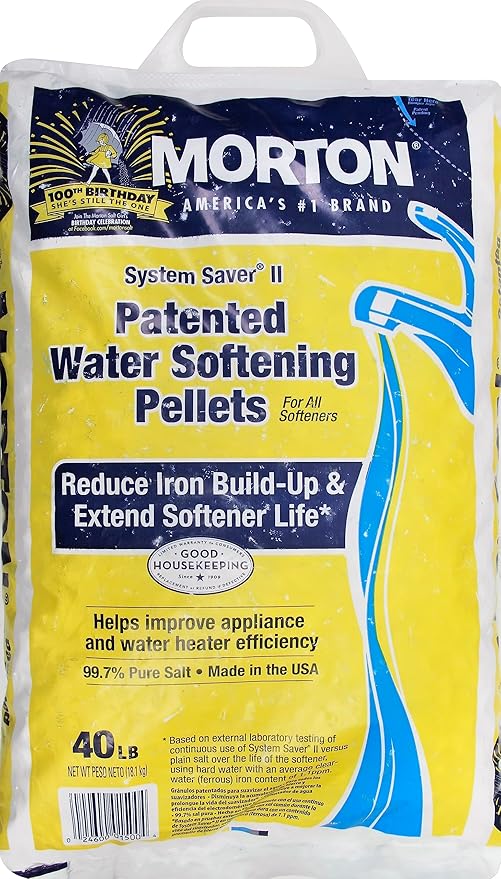
This 40-pound bag of USA-made System Saver pellets is designed to improve the taste of your water while helping extend the life of your appliances and water softener. Simple to use, just add the pellets directly to your softener's brine tank as needed.
Check On AmazonIf you click this link and buy, we earn a commission at no additional cost to you.
When the Answer Is Probably No
Should I get a water softener? If your hardness is under 5 GPG, probably not. At that level, scale accumulation is slow enough that a softener’s upfront cost does not recover on appliance savings within any reasonable timeframe. You would mostly be paying for softer skin and better soap lather, which are real benefits but do not justify a $1,500 installation on their own.
If you are renting without rights to modify plumbing, the question is mostly academic. You cannot protect appliances you do not own, and the landlord captures most of the long-term savings anyway. A portable countertop unit can help at a single faucet, but it is not a whole-house solution and it does not touch your water heater or dishwasher.
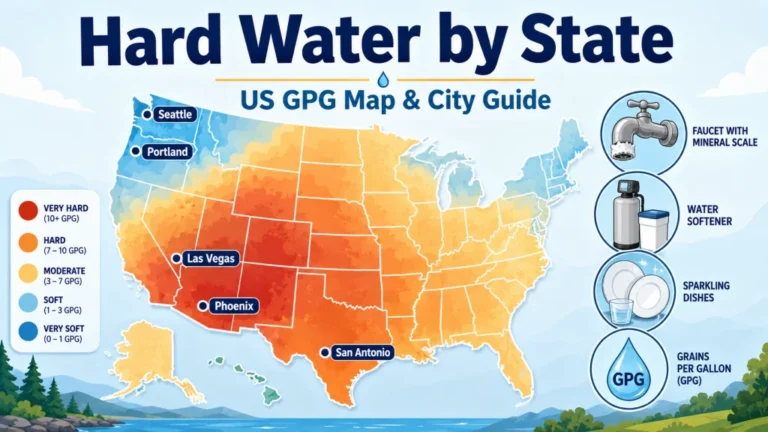
The taste question comes up frequently, and it is worth being direct about. Ion exchange removes calcium and magnesium but does not address chlorine, chloramines, or the compounds that actually affect how water tastes and smells. If taste is your primary concern, a carbon filter or reverse osmosis system addresses it more directly at a fraction of the cost. There are also genuinely soft water regions where the question barely arises. Parts of New England and the Pacific Northwest have municipal supplies in the 1 to 4 GPG range. Checking your region before committing to anything is straightforward, and a reference point for where your state typically falls is covered in the guide on hard water levels by state.
Why You Should Not Take a Dealer’s Word for Your Hardness Level
Every dealer who tests your water will tell you that you need a softener. That is not cynicism. It is just what happens when the person doing the diagnosis also sells the treatment. I have watched it happen enough times to stop being surprised by it. The test equipment is often accurate. The interpretation is where the incentive problem shows up.
Field Note: I have seen homeowners show me two test results for the same water, one from a dealer and one from a certified lab, that differed by 6 to 8 GPG. The dealer’s number was the higher one in every case I can recall. Once you know to check independently, the pattern becomes hard to ignore.
Accept the free hardness test from a water treatment dealer and use that number to decide whether to buy.
Pull your municipal Consumer Confidence Report, which your utility is required to publish annually. For well water, use a certified third-party lab. Neither has a financial stake in what you purchase.
For city water, your utility publishes a Consumer Confidence Report every year with hardness data, and it is free. For well water, a certified lab is the right move since CCRs do not cover private wells. The methods for doing this accurately, including which test strips are worth buying and when a lab kit is worth the extra cost, are all laid out in the guide on how to test your water hardness accurately. Knowing your confirmed GPG number changes the entire conversation.

This kit lets you test drinking water, pool water, or any water source in seconds using a simple dip-and-read method with an oversized color chart ranging from red to green, covering 0 to 25 GPG and 0 to 425 PPM. All 100 strips are protected by FreshSeal technology across a ready-to-use bottle and two sealed pouches for long-term accuracy. Each purchase also funds a full year of clean water for someone in the Central African Republic.
Check On AmazonIf you click this link and buy, we earn a commission at no additional cost to you.
What Homeowners at Both Ends Actually Report
The record from Reddit threads, tractor forums, and water treatment communities on this question is worth looking at because both outcomes are well documented, sometimes in the same thread. A sales rep working a 20 GPG service area stated plainly that nearly all of his customers would never go back to hard water once they had experienced soft. That matches what I see. At 20 GPG with a full household load, the difference in scale accumulation, soap behavior, and how skin feels after a shower is not subtle.
The same thread included a homeowner who had been pressured into a system that did not match his water conditions or his household’s actual needs. The response from other forum members was blunt: he had been oversold and overpaid. Both outcomes are real, and they trace back to the same variable. The satisfied homeowner knew his hardness level before he bought. The dissatisfied one trusted the dealer’s test. That difference in process produced two very different outcomes from the same category of product.
One concern that comes up frequently from rural homeowners is septic compatibility. If you have held off on a softener because of worry about brine discharge into your septic system, the university-level research on this is more reassuring than the fear suggests. The article on water softeners and septic systems covers what three independent institutions found and when there are legitimate reasons to be cautious.

This universal cleaner removes iron, sediment, dirt, and rust from your softener's resin bed, valve, and internal components, tackling the tough buildup that salt alone cannot address. It is compatible with virtually any brand including Whirlpool, Culligan, GE, Kenmore, Morton, and more, making it a reliable maintenance choice regardless of your system. Used every 4 months, it restores softening performance and can extend the parts and labor warranty on EcoPure systems up to 5 years with product registration.
Check On AmazonIf you click this link and buy, we earn a commission at no additional cost to you.
Final Thoughts: Making the Call Without Getting Pushed Into One
The answer to whether a water softener is worth it is almost always a GPG question. At 15 GPG or above with real appliance use and a household of three or more people, the math works clearly. At 5 GPG or below, it mostly does not. The range in between depends on household size, how long you plan to stay, and whether scale symptoms are already showing up in your home.
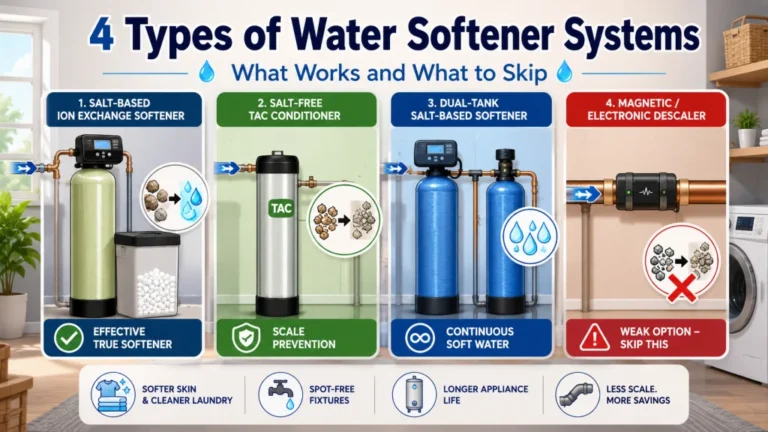
What does not help is making that decision based on a dealer test alone, or on what system manufacturers say on their own product pages. The full picture on how different system types work and what each is genuinely suited for is covered in the complete guide to water softener systems. For everything from hard water identification through sizing, installation, and maintenance, the complete water softener guide covers the full lifecycle in one place. Start with your number, confirmed independently, and the rest of the decision follows from there.

Sized for homes with 3 to 4 bathrooms and up to 5 family members, this system treats 48,000 grains of hardness and up to 10 ppm of iron by removing hard minerals like iron and magnesium that can clog pores and cause skin irritation. A built-in sediment and GAC pre-filter captures sand, dirt, rust, and other large particles at the source, protecting appliances and extending the life of your water softener. The high-efficiency Aquatrol control head helps conserve water and lower maintenance costs over time.
Check On AmazonIf you click this link and buy, we earn a commission at no additional cost to you.
FAQs
💧 At what GPG is a water softener worth it?
At 10 GPG and above, treatment makes sense on appliance-protection grounds. At 15 GPG or higher with full household appliance use, the break-even on energy and appliance replacement savings typically comes in under three years. Below 5 GPG, the financial case is weak and the benefits are mostly cosmetic.
⏱️ How long does it take a water softener to pay for itself?
At 15 GPG or above, often under three years when you account for reduced appliance wear, lower water heater energy use, and less detergent. At lower hardness levels, payback takes considerably longer and may not materialize on cost savings alone.
🏠 Is a water softener worth it if I rent?
Rarely. Renters typically cannot make permanent plumbing modifications, and the appliance savings accrue to the landlord. If skin feel or taste is the concern, a countertop carbon filter or shower filter costs far less and requires no installation.
🚰 Will a water softener make my water taste better?
Not reliably. Ion exchange removes calcium and magnesium but does not address chlorine, chloramines, or other compounds that affect taste. If taste is your main concern, a carbon filter or reverse osmosis system is the better tool at a fraction of the cost.
🔬 Can I trust the free hardness test a dealer offers?
Verify it independently before buying anything. Your municipal utility publishes an annual Consumer Confidence Report with hardness data. For well water, use a certified lab. Neither source has a financial stake in the result.
🌿 Is a water softener safe if I have a septic system?
University research from Wisconsin, the National Sanitation Foundation, and Virginia Tech all found that properly operated softeners do not harm septic systems. The real concern with older or undersized systems is hydraulic load from regeneration cycles, not the salt chemistry itself.