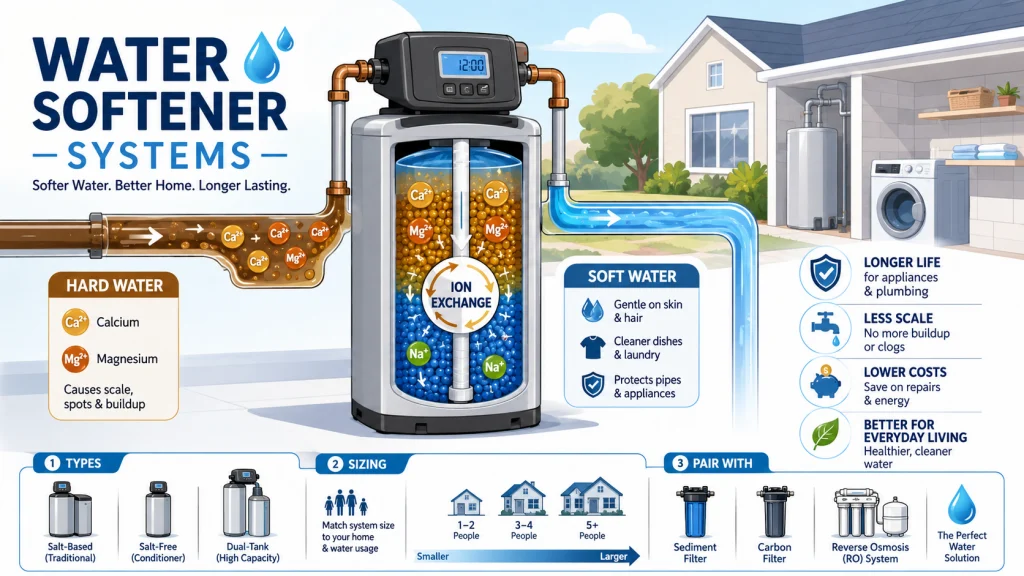
How a Water Softener Actually Works
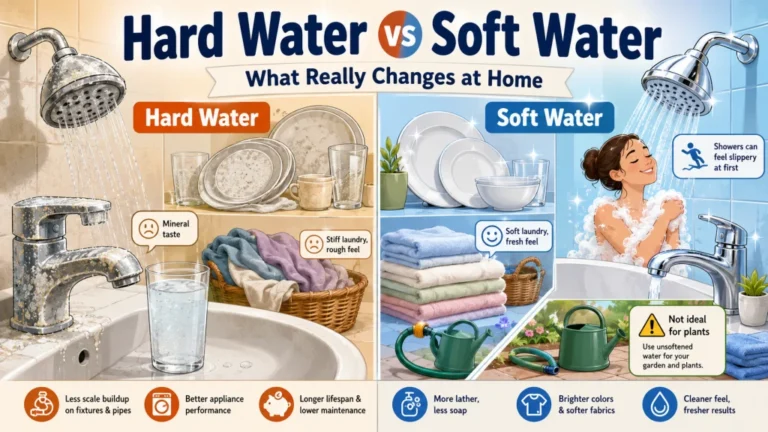
The mechanism is straightforward. Resin beads inside the tank carry a negative charge that attracts the positively charged calcium and magnesium ions responsible for hard water. As water passes through, those minerals bind to the resin and sodium ions swap into the water in their place. What comes out the other side will test at zero or near-zero GPG. Scale stops forming on heating elements, faucet aerators, and everywhere else you have been scrubbing calcium deposits off for years.
What most buyers never hear about is the resin quality. There are two crosslink densities used in residential systems: 8% and 10%. Standard box-store products typically use 8% crosslink resin. City water with chlorine degrades 8% crosslink resin noticeably faster than 10%, and that resin is the core of the system. I have pulled apart enough systems that failed early to know the resin spec matters as much as the control valve, and most product listings at big-box retailers do not print that number anywhere. For the full mechanism including regeneration cycle timing and what to ask before you buy, see how a water softener works, including the resin spec nobody mentions at the store.
The Types of Water Softener Systems: What Each One Actually Does
There are four types sold to homeowners. Only one removes hardness from your water. The others prevent scale without removing anything, or in one case, do nothing that independent testing can verify.
Salt-based ion exchange is the mechanism described above. It is the only technology that results in water testing soft after treatment. Dual-tank systems run the same process using two resin tanks so one can regenerate while the other softens, which is useful for larger households or anyone running at 15+ GPG where a standard single-tank system regenerates every two to three days and you notice the gaps.
Salt-free systems, marketed widely as “salt-free water softeners,” work differently. They use Template Assisted Crystallization, or TAC, technology to change the physical structure of hardness minerals so they resist forming scale on surfaces. The minerals stay in the water. A standard hardness test after treatment will still return your original GPG reading. That is not a flaw of the test. That is what the technology does. Then there are magnetic and electronic descalers. I have not seen independent peer-reviewed evidence strong enough to justify recommending them over a real softener, and at least one major manufacturer developed and quietly abandoned them after internal testing. I would not spend money on one. The full breakdown of all four types, including when a salt-free system is actually the right call, is in the honest comparison of water softener system types.
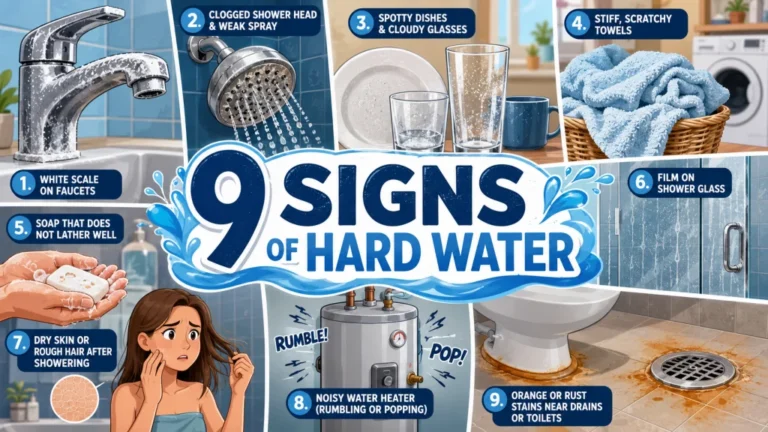
Field Note: One of the most common situations I run into is homeowners who bought a salt-free conditioner expecting soft water. The water still tests hard. The skin still feels dry. The soap still does not lather the way they expected. Nothing changed except they spent $1,200 and have a device that does something, just not what they wanted it to do. The naming overlap in this category is not accidental, and it costs buyers every year.
Sizing: Why the Number on the Box Is Not the Whole Answer
The basic formula is: number of people, multiplied by 75 gallons per day, multiplied by your GPG, multiplied by 7 days. A family of 4 at 10 GPG uses about 21,000 grains per week, so a 32,000-grain system is the practical floor, not the final answer. Rated grain capacity is measured under ideal lab conditions, and real-world usable capacity typically runs 15 to 30% below the stated number. Sizing slightly above the minimum is the right move.
The adjustment that catches well water households off guard is iron. For every 1 PPM of iron in your water, add 4 to 5 GPG to your hardness number before running the calculation. At 10 GPG with 2 PPM of iron, you are effectively sizing for 18 to 20 GPG. The full calculation with both the iron adjustment and the oversizing risk is at what size water softener you actually need, including the iron adjustment box stores leave out.
| Household Size | GPG Range | Minimum Grain Capacity |
|---|---|---|
| 1 to 2 people | Under 7 GPG | 24,000 grains |
| 2 to 4 people | 7 to 10 GPG | 32,000 grains |
| 3 to 5 people | 10 to 15 GPG | 48,000 grains |
| 4 to 6 people | 15+ GPG | 64,000 to 80,000 grains |
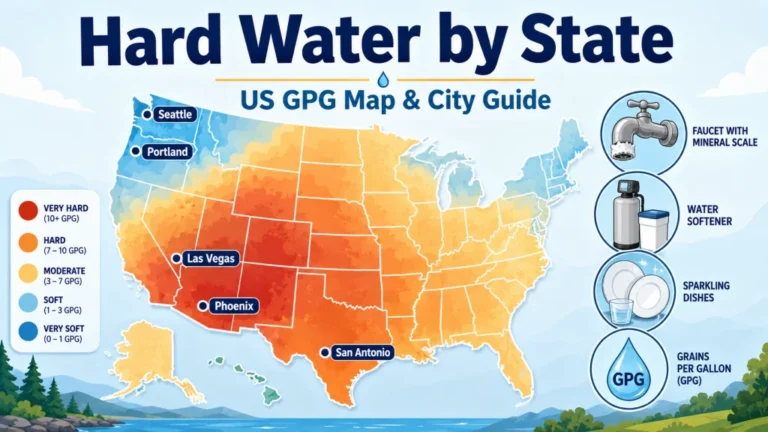
If you are in Phoenix, Las Vegas, San Antonio, or anywhere in the Texas Hill Country, assume the bottom row applies to your address. The table is for city water. Apply the iron adjustment before using it for well water, or the number will be undersized for your actual conditions.

This kit lets you test drinking water, pool water, or any water source in seconds using a simple dip-and-read method with an oversized color chart ranging from red to green, covering 0 to 25 GPG and 0 to 425 PPM. All 100 strips are protected by FreshSeal technology across a ready-to-use bottle and two sealed pouches for long-term accuracy. Each purchase also funds a full year of clean water for someone in the Central African Republic.
Check On AmazonIf you click this link and buy, we earn a commission at no additional cost to you.
When a Softener Is Not the Only System You Need
A water softener removes calcium and magnesium. It does not remove chlorine, sediment, bacteria, heavy metals, or anything else. Those are different problems that need different treatment. Knowing which combination applies to your water is worth sorting out before you buy anything. The most common scenarios:
- City water at 7+ GPG: a softener is the primary system, but a carbon pre-filter upstream removes chlorine before it reaches the resin and meaningfully extends resin life.
- Well water with iron or sulfur: for problem well water, the softener usually comes after sediment, iron, or sulfur treatment, not before them. A softener alone on unfiltered well water fouls within months.
- Drinking water quality concerns alongside hardness: a whole-house softener combined with a reverse osmosis unit at the kitchen tap handles both problems without compromise.
- Scale prevention only, no salt preference, or California discharge restrictions: a salt-free conditioner at 7 to 15 GPG may be appropriate, but understand clearly what it does and does not do before buying.
Water Softener vs. Whole-House Water Filter
These solve different problems and often belong together. A carbon pre-filter removes chlorine before it reaches the softener resin, which matters because chlorine degrades ion exchange resin over time. On well water, a sediment pre-filter before the softener is close to mandatory. Iron and particulate matter foul resin quickly, and the damage is cumulative. Full comparison and installation order at water softener vs. water filter, including why city water softeners need a pre-filter.
Water Softener vs. Reverse Osmosis
An RO system handles drinking water quality at the kitchen tap. A softener handles whole-house scale and appliance protection. When you use both, install the softener upstream: hard water fouls RO membranes and cuts their lifespan. The sodium a softener adds is removed by the RO membrane anyway. Details and the combination case at water softener vs. reverse osmosis, including the order that protects membrane life.
Water Softener vs. Water Conditioner
A conditioner is not a softener, regardless of how it is sold. It changes mineral crystal structure so scale resists forming on surfaces, but the minerals stay in your water and a hardness test still returns your original GPG. If you want water that tests soft, you need ion exchange. Where a conditioner makes sense: scale prevention at 7 to 15 GPG, no-salt preference, or California discharge restrictions. The full naming breakdown is at water softener vs. water conditioner, including what TAC technology actually does to your water.

Installed at the main water supply line, this system removes up to 99% of chlorine and up to 95% of sediment, rust, herbicides, industrial solvents, and other contaminants from every tap in your home. With 1-inch NPT connections and 20 by 4.5-inch cartridges supporting up to 15 GPM, it delivers strong whole-house flow with minimal pressure drop and straightforward DIY installation. Unlike reverse osmosis systems, it retains healthy minerals in your water and is backed by a lifetime personalized support warranty with online product registration.
Check On AmazonIf you click this link and buy, we earn a commission at no additional cost to you.
The Financial Question
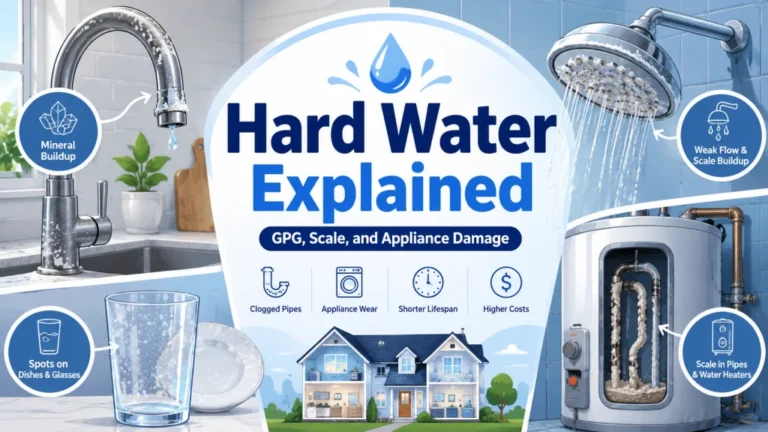
The Battelle Memorial Institute study, commissioned by the National Association of Home Builders, put numbers to what people who work in this industry have watched happen across thousands of homes. Gas water heaters running on 26 GPG water consumed 22% more energy over the test period. Water heater efficiency dropped by as much as 48%. Dishwashers showed measurably shorter operating lifespans and needed 30% more detergent to achieve the same cleaning results. At higher GPG levels, hard water is not a comfort complaint. It is an appliance replacement cycle problem.
The break-even calculation is more favorable than most buyers expect. At 15+ GPG, the combination of extended appliance lifespan and reduced energy consumption often returns the cost of the system within three years on appliance savings alone. At under 5 GPG, the case is mostly cosmetic and the math is weaker. If your water comes in under 5 GPG, I would rather you know that upfront than spend $1,500 on a system the numbers do not support. Before any of this, confirm your hardness number from an independent source. Understanding what your GPG means and how it changes the decision is covered at the hard water guide that covers GPG levels and what each one means in practice. The full break-even analysis, including when the honest answer is that a softener is not worth it, is at whether a water softener is actually worth it for your water and household.

IAPMO certified to NSF/ANSI Standard 44, this system is sized for homes with up to 5 people and 4 bathrooms, using ion exchange to deliver soft, scale-free water from every tap with city or well water compatibility. The user-friendly LCD allows metered operation that uses up to 50% less salt and 28% less water compared to standard time-based softeners, helping lower long-term costs on appliances, soap, and cleaning products. The bundle includes a recommended pre-filter and installation kit, and is backed by a 5 to 10-year limited warranty with dedicated customer support.
Check On AmazonIf you click this link and buy, we earn a commission at no additional cost to you.
If Your Home Is on a Septic System
This concern keeps a significant number of rural homeowners in hard water longer than they need to be. The worry is that sodium-rich regeneration brine will harm the beneficial bacteria in the septic tank. Three independent institutions studied exactly this question: the University of Wisconsin, the National Sanitation Foundation, and Virginia Polytechnic Institute. All three reached the same conclusion. The bacterial harm concern is not supported by the evidence at actual in-tank dilution concentrations.
The one legitimate consideration with septic systems is hydraulic, not chemical. Regeneration adds roughly 50 gallons per cycle, comparable to a single washing machine load. For an undersized or aging septic system, that additional volume on top of normal household flow is worth accounting for. Demand-initiated regeneration, which triggers based on actual water use rather than a fixed timer, reduces cycle frequency and limits the additional load. The full independent research findings and practical recommendations for septic households are at water softeners and septic systems, including what three independent institutions found.
Before You Compare Products, Answer These Six Questions
Most buying mistakes in this category happen before a single product page is opened. The specs on a water softener listing only tell you something useful if you already know what you are looking for. These six questions get you there.
- What is your actual GPG? Get it from your utility’s Consumer Confidence Report or a third-party test kit, not from anyone selling equipment.
- Is your water city water or well water? Well water with iron, sulfur, or sediment needs pre-treatment before the softener. The softener is the last stage of treatment, not the first.
- Do you want actual soft water, or only scale prevention? If it is scale prevention only, a salt-free conditioner may be sufficient. If you want a hardness test to read zero, you need ion exchange.
- How many people are in the household, and what does that imply for grain capacity? Use the sizing table above as a starting point, then apply the iron adjustment if your water has iron.
- Does the product listing tell you the resin crosslink percentage, the control valve type, and the service flow rate? If those three specs are not in the listing, they are worth asking about before buying.
- Is the system demand-initiated or timer-based? Demand-initiated regeneration saves 30 to 50% on salt use over time and is especially important on septic systems or households with variable water use.
These questions are not difficult to answer, but most buyers skip them entirely because the product comparison sites they land on never ask. Going through them before you shop means the product articles become easier to evaluate and less easy to game with misleading specs.
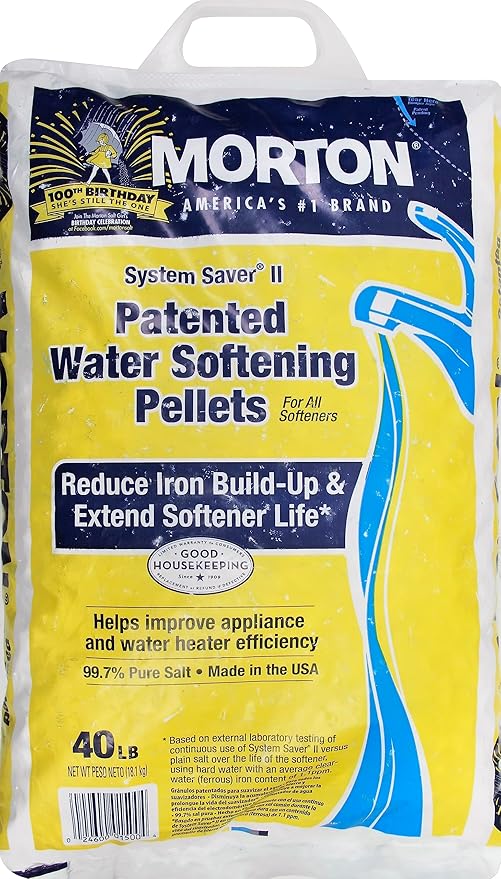
This 40-pound bag of USA-made System Saver pellets is designed to improve the taste of your water while helping extend the life of your appliances and water softener. Simple to use, just add the pellets directly to your softener's brine tank as needed.
Check On AmazonIf you click this link and buy, we earn a commission at no additional cost to you.
Final Thoughts: Start With Your Water, Then Choose a System
The pattern that repeats across installs is buyers who started with the product and worked backward. They bought based on what was on sale, what a contractor suggested, or what a dealer told them after running a test themselves. The better sequence is to know your GPG, understand what type of treatment that level requires, size the system correctly for your household, and then evaluate what is available at that specification. The sections in this guide, and the deeper articles each one links to, are built to support that order.
Once you have worked through the sizing and type questions, the best water softener options by situation is where product-level picks live, organized by water condition, household size, and use case. For the broader context covering how hard water identification, system selection, installation, and maintenance all connect, the complete water softener guide is the starting point for the whole site.
All Articles in This Section
Each article below covers one specific part of the systems topic in full depth. If something in this guide raised a question, one of these has the complete answer.
| Article | What it covers |
|---|---|
| How a Water Softener Works | Full ion exchange mechanism, the regeneration cycle step by step, and the 8% vs. 10% crosslink resin spec that determines how long a system lasts on city water |
| Types of Water Softener Systems | All four technologies compared honestly, including the evidence gap on descalers and when a salt-free conditioner is and is not the right call |
| What Size Water Softener Do I Need | The full sizing calculation, the iron adjustment well water users need, the rated capacity gap, and the bacterial risk of oversizing |
| Water Softener vs. Water Filter | What each system removes, correct installation order, and why chlorine in city water is shortening your resin life if you do not use a pre-filter |
| Water Softener vs. Reverse Osmosis | Different jobs, the case for combining both systems, and the installation order that protects RO membrane life |
| Water Softener vs. Water Conditioner | What TAC technology actually does to your water, why a post-treatment hardness test still reads hard, and when a conditioner is genuinely the right choice |
| Is a Water Softener Worth It | Break-even math using Battelle study data, the GPG threshold where the numbers support the investment, and when the honest answer is no |
| Water Softener and Septic System | What three independent institutions found about softener discharge and bacterial activity, and the one real concern worth planning for on aging systems |
FAQs
🔧 What does a water softener system actually do to my water?
It removes calcium and magnesium through ion exchange, so water leaving the system tests at zero or near-zero GPG. What it does not remove is chlorine, sediment, bacteria, or heavy metals. Those require separate treatment upstream. Scale stops forming. Soap lathers properly. The appliance damage caused by mineral buildup stops.
💧 What is the difference between a water softener and a water conditioner?
A softener removes hardness minerals. A conditioner changes their structure so they resist forming scale, but the minerals stay in the water. The test that matters: run a standard hardness test after treatment. A softener returns zero GPG. A conditioner returns your original number. If that distinction does not match what you were told when you bought it, you have a conditioner that was sold as a softener.
📏 How do I calculate what size water softener I need?
People times 75 gallons per day times GPG times 7 days equals your weekly grain requirement. That number tells you the minimum grain capacity to shop for. If your water has iron, add 4 to 5 GPG per 1 PPM of iron before the calculation, or the result will be too small for your actual water conditions.
🧪 Do I need a water filter if I already have a water softener?
On city water, a carbon pre-filter upstream of the softener is worth adding. Chlorine in municipal water degrades resin over time, and the difference in resin life between filtered and unfiltered city water is significant. On well water, a sediment pre-filter is close to non-negotiable if you have iron, sulfur, or particulate matter.
🏡 Can I install a water softener if I have a septic system?
Yes. Three independent institutions studied this and all reached the same conclusion: softener discharge does not harm septic bacterial activity. The legitimate concern is hydraulic: regeneration adds about 50 gallons per cycle, similar to a washing machine load. Demand-initiated regeneration reduces cycle frequency and is the sensible choice on septic systems.
💰 Is a water softener system worth the cost?
At 10+ GPG with full appliance use, usually yes. The Battelle Memorial Institute documented efficiency losses of up to 48% in water heaters running on hard water. Break-even on appliance savings alone is often under three years at 15+ GPG. Under 5 GPG, the case is mostly cosmetic and the numbers are harder to justify.
⚡ Do electronic or magnetic descalers work?
I have not seen independent peer-reviewed evidence strong enough to recommend them over a real softener. At least one major manufacturer developed and later abandoned them after internal testing. Some product listings include fine-print disclaimers recommending a traditional softener for water above 25 GPG. That says most of what you need to know.
🔄 How often does a water softener need to regenerate?
It depends on your GPG and household water use. A properly sized system on a demand-initiated controller regenerates roughly once per week. At 20+ GPG with a family of four, a correctly sized system may regenerate every two to three days. Demand-initiated regeneration is more efficient than timer-based controls, saving 30 to 50% on salt use over time.