The Signs of Hard Water Your Home Is Already Showing You
You do not need a test kit to spot the signs of hard water. Your faucets, shower head, dishwasher, and water heater are already showing you. These are physical, consistent indicators that show up in predictable patterns depending on where hot water contacts surfaces most often. What most homeowners do not realize is that what looks like a scattered list of minor annoyances is usually one problem expressing itself in multiple places at once.
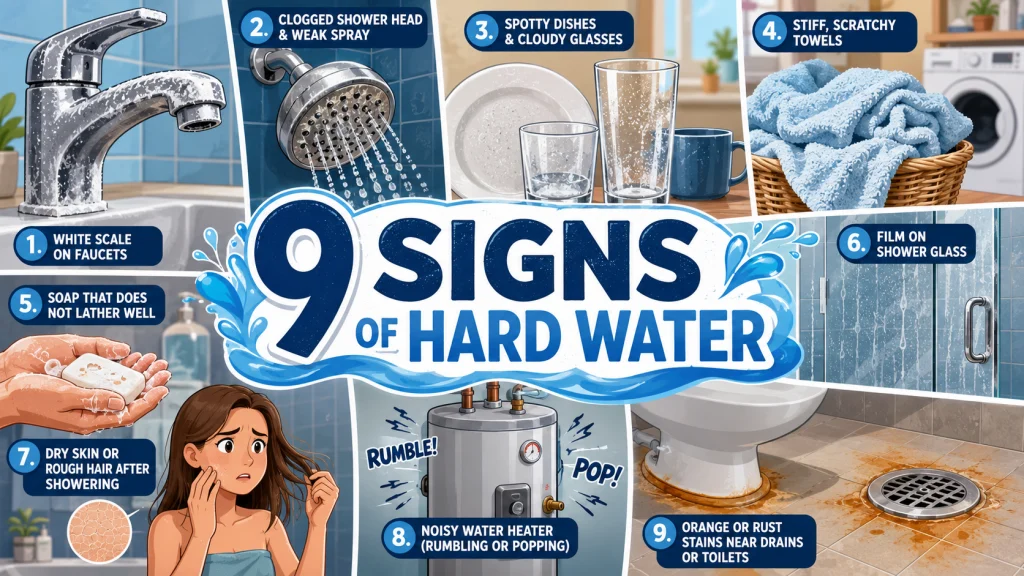
Here are the nine signs to check across your home:
- White or gray chalky scale around faucets and fixtures
- Shower head that has lost pressure or flow over time
- Spots and film on dishes after the dishwasher cycle
- Soap that will not lather properly or rinse cleanly
- Stiff, scratchy laundry, especially towels
- Film on bathtub walls and shower doors
- Water heater making popping or rumbling sounds
- Dry skin and tight hair after showering
- Orange or rust-colored staining around drains or in the toilet bowl
Not every sign carries the same weight. Some are cosmetic. Others are appliance wear indicators that are already costing you money in energy and shortened equipment life. And one on the list, the orange staining, is frequently misread as a hard water problem when it is actually something different that requires a different fix. I will walk through each one, what it means, and how to use them together to get a reasonable read on your situation. If you want the full context on what hard water is and where the mineral content in your water comes from, the foundation is covered at the definition of hard water and the GPG scale.
What Your Bathroom Is Showing You
The bathroom is where hard water announces itself most clearly. Hot water contacts tile, glass, faucets, and the shower head repeatedly every day, and each time it evaporates or dries on a surface, it leaves behind a residue of calcium and magnesium. Over weeks and months, that residue accumulates into visible deposits. The bathroom is also where most people first notice something is wrong, even if they cannot yet name what is causing it.
Three separate signs typically show up here, each telling you something different about how far along the buildup is.
White or gray chalky scale around faucets and fixtures
The white crust forming around the base of your faucet, on the aerator screen, and around the drain opening is calcium carbonate. It is what remains after water evaporates and the dissolved minerals stay behind. The thickness of that buildup and how quickly it returns after cleaning tells you something real about your hardness level. A light film that takes several months to come back is a different situation than hard, flaking crust that reappears within two weeks of cleaning. If you are seeing scale in multiple fixtures throughout the house, the source is your water supply, not a localized fitting issue.
One thing I check on every service call is the aerator screen on the kitchen faucet. Unscrew it and look at the mesh. If it is heavily clogged with white mineral deposits, the rest of the house is receiving the same water and accumulating the same way. It is a fast, free indicator before you spend anything on a test kit.
Shower head that has lost pressure or flow
Scale accumulates inside the nozzle openings of a shower head over time, physically blocking the holes. What feels like low building pressure is often a shower head that was installed when the house was new and has never been replaced. I have pulled shower heads on service calls that were operating at maybe 20 percent of their original flow. The nozzles were nearly sealed over with mineral deposits. Soaking a shower head in white vinegar overnight restores it temporarily, but if the restriction returns within a few months, the hardness level is high enough that periodic cleaning is not a practical long-term approach.
A shower head clogged to that degree has been accumulating scale for years. The same process is running simultaneously in your water heater, dishwasher, and washing machine. The shower head just makes it visible.
Film on bathtub walls and shower doors
The gray or white film on tile, the bathtub floor, and glass shower doors is the same mineral residue, left by water sheeting off surfaces and then evaporating. On glass doors at higher hardness levels, it eventually looks like permanent etching. That is not an aesthetic issue that cleaning can fully fix. When mineral deposits bond deeply enough with a glass surface, the damage is structural. If your shower doors have looked permanently hazy for years despite regular scrubbing, that is a long-term record of hard water written into the glass itself.
If you just moved into the home, the degree of etching on the glass gives you a rough sense of how long the hardness has been active without any treatment.

This advanced shower filter uses a multi-stage system combining sediment filters, redox media, calcium sulfite, activated carbon, and ceramic beads to reduce chlorine, pesticides, pharmaceuticals, dirt, and odors while infusing beneficial minerals into your water. Designed to visibly improve skin, hair, and nails within 2 to 4 weeks, it works with fixed, rain, combo, dual, and handheld showers via a standard half-inch connection with no tools required. Replacement cartridges last 6 months at under 9 cents per day, making it one of the more affordable long-term shower filtration options available.
Check On AmazonIf you click this link and buy, we earn a commission at no additional cost to you.
What the Kitchen and Laundry Room Are Telling You
Hard water does not stay in the bathroom. It flows to every fixture and appliance connected to the supply line, and the kitchen and laundry room show their own distinct signs. Both areas also carry financial consequences, not just inconvenience, because hard water is actively working against the cleaning agents and appliances you are relying on to do their jobs.
These signs are often misattributed to equipment failure or the wrong detergent. That misread leads to a lot of unnecessary appliance service calls and product switching that never solves anything.
Spots and film on dishes from the dishwasher
The spots on glasses and the film on plates coming out of the dishwasher are mineral deposits left by the rinse water, not food residue and not a machine malfunction. I have spoken with homeowners who switched detergent brands three times and had a technician come out before concluding the dishwasher was failing. It was not. At 10 or more grains per gallon, mineral spotting during the rinse cycle will continue regardless of what detergent goes in the machine, because the problem is the water itself, not the wash cycle.
There is a real wear component here beyond the cosmetic annoyance. Controlled testing by the Battelle Memorial Institute documented measurably accelerated wear on dishwashers at sustained high water hardness. A machine running on 20 GPG water does not last as long as an identical machine on soft water.
Soap that will not lather or rinse cleanly
Calcium and magnesium ions react with soap to form a calcium stearate compound rather than producing lather. The result is soap scum instead of foam, a feeling that soap never fully rinses off the skin, and a slightly coated sensation after a shower. If you have switched soap or shampoo brands multiple times looking for something that lathers better and nothing has worked, the water is reacting the same way with every soap you put in it. Hard water areas also go through laundry detergent faster than the packaging suggests, because the detergent is competing against the hardness minerals before it can work on the fabric.
Stiff, scratchy laundry
Mineral ions deposit in fabric fibers during the wash cycle and do not fully rinse out. Towels are usually where homeowners notice this first. They come out of a hot wash cycle feeling rough rather than soft, and that stiffness does not improve with fabric softener sheets or extra rinse cycles. Over time, the mineral deposits trapped in the fibers hold detergent residue and accelerate fabric breakdown. White fabrics develop a gray or dingy cast that regular washing cannot clear, which is often mistaken for a hard water stain when it is actually deeper mineral saturation in the fibers themselves.
A cup of white vinegar in the rinse cycle partially dissolves the mineral deposits and helps with the stiffness temporarily, but it addresses the symptom, not the source.

This kit lets you test drinking water, pool water, or any water source in seconds using a simple dip-and-read method with an oversized color chart ranging from red to green, covering 0 to 25 GPG and 0 to 425 PPM. All 100 strips are protected by FreshSeal technology across a ready-to-use bottle and two sealed pouches for long-term accuracy. Each purchase also funds a full year of clean water for someone in the Central African Republic.
Check On AmazonIf you click this link and buy, we earn a commission at no additional cost to you.
The Water Heater Sign: This One Is Already Costing You
A water heater making popping, rumbling, or cracking sounds is not a random appliance quirk worth ignoring. Scale builds on the heating element and on the floor of a tank heater over time. When that scale layer gets thick enough, water trapped beneath it heats past the normal transfer point before it can escape, which produces those sounds. The heater is not about to fail immediately when it starts making noise, but it has already been working harder than it should for some time before you first hear it.
The Battelle Memorial Institute study measured this directly. Gas water heaters operating at 26 grains per gallon used 22 percent more energy than identical units running on soft water under controlled conditions. At 15 or more GPG, that efficiency loss is not theoretical. It shows up in your monthly energy bill and in how long the heater lasts before needing replacement. I have pulled water heaters on service calls where the scale buildup inside the tank was close to an inch thick at the base. That tank had been losing efficiency for years before it finally quit. The homeowners had no idea the water condition was behind the decline.
Key point: If your water heater is under 10 years old and already making popping or rumbling sounds from scale buildup, your hardness may be high enough to justify testing immediately. The break-even math on treatment at that point tends to be shorter than most homeowners expect.
Two Signs That Need a Closer Look
Two of the nine signs on the list require more context than a straightforward description provides. One points to a related but separate problem with a different fix. The other is commonly overstated in ways that lead homeowners toward solutions that do not match the actual cause.
Dry skin and tight hair after showering
Mineral deposits from hard water do coat skin and hair after showering, and at higher GPG levels the effect is genuinely noticeable. Skin that feels tight after rinsing, hair that feels coated or lacks its usual body, a residue that does not fully wash off despite a thorough rinse: these are real and legitimate hard water signs. They belong on the list and are worth factoring into your overall read of the situation. What matters is not overstating them or treating them as the primary driver of a whole-house treatment decision without understanding the full picture first.
For city water households in particular, chlorine plays a significant role alongside hardness minerals in hair and skin effects, and the relationship between the two is more complicated than most hard water articles describe. For what the research actually supports versus what tends to get overstated, and for the specific distinction between hard water hair damage and hair loss (which are not the same thing), the full breakdown is at hard water effects on hair and skin.
Orange or rust-colored staining
Orange and rust stains in the toilet bowl, on the shower floor, around drain openings, and on laundry are not hard water signs. They are iron signs. Iron and hardness often come together in well water, but they are chemically different problems that require different treatment approaches. A standard water softener handles low levels of dissolved ferrous iron in the range of 1 to 2 parts per million, but iron staining at moderate to high levels requires dedicated iron filtration, not a softener alone. Putting a softener in front of a high-iron supply without addressing the iron first will foul the resin and shorten the system’s effective life significantly.
If you are seeing both white scale deposits and orange staining, your water has both problems, and you need to account for both when sizing and selecting any treatment. If you see rust staining only with no white scale anywhere, the primary issue may be iron rather than hardness, and starting with a softener may not be the right first step. Get a test that covers iron specifically before making any purchasing decisions. The test strips sold for hardness do not measure iron.

Recommended by SimpleLab and trusted by millions of American homes and businesses, this certified lab test is specifically designed to detect iron levels that can cause metallic taste, water discoloration, and staining on tubs, tiles, and fixtures. Each kit includes sampling materials, clear instructions, and pre-paid return shipping, with results delivered in an award-winning lab report featuring unbiased filtration recommendations and health guidance at no sales pitch. PhD scientists and engineers are available for direct support before, during, and after testing.
Check On AmazonIf you click this link and buy, we earn a commission at no additional cost to you.
The Sign Nobody Thinks to Check: The Failing Softener
There is one source of hard water symptoms that barely appears in any guide on this topic, and I see it come up more often than most homeowners would expect: an existing water softener that has stopped working. A softener with exhausted resin, a stuck control valve, or a brine system that has stopped regenerating correctly will pass hard water through the house as if no treatment is installed at all. The scale returns, the soap stops lathering, the shower head clogs again. Everything looks exactly like a house that has never had any treatment.
I have been on service calls where the homeowner was convinced the city had changed something in the municipal supply, or that a neighboring construction project was somehow affecting their water. In both cases the actual problem was a softener that had been failing silently for over a year. In one of those homes the brine float had stuck at a position that prevented any salt from dissolving, so the system was cycling without ever actually regenerating the resin. From the outside, nothing looked wrong. The water, however, was testing as hard as untreated supply.
Field Note: If you moved into a house with an existing softener, do not assume it is working. I check the resin tank, brine float assembly, and control valve settings on every service call that involves an installed system. A softener set on a fixed timer but never adjusted for actual household size and water hardness can cycle regularly and still pass hard water through the house for months without triggering any obvious alarm. The fastest check is to test the water at a cold tap downstream of the softener. If that water still tests hard, the system is not doing its job regardless of how recently it was installed or how new it looks.
If you are in a home with an existing softener and you are seeing the signs listed above, check the softener before assuming the problem is your water supply. It is a common misread, and it is an easy one to rule out.
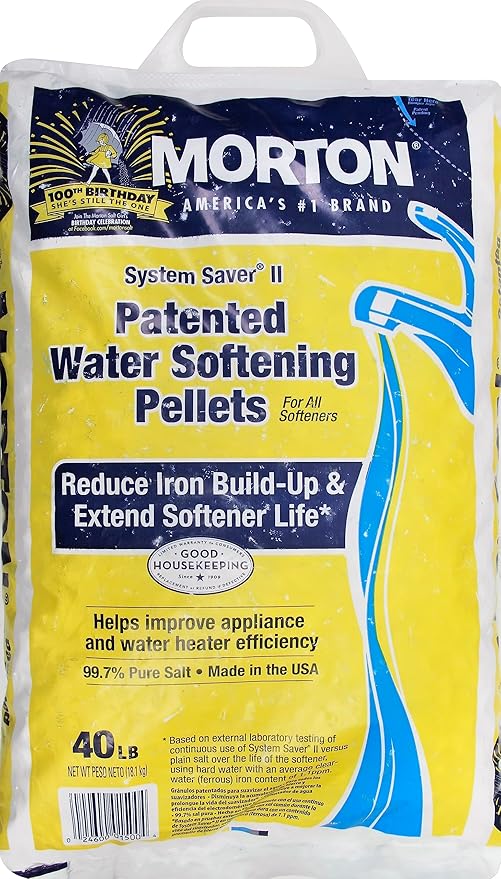
This 40-pound bag of USA-made System Saver pellets is designed to improve the taste of your water while helping extend the life of your appliances and water softener. Simple to use, just add the pellets directly to your softener's brine tank as needed.
Check On AmazonIf you click this link and buy, we earn a commission at no additional cost to you.
When the Signs Point Somewhere Else
Not every symptom on the list above is automatically a whole-house hard water problem. A few situations produce identical-looking signs with a different cause, and catching those early saves you from a misdiagnosis that leads to the wrong solution. Here is where it is worth slowing down before drawing conclusions.
If only one faucet has low pressure and no other fixtures are affected, the aerator or shutoff valve on that specific tap is the more likely cause. Hard water restriction affects the house broadly, not one isolated location. If only the dishwasher produces spots and everything else looks fine, check the rinse aid dispenser and the heating element before blaming the supply water. If only the laundry feels rough with no scale showing anywhere on fixtures, check whether you are overdosing detergent. Excess detergent that fails to rinse fully leaves the same stiff texture in fabric that mineral deposits do, and the fix is simply adjusting the amount. And if you are seeing orange staining but no white scale anywhere in the house, revisit the iron distinction: that pattern points toward an iron problem, not a hardness problem.
Hard water tends to show up in multiple places at once. If you are seeing it in only one location, rule out that location before assuming the whole supply is the problem.
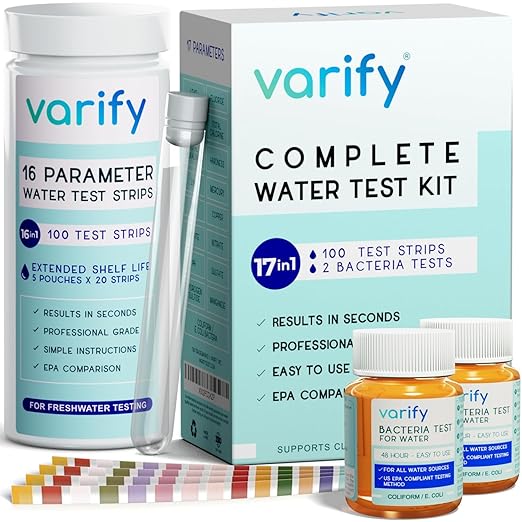
This comprehensive kit tests for 17 parameters including chlorine, fluoride, lead, iron, and bacteria, giving you a full picture of your water's safety in minutes. The 100 color-coded test strips come in 5 individually sealed pouches of 20 for extended freshness, while 2 included bacteria tests deliver results within 48 hours. Every purchase contributes a portion of proceeds to Water For Good, supporting clean water access in Central Africa.
Check On AmazonIf you click this link and buy, we earn a commission at no additional cost to you.
Final Thoughts: Reading the Severity Before You Spend Anything
Seeing one or two signs occasionally is not the same situation as seeing five or six consistently across your home. The signs work best when read together rather than in isolation, and the pattern across multiple rooms tells you more than any single indicator does on its own. The goal at this stage is not to decide whether to buy a system. It is to decide whether a test is worth your time, and if so, how urgent the situation actually is.
Here is a practical calibration based on what the signs suggest in combination:
| Signs Present | What It Likely Indicates | Suggested Next Step |
|---|---|---|
| 1 to 2 | Moderate hardness possible, may be a localized fixture issue | Check your utility water quality report or run a test strip |
| 3 to 5 | Hard water very likely, moderately high GPG | Get your exact GPG number before spending anything on treatment |
| 6 or more | High to very high hardness, appliance wear likely already underway | Treatment worth serious consideration once GPG is confirmed and iron is ruled in or out |
For the four methods to get your actual hardness reading, including the free option that works for most city water households, see how to test for hard water. For the broader context of what hard water is, where your region sits on the national hardness map, and what different GPG levels mean for treatment decisions, the full picture is at understanding hard water and what it costs you. And if you are starting from the beginning and want a map of the full decision process from identifying the problem to choosing and installing a system, that overview lives at the complete water softener guide.
Physical signs are useful precisely because they are free, always present, and honest. Scale deposits do not have a sales pitch. A water heater making noise is not trying to upsell you. They just tell you what is happening. Start there, and then get the number.
FAQs
🪣 Can I tell if I have hard water just by looking around my house?
Yes. White scale around faucets and drains, film on shower walls, spots on dishes after the dishwasher, and scratchy laundry are all visible indicators. Three or more of these signs appearing consistently across your home makes hard water very likely. A test confirms the exact GPG level and tells you how serious the situation is.
🚿 Why has my shower head lost pressure over the years?
Scale builds up inside the nozzle openings of a shower head over time, physically blocking the flow. Soaking it in white vinegar overnight restores it temporarily. If the restriction returns within a few months, your water hardness is high enough that periodic cleaning is not a practical long-term solution.
👕 Why do my towels feel rough even right after washing?
Calcium and magnesium ions deposit in fabric fibers during the wash cycle and do not fully rinse out, leaving towels stiff and scratchy regardless of the wash temperature or detergent used. A cup of white vinegar in the rinse cycle helps in the short term. The root cause is the hardness of the wash water itself.
🔴 What causes orange stains in my toilet or shower drain?
Orange and rust staining is caused by iron in the water, not by calcium or hardness minerals. Iron and hardness often come packaged together in well water but require different treatment. If your staining is persistent and heavy, test specifically for iron before selecting any treatment option. Standard hardness test strips do not measure iron.
🔧 How do I know if my existing water softener has stopped working?
Test the water at a tap downstream of the softener, not the supply line going in. If the outlet water still tests hard, the system is not functioning regardless of how it looks externally. Check that the brine tank has salt, that the control valve is set correctly for your household size and GPG, and that the system is actually completing its regeneration cycle on schedule.
🍽️ Why are there spots on my dishes even with a working dishwasher?
Dishwasher spots are mineral deposits left by hard water during the rinse cycle. They are not a machine problem or a detergent problem. At 10 or more GPG, spotting will continue regardless of what detergent you use, because the issue is the water coming into the machine, not the wash cycle itself.
💧 Does hard water cause permanent damage to pipes?
Scale accumulates inside pipes over time, particularly in hot water lines where minerals precipitate more readily at higher temperatures. In older steel or galvanized pipes this can reduce flow gradually over years. Copper and PEX pipes are more resistant but not immune at very high hardness levels. In most homes, the more immediate and measurable damage from hard water shows up in appliances and heating elements before the pipes themselves become a problem.