When a Softener Alone Does Not Cover It
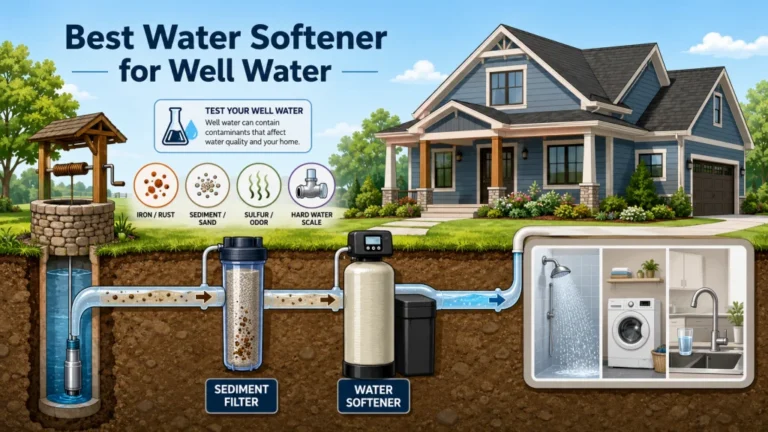
The best water softener and filter system for well water is not a single product decision. It is a sequencing decision. Well water with hardness only, confirmed by a lab test with nothing else elevated, is the manageable case. Well water with hardness plus iron, sulfur, sediment, or pH imbalance is what I actually encounter most of the time, and it is what brings homeowners back after installation wondering why the system is not performing.
Most of the service calls I have gone on for well water installs were not equipment failures. They were sequence failures. The softener went in before the sediment pre-filter. Iron got into the resin before anyone installed an upstream treatment stage. The result is the same every time: resin fouled ahead of schedule, salt consumption climbing, and a homeowner looking at a system that cost real money and is already underperforming within the first year.
If your well water test came back with hardness as the only elevated reading, the guide on sizing and selecting a water softener for well water covers that simpler case directly. If the test showed hardness alongside iron, sulfur, sediment, or any combination of those, the treatment train is where you need to start. The same principle that applies when matching a softening system to your actual water situation holds here too: what is in the water determines the equipment, not the other way around.
The Correct Well Water Treatment Train
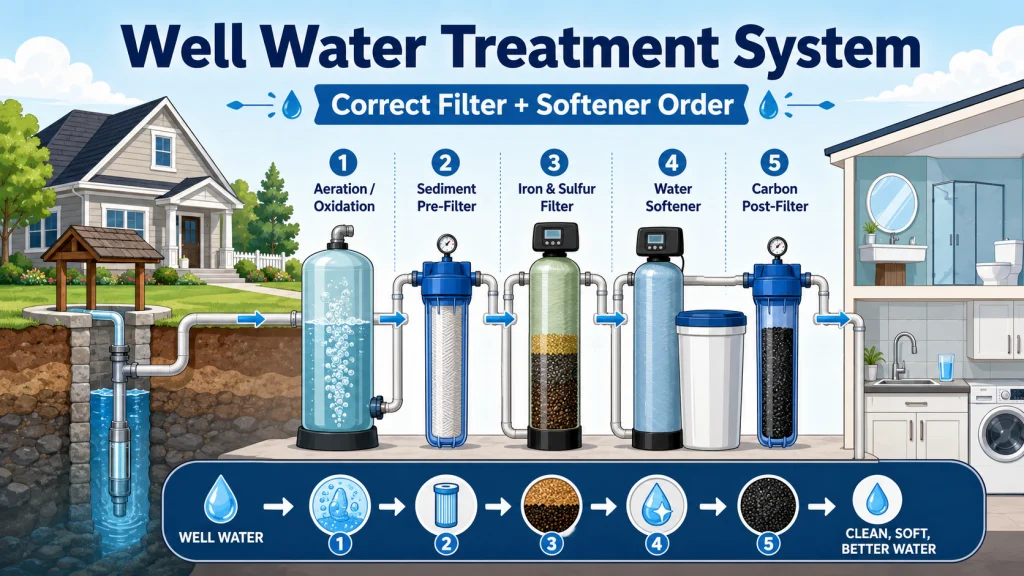
The full treatment train for well water with multiple contaminants follows a specific order. Each stage conditions the water for the next one. Skipping a stage does not just leave a gap; it often actively damages the equipment downstream.
| Stage | What It Handles | Required When |
|---|---|---|
| Aeration or oxidation injection | Hydrogen sulfide (H2S), dissolved iron (converts ferrous to filterable ferric) | Sulfur present, or iron above 3 PPM |
| Sediment pre-filter (20 to 50 micron) | Sand, silt, fine particulate, oxidized iron floc | All well water, no exceptions |
| Iron and sulfur removal filter | Oxidized iron particles, residual sulfur compounds | Iron above 1 to 2 PPM, or confirmed sulfur |
| Water softener (ion exchange) | Dissolved calcium and magnesium (hardness) | Hardness above 7 GPG |
| Carbon post-filter (optional) | Residual taste, odor, trace organics | Taste or odor concern after other stages |
This order is not arbitrary. Aeration converts dissolved sulfur and ferrous iron into forms a filter can physically remove. The sediment pre-filter catches particles before they reach any resin bed. The iron filter handles what the sediment filter passes through. The softener handles what remains after all of that. Running a softener at the front of this sequence, before any upstream stages, is asking the resin to do work it was not built for and shortening its service life in the process.
Why Getting the Sequence Wrong Damages the Resin
The most common well water installation mistake I see is running the softener without a sediment pre-filter upstream. Well water is not treated municipal water. Sediment loads vary widely, and even water that looks clear carries fine particles that accumulate in the resin bed over time. A properly sized sediment filter is inexpensive maintenance insurance. Skipping it is one of the more reliably costly mistakes I have watched repeat across installations.
Field Note: I replaced a resin bed on a well water softener that was less than two years old. The homeowner had confirmed hardness of 18 GPG and had installed a solid system: correct grain capacity, proven control valve, quality resin. No sediment filter upstream. The resin was packed with fine particulate, regeneration was struggling, and salt consumption had nearly doubled from year one. A 20-micron sediment pre-filter installed ahead of the softener would have cost around $80. The resin replacement cost considerably more.
Iron follows a similar path. When ferrous iron enters the resin bed, it binds to the resin sites during the softening cycle. Regeneration with brine flushes sodium ions through the resin, but it does not strip iron the way it strips calcium and magnesium. Over time, iron accumulates, capacity drops, and you are regenerating more frequently and burning more salt to get the same result. Above 3 PPM ferrous iron, I would not run a softener without a dedicated iron treatment stage upstream regardless of how strong the softener itself is.
Sulfur operates on a shorter timeline. Hydrogen sulfide gas does not foul the resin the same way iron does, but it accelerates deterioration of the rubber components inside the control valve and creates conditions in the tank that are not kind to resin over time. If sulfur is present at any detectable level, it belongs in an aeration stage before anything else in the train.

This 50-micron flushable and reusable filter serves as an ideal first stage in any whole house filtration system, capturing sediment, rust, dirt, and sand before water reaches finer filters downstream. A built-in Siliphos additive helps soften water, prevent scale buildup, and reduce pipe corrosion, with filter replacement recommended every 3 to 6 months for best results. The see-through housing allows easy visual monitoring, and dual threads with 1-inch MNPT and 3 to 4-inch FNPT connections make installation straightforward for indoor use within a pressure range of 20 to 100 PSI.
Check On AmazonIf you click this link and buy, we earn a commission at no additional cost to you.
What Each Stage in the System Actually Does
Understanding what each component is built for makes it straightforward to decide which stages your water actually requires. These are not redundant steps. Each one targets a specific form of contamination that the others are not designed to handle.
- Aeration or oxidation injection: Introduces air or an oxidizing agent into the water stream to convert dissolved ferrous iron and hydrogen sulfide gas into their oxidized, filterable forms. Neither dissolves out downstream without this step; they just move further into your equipment and cause damage there instead.
- Sediment pre-filter (20 to 50 micron): Physically traps sand, silt, fine sediment, and oxidized iron particles before they reach any resin bed or filter media. This is the stage requiring the most frequent maintenance. Cartridge changes every one to three months depending on well water sediment load. Pressure drop across the filter housing tells you when it is time to change.
- Iron and sulfur filter (greensand, birm, or catalytic carbon media): Captures oxidized iron particles and residual sulfur compounds after the aeration stage. This is what makes the downstream softener viable when iron is in the water. It carries the iron load so the resin does not have to.
- Water softener (ion exchange resin): Handles dissolved calcium and magnesium, the hardness minerals. This is the one job it was designed for. When upstream stages are working correctly, the softener performs as rated because it is only handling hardness, not trying to compensate for missing pre-treatment.
- Carbon post-filter (optional): Addresses residual taste or odor compounds not handled by earlier stages. Not required for all well water, but worth adding if the treated water still carries a taste concern after the rest of the train is operating correctly.
The sizing implication runs through this list. When iron is present, you do not size the softener for hardness alone. Add 4 to 5 GPG to your hardness number for every 1 PPM of ferrous iron to get the effective sizing load. At 15 GPG hardness with 2 PPM iron, you are sizing for roughly 23 to 25 GPG effective load. For a family of four at those numbers, that puts the minimum at 64,000 grains of capacity before factoring in regeneration efficiency. Standard sizing guides calibrated for city water hardness will leave you undersized on iron-bearing well water every time.
When an Integrated Combo System Is Appropriate
Integrated well water systems that combine iron and sulfur treatment with softening in a single enclosure or two-unit bundle work well within defined limits. The manufacturers who spec these honestly are specific about those limits, and it is worth holding them to the published numbers rather than marketing language about what the system “handles.”
The conditions where a well-designed integrated system performs as intended:
- Ferrous iron under 3 PPM (dissolved, clear water iron only)
- Hydrogen sulfide under 1 PPM (no persistent rotten egg smell)
- Total hardness under 15 GPG
- No ferric iron (no orange tint, no visible particles, no staining in fixtures)
- pH between 6.8 and 7.6
A well water profile that fits those numbers is not unusual. Properties adjacent to municipal water areas, newer wells in moderate mineral zones, and rural homes in lower-hardness regions often fall within this range. For a family of three at 12 GPG hardness, 1.5 PPM ferrous iron, no sulfur detected, and pH at 7.2, a quality integrated air-injection oxidation system paired with a correctly sized softener handles the full treatment need without requiring four separate units. The effective sizing calculation at those numbers puts them at roughly 19 to 20 GPG, which lands comfortably in the 48,000-grain range for that household size.
What matters when evaluating any integrated system is whether the iron treatment stage genuinely sits upstream of the resin inside the unit, not just in the marketing description. The treatment sequence has to hold inside the system the same way it does in staged equipment. If a manufacturer cannot explain where in the process the iron and sulfur treatment occurs before the water contacts the resin, that is worth pressing before purchase.
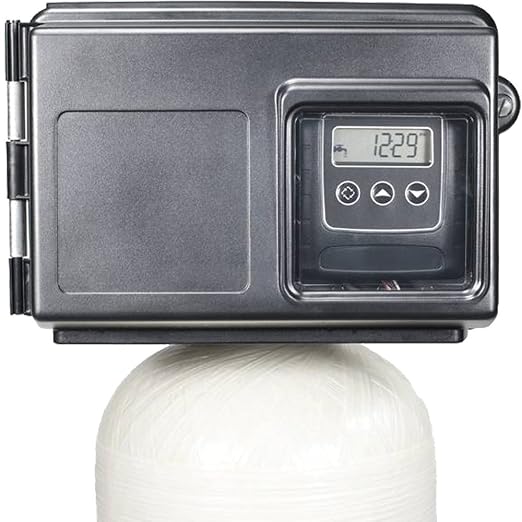
This chemical-free whole house system uses air injection and oxidation to remove iron, sulfur, and manganese from your water without the need for added chemicals or separate chemical tanks. A patented piston keeps the entire oxidation process contained within one tank, creating a pressurized air bubble during backwash to trap impurities and minimize maintenance costs and downtime. The system arrives fully equipped with a tank riser tube, deflector, control head, media, and stainless steel bypass valve for straightforward installation in an average-sized home.
Check On AmazonIf you click this link and buy, we earn a commission at no additional cost to you.
When Staged Separate Equipment Makes More Sense
Above those limits, integrated systems start to compromise on one or more stages. Each component in a properly staged setup is purpose-built for its specific job and is not sharing capacity with anything else. The trade-off is cost and installation complexity. The benefit is that each unit operates at full rated capacity for its specific task, which matters when the water problem is serious enough to push past what a combo unit can handle cleanly.
Staged separate equipment is the better path when:
- Ferrous iron is above 3 PPM, or any ferric iron is confirmed by orange staining or visible particles in the water
- Hydrogen sulfide is consistently detectable above 1 PPM
- Hardness is above 15 GPG, which raises the combined effective load high enough that integrated systems typically cannot handle both iron removal and softening at rated capacity simultaneously
- Iron and sulfur are both elevated at the same time, since this combination accelerates media degradation in systems trying to address both problems in a single stage
Here is a concrete example of a well water scenario that crosses these lines: 20 GPG hardness, 4 PPM iron, confirmed sulfur at 1.5 PPM. This is not an unusual reading for older wells in rural Midwest or Southwest locations. An integrated combo system rated for all three of those simultaneously does not really exist in residential products that perform honestly across the board. The right treatment here is an aeration or air-injection oxidation unit, followed by a 20-micron sediment pre-filter, then a dedicated greensand iron and sulfur filter, then the softener. The iron adjustment alone at those numbers puts the effective sizing load at 40 GPG or higher for hardness calculation purposes. For a family of four, 80,000 grains is the bare minimum on paper, but 96,000 grains or twin alternating tanks is the safer practical call. Hardness breakthrough during a single-tank regeneration cycle is noticeable at that load level, and well water households at 20 GPG feel it more than most.
The cost difference between staged and integrated is real. Staged systems for severe well water scenarios run $3,000 to $5,000 or more installed. For water that genuinely needs that level of treatment, the cost reflects what the equipment is doing. An integrated system that underperforms at those conditions is not a cheaper solution; it is a system that fails ahead of schedule and costs the same money later on service calls and early replacement.
For the iron-specific decision, the article on water softeners for well water with iron covers the ferrous and ferric distinction in detail, including when pre-treatment is the only viable path. For sulfur specifically, the guide on treating well water with a sulfur smell covers the aeration options and why a softener alone leaves the odor problem completely unaddressed. When both are present at elevated levels, the article on well water treatment with iron and sulfur together lays out the staged treatment approach for that specific combination.

Designed for homes with 4 or more bathrooms, this single-tank air injection system removes iron, sulfur, and manganese from well water without chemicals or a separate air pump by creating a pressurized air pocket inside the tank that oxidizes contaminants and traps them in the filter media until backwash. The Fleck 5600SXT digital controller automates the entire backwash cycle for low-maintenance operation, and the filter media lasts an average of 5 years before needing replacement. Note that this system does not reduce TDS.
Check On AmazonIf you click this link and buy, we earn a commission at no additional cost to you.
What to Combine: System Options by Well Water Scenario
Once the treatment train is clear, the buying decision narrows to which configuration actually fits your test results. Here is how I think about the three most common well water scenarios I see, and what type of system fits each one.
Moderate Well Water: Iron Under 3 PPM, Sulfur Under 1 PPM, Hardness Under 15 GPG
This is where a quality integrated air-injection oxidation system paired with a softener does its best work. The AIO stage oxidizes dissolved iron and light sulfur before the water reaches the resin, and a sediment pre-filter sits between the two. What to look for in an integrated system at this tier: a rated iron capacity of at least 3 PPM ferrous, a proven demand-initiated control valve on the softener (not timer-based), and quality resin, with 10% crosslink as a durability upgrade if the budget allows. Grain capacity should account for the iron adjustment, not just raw hardness. A family of four at 12 GPG with 2 PPM iron is sizing for 20 to 22 GPG effective load, which puts the target at 48,000 to 64,000 grains depending on daily usage.
The combo I see fail in this scenario is usually not a bad system; it is the wrong question asked before purchase. Buyers pick the integrated system based on the iron claim without checking whether the rated capacity includes the iron adjustment. It does not always. Verify the iron rating is ferrous only, and size the softener for effective GPG, not the label GPG.
Higher Iron or Confirmed Ferric Iron: Dedicated Iron Treatment Upstream
Above 3 PPM ferrous iron, or any confirmed ferric iron showing orange tint or staining, the softener needs a dedicated iron filter as its upstream partner, not just an AIO oxidation stage. A standalone iron filter using birm, greensand, or catalytic carbon media after the oxidation and sediment stages carries the full iron load before the water sees any resin. The softener then handles only residual hardness, which is what it was designed to handle.
What to look for at this tier: a backwashing iron filter with an independently rated iron capacity above your test result, a 20-micron sediment pre-filter positioned before the iron filter, and a softener with fine mesh resin if ferrous iron is in the 3 to 5 PPM range. Modular setups work better here than bundled combo systems because each unit can be sized independently for its specific load. An integrated system that claims to handle 6 PPM iron and soften simultaneously is doing both jobs at reduced efficiency. Separate equipment does each job at full capacity.
Severe Well Water: High Iron, Confirmed Sulfur, Hardness Above 15 GPG
This is the scenario where staged separate equipment is not just better; it is the only configuration that performs reliably. The full train here is: aeration or air-injection oxidation injection first, then a 20-micron sediment pre-filter, then a dedicated greensand or catalytic carbon iron and sulfur filter, then the softener. Each unit in this sequence is purpose-built for one job. No residential combo system handles severe iron, sulfur, and high hardness simultaneously at rated capacity across all three.
What to look for in a staged setup at this level: a demand-initiated softener control valve (Fleck and Clack are the industry-standard valves found in the most field-serviceable systems), high-capacity resin tank sized to the iron-adjusted effective GPG load, and media in the iron filter rated for the specific contaminant levels your test confirmed. For iron above 5 PPM, some installations also include a dedicated oxidation injection system rather than relying on passive air injection alone. The upfront cost is higher. The service life and consistent performance justify it for water that genuinely needs this level of treatment.
Key point: Whatever configuration you choose, match the capacity of each stage to your actual test numbers, not the marketing summary on the product page. The iron rating, sulfur handling claim, and grain capacity need to hold up under your specific water conditions, not average residential conditions.
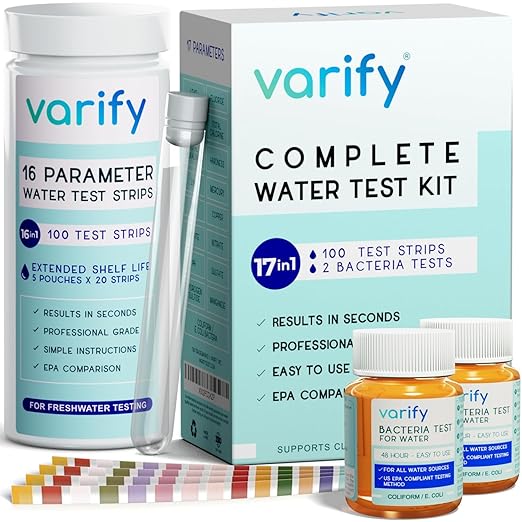
This comprehensive kit tests for 17 parameters including chlorine, fluoride, lead, iron, and bacteria, giving you a full picture of your water's safety in minutes. The 100 color-coded test strips come in 5 individually sealed pouches of 20 for extended freshness, while 2 included bacteria tests deliver results within 48 hours. Every purchase contributes a portion of proceeds to Water For Good, supporting clean water access in Central Africa.
Check On AmazonIf you click this link and buy, we earn a commission at no additional cost to you.
Final Thoughts: Start With the Water Test, Not the Product Page
The most consistent mistake I see on well water installs is buying equipment based on a single confirmed problem and discovering two more after the system is in. A lab water test before you purchase anything is not optional for well water. It is the only way to know which stages you actually need and in what order to sequence them. Most county extension offices or state water programs offer inexpensive testing, and a basic well water panel covering hardness, iron, pH, sulfur, and manganese covers the primary variables for this decision. Some state health departments offer it at no cost.
Once you have the test results, the treatment train is not complicated. Put each stage upstream of the equipment it protects. Do not ask the softener to handle iron; put iron treatment upstream and let the softener do the one job it was designed for. For most well water with moderate iron and hardness inside the limits covered above, a solid integrated system handles it cleanly and keeps the installation simple. For anything that pushes past those limits, staged equipment pays for itself in service life and consistent performance. The sequence comes first. The product choice follows from that.
FAQs
🔧 Do I need both a water filter and a water softener for well water?
Most well water benefits from both. A softener handles hardness through ion exchange; it does not remove iron, sulfur, or sediment. If your water test shows elevated iron or any sulfur, a filter stage upstream of the softener is necessary to protect the resin and keep the system performing as rated.
💧 What is the correct order for a well water treatment system?
The correct order is: aeration or oxidation injection (if sulfur or high iron is present), sediment pre-filter, iron and sulfur filter (if needed), water softener, and an optional carbon post-filter. Installing the softener before pre-filtration is the single most common well water treatment mistake.
🧪 How much iron is too much for a softener to handle on its own?
Above 3 PPM ferrous iron, a dedicated iron filter upstream of the softener is the right call. Below that, a fine mesh resin softener can manage ferrous iron in some cases. Any ferric iron at all, indicated by orange staining or discolored water, requires pre-filtration regardless of the PPM reading.
📐 How does iron change water softener sizing?
Add 4 to 5 GPG to your hardness number for every 1 PPM of ferrous iron. At 15 GPG hardness with 2 PPM iron, size for 23 to 25 GPG effective load. Sizing for hardness alone on iron-bearing well water consistently results in a softener that regenerates too frequently and wears out ahead of schedule.
🏠 When does an integrated combo filter-softener system work for well water?
Integrated combo systems perform well when ferrous iron is under 3 PPM, hydrogen sulfide is under 1 PPM, hardness is under 15 GPG, and there is no ferric iron present. Above those limits, staged separate equipment handles each stage at full rated capacity without compromising on any single one.
⚙️ How often does a sediment pre-filter need to be replaced on well water?
Every one to three months is typical, but it depends on how much sediment is in the well. High-sediment wells may need monthly cartridge changes. Pressure drop across the filter housing is the most reliable signal: when flow noticeably decreases, the cartridge needs to come out.
🔎 Does a water softener remove sulfur smell from well water?
No. A standard ion exchange softener does not remove hydrogen sulfide. If your well water has a rotten egg odor, that requires aeration, an oxidizing filter, or an air-injection oxidation system upstream of the softener. Running sulfur-bearing water through a softener without pre-treatment also accelerates deterioration of valve components.